First Impressions
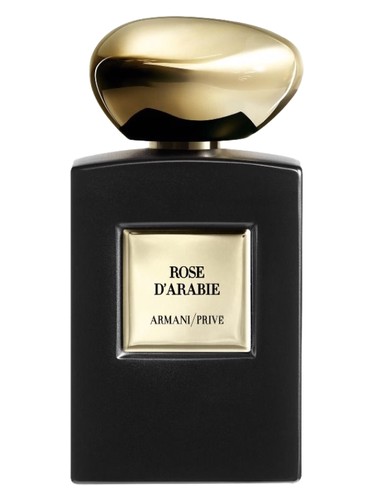
The first spray of Rose d''Arabie feels like stepping into a luxurious tent at twilight, where crimson silk panels filter the fading light into shades of burgundy and plum. This is not the dewy, garden-fresh rose of spring mornings. Instead, Giorgio Armani presents something altogether more complex: a rose preserved in amber, deepened by shadow, wound through with threads of incense and earth. The initial impression is simultaneously plush and austere, an opulent restraint that announces itself with confidence rather than volume.
Within moments, you understand why this fragrance has captivated over 2,400 reviewers. The rose accord—registering at full intensity in its profile—doesn''t stand alone in innocent beauty. It arrives already entangled with darker companions, the patchouli and oud revealing themselves almost immediately as equal partners in this olfactory dance. There''s a richness here that feels intentional, almost architectural in its construction.
The Scent Profile
Rose d''Arabie builds its story on three towering pillars: rose at maximum intensity, patchouli at a substantial 58%, and oud at 55%. These aren''t discrete stages that politely take turns on your skin; rather, they form an interwoven tapestry from the start.
The rose itself carries the character of Turkish and Taif roses—full-bodied, slightly spicy, with a jammy depth that speaks of petals crushed rather than merely brushed. But this rose never gets the chance to play the ingénue. The patchouli wraps around it immediately, lending an earthy, slightly chocolate-tinged darkness that grounds the floral sweetness. This isn''t the headshop patchouli of the 1970s; it''s refined, almost suede-like in its texture.
The oud presence is notable yet restrained, occupying that sweet spot where Western sensibilities meet Eastern tradition. At 55%, it provides a resinous, woody foundation without dominating the composition. This is oud as an accent rather than a declaration, smoky and mysterious but never aggressively medicinal or animalic.
Supporting players include a woody accord at 35% that reinforces the composition''s structure, a floral element at 30% that softens the edges, and warm spices at 29% that add subtle heat—perhaps cumin or cardamom—creating gentle warmth rather than obvious spice.
As the fragrance develops, it maintains remarkable consistency. This isn''t a scent of dramatic transformations but rather of deepening intensity, like watching the sky darken from dusk into night. The rose remains central, but it grows warmer, more sensual, more enveloped in its woody-resinous companions as hours pass.
Character & Occasion
The seasonal data tells a clear story: Rose d''Arabie is a cold-weather creature. With winter registering at 97% and fall at 88%, this is unambiguously a fragrance for cooler months. The richness that makes it so compelling in November would feel suffocating in July''s humidity. Spring (40%) and summer (24%) are possible territory only for those who wear fragrance lightly or favor air-conditioned environments.
The day-to-night breakdown is equally revealing. While 46% find it appropriate for daytime wear, it achieves its full potential after dark, scoring a perfect 100% for evening occasions. This is the fragrance of candlelit dinners, gallery openings, theater nights—anywhere sophistication and a touch of mystery are assets rather than obstacles.
Though marketed as feminine, the composition''s depth and the substantial oud-patchouli presence make it genuinely unisex. This is rose for those who find most rose fragrances too sweet, too simple, or too traditionally pretty. It suits confident wearers who appreciate fragrance as a statement rather than merely an accessory.
Community Verdict
With a rating of 4.36 out of 5 from 2,439 votes, Rose d''Arabie stands as one of the more successful entries in the Armani Privé collection. This rating places it firmly in "very good to excellent" territory, suggesting broad appreciation rather than polarized responses. That nearly 2,500 people have taken the time to rate it also speaks to its reach and relevance within the fragrance community.
The high rating combined with the specific accord breakdown suggests that Armani delivered on the promise of its name: this genuinely does capture something of Arabia''s perfumery traditions while remaining accessible to contemporary Western palates. The absence of significantly negative sentiment in this rating indicates consistent quality and performance.
How It Compares
Rose d''Arabie finds itself in prestigious company. Its similarity to Tom Ford''s Noir de Noir, Maison Francis Kurkdjian''s Oud Satin Mood, and Frédéric Malle''s Portrait of a Lady positions it squarely in the "luxurious dark rose" category that has defined niche perfumery in the 21st century.
Compared to Portrait of a Lady''s more baroque, patchouli-forward intensity, Rose d''Arabie offers slightly more restraint. Against Oud Satin Mood''s creamy smoothness, it presents more obvious structure and definition. The Chanel connections—Coco Noir and Coco Mademoiselle—suggest a shared DNA of sophisticated femininity, though Rose d''Arabie ventures into considerably darker territory than either.
Where it distinguishes itself is in balance. This fragrance doesn''t choose between rose and oud—it insists on both, equally, in conversation rather than competition.
The Bottom Line
Rose d''Arabie represents Giorgio Armani''s Privé collection at its most assured. This is a fragrance that knows exactly what it wants to be: a bridge between East and West, between traditional femininity and modern androgyny, between the garden and the souk.
At 4.36 stars, it delivers on its promise with consistency and quality. While pricing for the Privé line sits firmly in luxury territory, the complexity and performance justify the investment for those seeking something beyond commercial offerings.
Who should try it? Anyone who loves rose but craves depth. Anyone drawn to oud but intimidated by its extremes. Anyone building a cold-weather wardrobe of sophisticated evening scents. And certainly anyone who has loved those similar fragrances from Tom Ford, Kurkdjian, or Malle but wants to explore a slightly different interpretation of this very particular olfactory territory.
This is not a safe fragrance, but it''s not a challenging one either. It''s simply confident—a rare quality that the best perfumes share with the best people.
KI-generierte redaktionelle Rezension