First Impressions
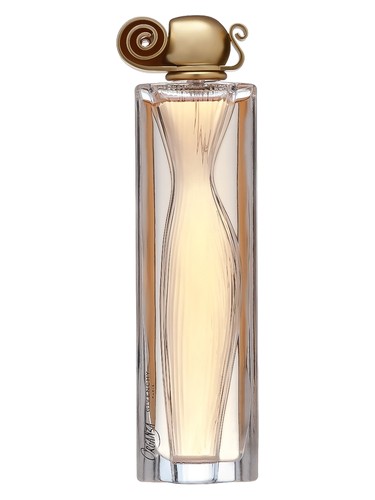
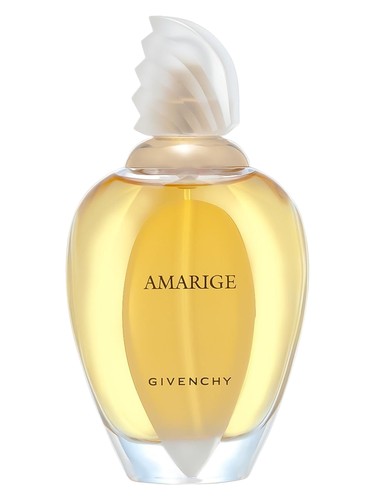
The first spray of Amarige announces itself like a grand entrance at a 1990s gala—unapologetically, memorably, and with zero interest in subtlety. This is white floral perfumery at its most audacious, opening with a radiant burst of orange blossom and neroli that''s immediately sweetened by plum and peach. There''s a violet softness trying to temper the exuberance, but make no mistake: Amarige arrives with the volume turned to maximum. Within seconds, you''ll understand why this Givenchy creation has maintained a 3.91 rating across nearly 9,000 votes—it''s technically accomplished, undeniably memorable, and completely polarizing.
The name itself, "Amarige," is "Givenchy''s marriage" spelled backward, and the fragrance embodies that kind of bold, romantic gesture. This isn''t a wallflower composition for timid wearers. It''s a declaration, for better or worse.
The Scent Profile
Amarige''s opening act features a lush parade of fruits and flowers: orange blossom and neroli provide the brightness, while peach, plum, and mandarin orange lend a honeyed sweetness. Brazilian rosewood adds an exotic, slightly spicy warmth that hints at the complexity to come. It''s a generous, almost excessive introduction that sets the stage for what follows.
The heart is where Amarige reveals its true nature as a white floral showcase. Tuberose takes center stage, supported by an opulent chorus of gardenia, jasmine, and ylang-ylang. Mimosa and black locust add a honeyed, slightly indolic quality, while carnation and rose provide structure. The inclusion of black currant and red berries maintains that sweet fruitiness, while orchid amplifies the creamy floral intensity. At 100% white floral and 52% sweet according to its main accords, this is a composition that refuses compromise—it commits fully to its opulent vision.
The base grounds this floral explosion with sandalwood, cedar, and woody notes that provide much-needed warmth and stability. Vanilla, tonka bean, and amber add sweetness and depth, while musk creates a skin-like softness that should, in theory, make this powerhouse wearable. The powdery accord (39%) becomes more apparent in the drydown, offering a vintage, cosmetic quality that firmly places Amarige in its 1991 origins.
Character & Occasion
The data tells a clear story: Amarige is a cold-weather fragrance, rating 100% for fall and 90% for winter. Spring receives a respectable 78%, but summer languishes at just 40%—this is decidedly not a warm-weather scent. The richness, the sweetness, and the sheer density of florals demand cooler temperatures to avoid overwhelming everyone within a ten-foot radius.
Interestingly, it scores nearly equally for day (97%) and night (94%) wear, though the community feedback suggests this might be more theoretical than practical. The reality is that Amarige''s projection is so powerful that many wearers struggle to find appropriate occasions for it at all. This is a fragrance that seems designed for a different era''s social norms—when powerful sillage was celebrated rather than considered intrusive.
The 47% yellow floral accord and 44% woody backbone suggest this could work beautifully in professional settings, but that assumes a restrained application and favorable skin chemistry—two variables that prove challenging with Amarige.
Community Verdict
The Reddit fragrance community''s sentiment score of 5.5 out of 10 reveals the fundamental tension at Amarige''s heart. The fragrance itself isn''t poorly made—quite the opposite. Users praise its "beautiful floral composition on paper and in the bottle" and describe it as "smooth, creamy, and sunny" when it works well. Its "powerful projection and longevity" are undeniable, making it a legitimate powerhouse performer.
The problems emerge with wearability. Multiple users report that Amarige "turns animalic, dirty, or soapy on some skin types," transforming from gorgeous to unbearable depending on individual chemistry. It''s described as "extremely loud and brash—difficult to wear in public," with some experiencing a "bitter, musty, or unpleasant" character that seems to bear little resemblance to what others experience.
The reformulation issue looms large. Community members note that Amarige was "reformulated around 2007-2008 and is no longer as well-rounded as original," suggesting that vintage bottles may offer a superior experience. The modern version is criticized for being "dated and potentially offensive to modern sensibilities"—a fragrance out of step with contemporary preferences for intimate, skin-like scents.
The consensus recommendation is cautious: best for "house wear or personal enjoyment" by those with "tolerance for bold 90s fragrances." Even fans suggest "single-spray application," acknowledging that Amarige''s default setting is simply too much for shared spaces.
How It Compares
Amarige sits among distinguished company in its category. Its similar fragrances include Lancôme''s Poème, Givenchy''s own Organza, Jean Paul Gaultier''s Classique, and Dior''s J''adore and Pure Poison. These comparisons reveal Amarige''s position as a bridge between the opulent florals of the early 90s and the more refined white florals that would follow. Where J''adore offers a cleaner, more modern take on floral radiance, and Pure Poison provides a more mysterious interpretation, Amarige remains unabashedly maximal—a time capsule of an era when "more" was definitively more.
The Bottom Line
Amarige is a fragrance that demands research before purchase. With nearly 9,000 votes averaging 3.91 out of 5, it''s clearly resonated with many wearers—but the community data reveals significant risk. This is not a blind-buy fragrance unless you''re specifically seeking a powerful 90s white floral and have realistic expectations about projection.
Sample it first, and crucially, test it on your own skin for several hours. What smells divine in the bottle may transform into something completely different on your particular chemistry. If you''re fortunate enough to be among those who can wear Amarige successfully, you''ll have access to a genuinely nostalgic powerhouse with impressive longevity. If not, you''ll understand why so many bottles end up relegated to scenting drawers rather than skin.
For those seeking the Amarige experience with less risk, consider exploring J''adore or Poème first—they offer white floral beauty with more predictable performance and better alignment with modern sensibilities. But for the adventurous, for the nostalgic, or for those whose skin chemistry makes Amarige sing rather than shout? This remains a creamy, sunny floral experience that captures a very specific moment in perfumery history—when fragrance was meant to fill rooms, not just personal space.
KI-generierte redaktionelle Rezension