First Impressions
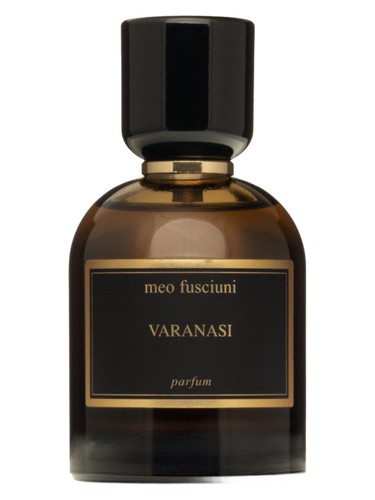
The first spray of Varanasi doesn''t so much introduce itself as it demands your attention. Named after the holiest city in India, where funeral pyres burn continuously along the Ganges, this 2020 release from Meo Fusciuni opens with an immediate assault of incense smoke, saffron''s metallic warmth, and the sharp aromatic punch of nutmeg and cardamom. But there''s something else lurking beneath—something feral and untamed that signals this won''t be a conventional spiritual journey. The animalic accord, which dominates at 100% intensity, announces itself almost immediately, creating an olfactory experience that some describe as transformative and others can only characterize as burning rubber meeting ancient temple.
This is not a fragrance that asks for your approval. It simply exists, uncompromising and unapologetic.
The Scent Profile
The opening quartet of incense, saffron, nutmeg, and cardamom creates a spice market rendered in charcoal and smoke rather than the warm, inviting sweetness you might expect. The incense here carries a tarry, almost resinous quality that immediately establishes Varanasi''s serious intentions. Saffron adds its characteristic leathery-metallic edge, while nutmeg and cardamom provide brief moments of recognizable warmth before the composition takes a sharp turn into more challenging territory.
As the heart develops, the 72% amber accord begins to emerge alongside a complex interplay of ambergris, cypriol oil (nagarmotha), rose, ambrette, and jasmine. This should theoretically create a lush, resinous floral heart, but Varanasi refuses convention. The cypriol oil—earthy, smoky, and slightly medicinal—dominates alongside the animalic ambergris, while the florals struggle to assert themselves. When rose and jasmine do appear, they seem almost suffocated by smoke, like flowers laid on a funeral pyre. The ambrette adds a musky undercurrent that bridges into the composition''s most controversial elements.
The base is where Varanasi fully reveals its provocative nature. Animal notes, agarwood, leather, gurjan balsam, Himalayan nard, and vetiver create a dense, woody-animalic foundation that reads almost confrontationally on skin. The leather accord (49%) manifests not as refined suede but as birch tar-tinged rawness. Gurjan balsam and nard add medicinal, almost pharmaceutical facets, while vetiver provides earthy grounding. The oud weaves through it all with its characteristic barnyard funk, creating what community members describe as everything from "memorable leather impressions" to "overwhelming burning rubber."
Character & Occasion
The data tells a clear story: this is a cold-weather, nighttime fragrance for those with courage. Winter scores 100% suitability, fall sits at 95%, while spring (33%) and summer (23%) barely register. The night suitability rating of 90% versus day''s 45% confirms what your nose already knows—Varanasi belongs to darkness and solitude, or perhaps intimate gatherings of fellow scent adventurers who appreciate olfactory provocation.
This is marketed as feminine, though the animalic, woody, and leather dominance makes such categorization almost irrelevant. Varanasi transcends traditional gender boundaries to exist in a space occupied by those who seek fragrance as art rather than accessory. It''s for special occasions only—not because it''s fancy, but because it demands the mental and emotional space to be appreciated (or at least processed). This isn''t something you wear to the office unless you work somewhere very unusual.
Community Verdict
The Reddit fragrance community''s mixed sentiment (5.8/10) reflects Varanasi''s deeply divisive nature. Based on eight opinions, the conversation reveals sharp polarization. Supporters praise the "thoughtful perfumer story and artistic vision" and appreciate the "complex spice and animalic character that rewards exploration." They find the birch tar and leather notes create "memorable impressions" and generate "strong emotional responses and memory associations."
However, critics are equally passionate in their reservations. The "extremely intense and polarizing" nature proves "overwhelming on skin" for most wearers, with that burning rubber comparison appearing repeatedly. Multiple community members note it''s an "acquired taste that requires significant fragrance experience to appreciate," and interestingly, some suggest it''s "not representative of wider Meo Fusciuni house quality"—implying this is an outlier even within an already niche brand.
The consensus places this firmly in the category of "adventurous fragrance collectors" seeking "challenging scents" for "evening or special occasion wear."
How It Compares
Varanasi finds itself in notable company: Cuoium by Orto Parisi, Promise by Frederic Malle, 1740 Marquis de Sade by Histoires de Parfums, L''Air du Desert Marocain by Tauer, and Black Afgano by Nasomatto. These are all fragrances that push boundaries—animalic, intense, unapologetically niche. Where L''Air du Desert Marocain tames its spices with amber sweetness and Black Afgano wraps its darkness in hashish haze, Varanasi offers less comfort, less compromise. It occupies the more extreme end of this spectrum, closest perhaps to Cuoium''s raw leather intensity but with added smoke and spice complexity.
The Bottom Line
With a 3.91/5 rating from 436 voters, Varanasi performs respectably for such a challenging composition. This isn''t a low rating—it''s actually quite good considering the polarizing nature. That nearly 450 people have voted suggests genuine interest, even if consensus remains elusive.
Should you try it? If you''re still building your fragrance vocabulary with safer niche offerings, probably not yet. But if you''ve explored the similar fragrances listed above and found yourself intrigued rather than repelled, Varanasi deserves a sample. Be warned: sampling on paper won''t prepare you for the skin experience, where that animalic intensity and burning rubber aspect apparently intensifies.
This is fragrance as confrontation, as art, as olfactory pilgrimage to uncomfortable places. It won''t be your signature scent, but it might be the one that expands your understanding of what perfume can be—and what you can tolerate in pursuit of that understanding.
AI-generated editorial review