First Impressions
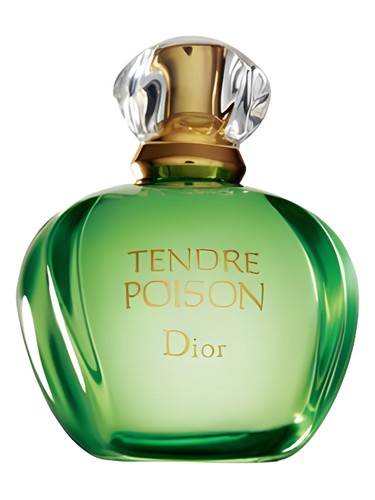
The first spray of Tendre Poison delivers something unexpected for a fragrance bearing the Poison name: sunshine. Where its predecessor announced itself with dark, intoxicating spices, Tendre opens with a burst of citrus optimism—mandarin and bergamot dancing through a haze of white florals. There''s an unusual green undertone here, something almost jungle-like that prevents this from becoming another predictable white floral composition. The Brazilian rosewood adds an exotic whisper, while the asafoetida (a daring choice for 1994) provides an herbaceous edge that keeps the sweetness in check. This is Poison reimagined as a spring morning rather than a midnight seduction.
The Scent Profile
Tendre Poison''s evolution is a masterclass in balance. Those opening citrus notes—mandarin orange and bergamot—sparkle briefly before yielding to the fragrance''s true identity: an unabashed white floral celebration. The tuberose emerges as the star performer, creamy and indolic without crossing into overwhelming territory. Orange blossom weaves through with its neroli-tinged brightness, while freesia adds a translucent, almost aquatic quality that prevents the composition from becoming too heavy.
The honey accord in the heart deserves special attention. Rather than drowning the florals in golden sweetness, it acts as a binding agent, smoothing the edges where tuberose and rose might otherwise clash. This is where Tendre Poison earns its "smooth and well-blended" reputation—there are no jarring transitions, just a seamless unfurling of petals.
As the fragrance settles into its base, the sandalwood and musk create a soft, skin-like foundation. Vanilla appears, but not the gourmand vanilla of modern fragrances; this is subtle, almost powdery. The heliotrope contributes an almond-like sweetness that plays beautifully with the lingering tuberose. What emerges is a scent that manages to be both substantial and airy, nostalgic yet fresh—a balance that explains why, thirty years after its launch, people are still hunting for bottles.
Character & Occasion
The data tells a clear story: Tendre Poison is a spring fragrance first and foremost (95%), though it translates well into fall (55%) and even manages respectable showings in summer (51%). This versatility stems from that intelligent construction—enough citrus and green notes to work in warmth, enough body to stand up to cooler weather. Winter (34%) is perhaps the only season where it might feel out of place, lacking the heavy richness typically associated with cold-weather fragrances.
This is definitively a daytime scent (100%), though it can transition into evening wear for casual occasions (49% night rating). Picture it at a garden lunch, a spring wedding, a Sunday brunch. It''s sophisticated without being formal, feminine without being delicate. The community identifies it as best suited for mature women and everyday wear, which tracks—this isn''t a fragrance making bold statements or demanding attention. It''s confident, refined, and knows exactly what it is.
Community Verdict
The fragrance community''s relationship with Tendre Poison (sentiment score: 7.5/10) is colored by one unavoidable fact: you can''t easily buy it. Discontinued since 1994—yes, the same year it launched—Tendre Poison has become the definition of a cult classic cut short in its prime. This scarcity drives both its appeal and its most significant drawback.
The pros are compelling: beyond the nostalgic appeal and loyal following, wearers praise that distinctive green, jungle-like quality that sets it apart from typical white florals. The blending receives consistent acclaim, as does the longevity and quality, especially considering the price point at original retail. But that original price point is long gone. On the secondary market, bottles command around €200 for 100ml—a significant investment for a fragrance you can''t sample first.
The search for alternatives has become its own cottage industry. The community points to Grès Cabotine and Divain 729 as similar options, but with the caveat that neither quite captures the magic. It''s the perfume equivalent of trying to replace a lost love—close, but not quite.
How It Compares
Within the white floral category, Tendre Poison occupies interesting territory. It shares DNA with Givenchy''s Amarige and Organza—other 90s white florals that embraced boldness over minimalism. Its own lineage includes Pure Poison, Dior''s 2004 attempt to revisit the concept with orange blossom at the helm. While Pure Poison succeeded commercially, devotees insist Tendre possessed something irreplaceable.
The comparisons to Coco Mademoiselle and J''adore feel more aspirational than accurate—those fragrances lean toward transparent modernity, while Tendre Poison retains a distinctly 90s fullness. It''s more opulent, more unabashedly floral, less concerned with the contemporary preference for "skin scents."
The Bottom Line
A rating of 4.05 out of 5 from over 3,000 votes is impressive for any fragrance, but remarkable for one that''s been unavailable for three decades. That score reflects both the quality of the juice and the rose-tinted glasses of nostalgia—and honestly, both factors are valid.
Should you seek out Tendre Poison? If you''re drawn to white florals with character, if you appreciate 90s perfumery''s confidence, and if you have the budget for secondary market pricing, then yes. But go in with realistic expectations. At €200, you''re paying for rarity as much as artistry. Sample first if possible (decant services are your friend here), because while the community loves it, that doesn''t guarantee it will love you back.
For those who wore it in the 90s, finding a bottle might offer a genuine connection to that era. For newer fragrance lovers, it''s a fascinating historical document—proof that Dior could do fresh, green florals as masterfully as gothic seductions. Just remember: sometimes the most romantic stories are the ones that end too soon, leaving us forever wondering what might have been.
AI-generated editorial review