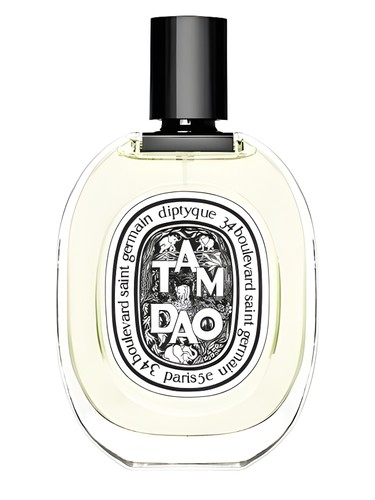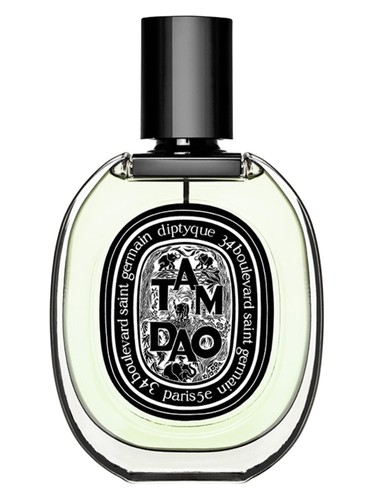
First Impressions
The first encounter with Tam Dao Eau de Parfum feels less like applying fragrance and more like stepping through a temple gate into hushed reverence. Named after the mountain forests of Indochina, this 2013 Diptyque release announces itself with an uncompromising woody presence that reads as 100% wood—not "predominantly woody" or "woody-leaning," but wholly, devotedly arboreal. There''s an immediate softness here too, a powdery quality that tempers what could be austere into something approachable, almost meditative. This isn''t wood that splinters; it''s wood that''s been worn smooth by countless hands and decades of incense smoke.
The Scent Profile
Diptyque has taken an intriguing approach with Tam Dao''s Eau de Parfum formulation by eschewing the traditional pyramid breakdown, presenting instead a holistic composition that reveals itself as a complete thought rather than chapters. Without specified top, heart, or base notes, the fragrance unfolds as a continuous meditation on wood, allowing its character to emerge gradually rather than in distinct phases.
What defines this scent is its woody backbone—so dominant it registers at maximum intensity—supported by a powdery softness that comprises 42% of its character. This powdery element isn''t the makeup-counter variety; it''s more akin to fine sawdust suspended in temple air, or the chalky smoothness of sandalwood paste. Warm spices enter at 24%, providing gentle heat without specific identifiable players, while a subtle aromatic quality (23%) adds dimensionality that prevents the composition from becoming one-note.
Amber glows at 18%, contributing a resinous warmth that anchors the lighter woods, and a whisper of musk (15%) rounds out the base with skin-like intimacy. The overall effect is seamless—a study in how restraint and focus can create something more memorable than complexity for its own sake. As the fragrance settles, it becomes increasingly personal, as if the woods are warming against your skin, releasing their quiet secrets slowly throughout the day.
Character & Occasion
Tam Dao Eau de Parfum has found its natural habitat in the cooler months, registering as absolutely perfect for fall (100%) and highly suitable for winter (74%). This makes intuitive sense—the fragrance wraps around you like a cashmere scarf, providing olfactory warmth when the temperature drops. Spring receives a respectable 68% approval, suggesting the scent''s powdery softness translates well to transitional weather, though summer''s 38% rating confirms what you''d suspect: this is not a heat-friendly fragrance.
The day/night breakdown reveals versatility that might surprise those who assume woody scents belong to evening occasions. With an 82% day rating versus 64% night, Tam Dao proves itself a contemplative daytime companion—appropriate for the office, weekend errands, or quiet afternoons with a book. Its restraint and lack of projection make it professional without being boring, present without announcing itself across a room.
Originally marketed as feminine, Tam Dao transcends such binary classifications. Its woody-powdery signature appeals to anyone drawn to understated elegance and natural materials. This is fragrance for the person who appreciates quality over quantity, whisper over shout.
Community Verdict
Here''s where the narrative becomes incomplete. Despite Tam Dao''s impressive 4.11 out of 5 rating based on 3,104 votes—a substantial sample size that speaks to both popularity and general approval—the fragrance community discussions yielded no specific feedback for this review. This absence of Reddit conversation is itself noteworthy, suggesting either that Tam Dao''s appeal is self-evident enough to require little debate, or that it occupies a respected but quiet corner of the fragrance landscape, appreciated by those who wear it but not generating the passionate discourse of more polarizing releases.
The strong rating indicates satisfaction, but without community pros and cons, we''re left to interpret what that 4.11 represents: likely admiration for its quality and wearability, tempered perhaps by recognition that it won''t be everyone''s style—particularly those seeking projection, sweetness, or conventional appeal.
How It Comparisons
Tam Dao Eau de Parfum exists in distinguished company. Its most obvious sibling is Tam Dao Eau de Toilette, the lighter concentration that preceded this 2013 release. The connections to Le Labo''s Santal 33 and Byredo''s Gypsy Water place it firmly in the contemporary woody-sandalwood category that dominated the 2010s, though Tam Dao''s powdery character distinguishes it from Santal 33''s more assertive, leathery presence and Gypsy Water''s citrus-inflected interpretation.
The comparison to Maison Margiela''s By the Fireplace suggests shared warmth and comfort, while Tom Ford''s Oud Wood nods to Tam Dao''s resinous amber undertones, though Ford''s creation ventures into denser, more opulent territory. Within this constellation of woody fragrances, Tam Dao positions itself as perhaps the most contemplative—less about making a statement than creating a personal sanctuary.
The Bottom Line
With its 4.11 rating across over 3,000 votes, Tam Dao Eau de Parfum has achieved something increasingly rare: broad appeal without compromise. This is a fragrance that knows exactly what it wants to be—a meditation on wood rendered in olfactory form—and executes that vision with quiet confidence.
Is it worth the Diptyque price point? For those who prize natural-smelling woods, understated elegance, and fragrances that improve rather than overwhelm a room, absolutely. This is a scent that rewards patience and proximity, revealing its nuances to those who lean in rather than broadcasting across space.
Who should seek it out? Anyone building a serious fragrance wardrobe needs at least one refined woody scent, and Tam Dao makes an excellent candidate—versatile enough for daily wear, distinctive enough to feel special, and crafted with enough sophistication to stand the test of changing trends. If you''ve found yourself unmoved by aggressive oud fragrances or sweet sandalwood interpretations, Tam Dao''s balanced, powdery-woody signature might be exactly what you''ve been seeking.
AI-generated editorial review