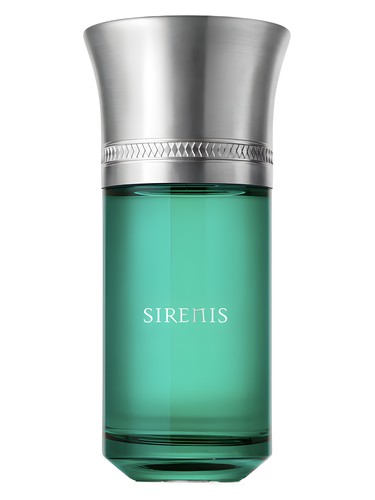
First Impressions
The first spray of Sirenis feels like standing at the edge of a cliff where land surrenders to ocean—that precise moment when sage-studded Mediterranean hillsides meet the salt-laced air. This is no gentle beach vacation in a bottle. Les Liquides Imaginaires has conjured something more elemental, a composition that references the mythological sirens not through sweetness or obvious seduction, but through something darker and more compelling: the pull of depths unknown.
The opening is decidedly aromatic, with sage and cardamom providing an herbal spine that keeps the marine notes from drifting into the overly aquatic territory that plagues so many ocean-inspired fragrances. Bergamot adds a whisper of citrus brightness, but it''s restrained, almost shy—a flash of sunlight on water rather than a brilliant noon glare. Within seconds, you understand this is a marine fragrance for those who''ve grown weary of the genre''s usual clichés.
The Scent Profile
Sirenis unfolds with an architecture that defies the expected linearity of marine compositions. Those opening marine notes—dominant at 100% according to community consensus—establish immediate authority. But they''re sophisticated, more mineral than synthetic, more tide pool than swimming pool. The sage brings an almost medicinal quality, while cardamom adds unexpected warmth and complexity to what could have been a cold, aloof opening.
The aromatic accord, rated at 91%, threads through the entire composition, preventing the fragrance from ever becoming too pretty or approachable. This is intentional tension, a creative choice that speaks to Les Liquides Imaginaires'' conceptual approach to perfumery.
As the heart emerges, transparent flowers materialize like sea foam catching light. They''re indefinable, these blooms—neither rose nor jasmine, but rather the idea of florality rendered in watercolor rather than oil paint. Broom adds a green, slightly bitter facet, while sandalwood provides creamy support without dominating. It''s a smart choice; too much wood here would ground the composition when it needs to remain suspended between elements.
The musky accord (87%) becomes increasingly apparent in this middle phase, adding skin-like warmth that humanizes the maritime abstraction. This is where the siren metaphor crystallizes—half-human, half-other, existing in the liminal space between two worlds.
The base reveals Sirenis''s true complexity. Moss and patchouli (contributing to that 73% mossy accord) create an earthy foundation that seems almost contradictory to the aquatic opening, yet it works. Vetiver adds its characteristic smokiness, while amber provides subtle sweetness and musk ensures the whole affair stays close to skin. This isn''t a projection monster; it''s an intimate fragrance that rewards proximity. The woody accord at 65% ensures substantial depth without overwhelming the composition''s airy qualities.
Character & Occasion
The data tells an unambiguous story: Sirenis is a warm-weather composition, registering 100% for summer and 79% for spring. This makes perfect sense—the marine freshness and aromatic lift make it ideally suited for heat and humidity. But that mossy, musky foundation means it''s not simply abandoned when temperatures drop; 21% still reach for it in fall, likely on milder days when nostalgia for summer lingers.
At 86% day versus 24% night, Sirenis clearly presents itself as daytime wear. It lacks the dense sweetness or heavy orientalism that typically characterizes evening fragrances. Instead, imagine this for seaside lunches, coastal walks, or professional settings where you want to smell fresh but interesting—distinctive without being disruptive.
Despite being marketed as feminine, the aromatic and mossy elements make Sirenis thoroughly wearable for anyone drawn to unconventional aquatics. This isn''t cotton candy and vanilla; it''s sage and vetiver held together by marine air.
Community Verdict
With a 3.2 out of 5 rating across 337 votes, Sirenis occupies that interesting middle ground that often signals a polarizing or challenging fragrance. This isn''t a crowd-pleaser, and it doesn''t aspire to be. The rating suggests a composition that rewards patience and an open mind—those expecting a conventional marine will be confounded by the earthy base, while those seeking a pure aromatic might find the aquatic opening too prominent.
This moderate rating can actually be encouraging for the right wearer. Fragrances that please everyone typically offend no one, which often means they excite no one. Sirenis clearly has a perspective, and not everyone will share it.
How It Compares
Within the Les Liquides Imaginaires lineup itself, Sirenis shares DNA with Navis, Abyssis, and L''Ile Pourpre—all aquatic or island-inspired compositions from this conceptually-driven house. The comparison to Lalique''s Encre Noire is telling; both feature that unusual combination of fresh top notes with dark, earthy bases, though Encre Noire skews more dramatically vetiver-centric.
What distinguishes Sirenis is its commitment to the marine theme while refusing to let it become one-dimensional. Where many aquatics peter out into bland muskiness, this one develops genuine character through its aromatic and mossy dimensions.
The Bottom Line
Sirenis won''t convert aquatic-averse wearers, but it might rehabilitate the genre for those who''ve dismissed it as irredeemably synthetic or boring. At 3.2 stars, it''s worth approaching with curiosity rather than high expectations—this is a fragrance to explore, not to love at first sniff.
The ideal Sirenis wearer appreciates conceptual perfumery, doesn''t mind moderate sillage, and wants something fresh for warm weather that transcends typical citrus-marine formulas. If you found yourself intrigued by the mythological premise, if you appreciate fragrances that contain contradictions, or if you simply want a sophisticated aquatic that won''t remind anyone of department store sport flankers, Sirenis deserves your attention.
It''s not perfect, but it''s certainly not boring—and in a fragrance landscape crowded with safe bets, that counts for something.
AI-generated editorial review