First Impressions
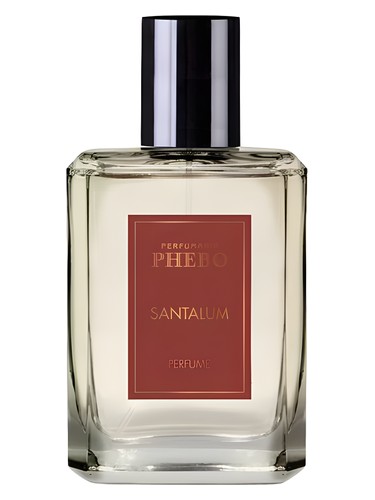
The first spray of Phebo''s Santalum delivers an unexpected greeting. Rather than the creamy, familiar embrace you might anticipate from a sandalwood-centered fragrance, you''re met with something altogether more intriguing: the crisp, almost vegetal snap of carrot and green leaves, tempered by cardamom''s resinous warmth. It''s an opening that reads more like a sophisticated cologne than a traditionally feminine perfume, and that initial moment of pleasant disorientation sets the tone for everything that follows. This is sandalwood refracted through an unconventional lens—one that prioritizes powder and restraint over opulence.
Within minutes, the composition settles into something softer, more intimate. That dominant powdery accord—scoring a perfect 100% in community assessments—begins to assert itself, wrapping those green, spicy top notes in a veil of something that feels almost tactile. The name makes immediate sense: this isn''t just about smelling sandalwood. It''s about experiencing it as texture, as sensation.
The Scent Profile
The journey from top to base unfolds with deliberate pacing. Those initial carrot and green leaf notes provide an earthy, slightly bitter counterpoint to cardamom''s sweetness—a combination that prevents the opening from veering into predictable territory. Carrot as a perfume note brings an almost root-like earthiness, grounding what could otherwise float away into abstraction.
As the fragrance transitions into its heart, Santalum reveals its most intriguing element: velvet listed as an actual note, alongside musk and thanaka wood. This isn''t mere marketing poetry. The velvet accord translates to an almost suede-like softness, a textural quality that drapes itself over the skin. The musk here reads clean rather than animalic, reinforcing that powdery character while the thanaka wood—a lesser-known ingredient from Myanmar traditionally used in cosmetics—adds a subtle, almost chalky dimension that enhances the composition''s overall softness.
The woody accord, rated at 94%, becomes increasingly prominent as the fragrance develops. By the time Santalum reaches its base, you''re enveloped in classic materials: sandalwood at the core, naturally, supported by olibanum''s resinous incense quality and vetiver''s dry, rooty earthiness. Yet even here, that powdery softness never fully recedes. The sandalwood remains smooth and rounded rather than sharp, the olibanum whispers rather than proclaims, and the vetiver adds structure without aggression.
The warm spicy accord (64%) and musky elements (57%) create a supporting framework that keeps the fragrance from becoming too airy or ethereal, while the aromatic (39%) and soft spicy (31%) aspects add just enough complexity to reward closer attention.
Character & Occasion
Despite its feminine classification, Santalum wears with remarkable versatility. The community data tells a compelling story: while it performs beautifully as a daytime scent (78%), it truly comes alive in evening hours (99%). This is a fragrance that adapts to cooler weather with particular grace—fall scores 100%, winter hits 92%—while still maintaining relevance in spring (65%). Summer (21%) is clearly not its natural habitat, and honestly, that''s not a weakness. This is a fragrance that thrives in the transitional seasons, when you want something comforting without being heavy, sophisticated without being formal.
The powdery-woody profile makes it an excellent choice for professional settings where you want to leave an impression of quiet competence and understated elegance. It''s refined enough for important meetings, soft enough not to overwhelm intimate conversations, and distinctive enough that people will ask what you''re wearing.
For the wearer, Santalum seems ideally suited to someone who appreciates woody fragrances but finds traditional masculine takes too assertive or cologne-like. It''s for those who want sandalwood without the hippie associations, powder without the vintage dowdiness.
Community Verdict
With 345 votes yielding a 4.37 out of 5 rating, Santalum has clearly resonated with its audience. That''s a strong showing, suggesting a fragrance that delivers on its promises while offering enough personality to inspire genuine affection. The rating indicates consistent quality and broad appeal—not a niche oddity that polarizes, but a well-crafted composition that earns respect across different preferences.
The number of votes also suggests this isn''t merely a curiosity in Phebo''s lineup but a fragrance people have actually purchased, worn, and felt strongly enough about to rate. For a 2019 release from a Brazilian brand, that level of engagement speaks to genuine quality rather than hype.
How It Compares
Santalum sits comfortably alongside several fragrances in the woody, warm category: Natura''s Homem Essence, Phebo''s own Bronze and Fava Tonka, and Granado''s Fervo Intenso and Oud. What distinguishes Santalum within this constellation is its commitment to that powdery softness. Where many of these comparisons lean more overtly masculine or emphasize different facets of woody aromatics, Santalum maintains its unique position—neither fully feminine nor masculine, prioritizing elegance and subtlety over projection or boldness.
The Brazilian perfumery tradition often emphasizes tropical florals and bright citrus, making Santalum''s cooler, more contemplative character something of an outlier in its geographical context, though clearly part of a woody family within Phebo''s range.
The Bottom Line
Santalum deserves its 4.37 rating. This is confident, well-executed perfumery that understands restraint as a virtue rather than a limitation. Phebo has created something that fills a specific niche beautifully: a sandalwood fragrance for people who don''t usually wear sandalwood fragrances, a powdery scent that doesn''t read as dated, a feminine fragrance that transcends gender expectations.
The value proposition appears strong, particularly from a Brazilian brand that typically offers more accessible price points than European luxury houses. For anyone drawn to woody-powdery compositions, for those seeking something sophisticated for fall and winter evenings, or for anyone curious about well-crafted Brazilian perfumery, Santalum merits serious attention. It won''t be for everyone—those seeking bold projection or summer brightness should look elsewhere—but for its intended audience, it''s a small revelation wrapped in velvet.
AI-generated editorial review