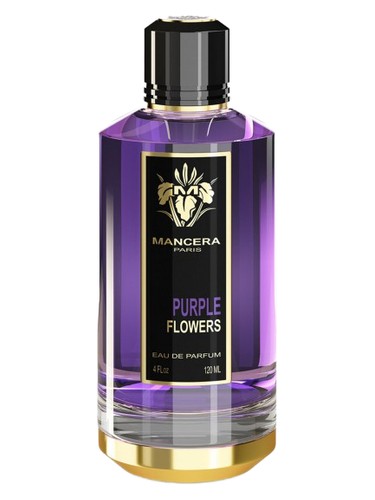
First Impressions
Despite what the name suggests, Purple Flowers isn''t really about flowers at all. The opening spray delivers a sharp, almost masculine jolt—the resinous snap of fig tree colliding with the heat of black pepper and ginger. There''s Sicilian mandarin somewhere in the background, lending a citrus brightness that prevents the spice from overwhelming, but make no mistake: this is wood and spice from the first moment. The "purple flowers" feel like a marketing mirage, a romantic promise that gives way to something altogether earthier and more complex. It''s the kind of misdirection that makes you wonder if the perfumer and the marketing team were working from the same brief.
The Scent Profile
The composition unfolds with that distinctive fig-forward opening—green, slightly milky, with an almost latex-like quality that Mancera seems particularly fond of. Black pepper crackles alongside ginger and nutmeg, creating a fresh-spicy profile that dominates the first fifteen minutes. The Sicilian mandarin acts as a buffer, softening what could easily become too aggressive, lending just enough sweetness to keep things approachable.
As the top notes settle, the heart reveals where those "flowers" have been hiding all along. Rose emerges, but it''s not the dewy, photorealistic rose of a modern niche darling. This is rose filtered through patchouli and cedar—earthy, slightly dusty, with that characteristic Mancera sweetness beginning to creep in. The patchouli here reads as woody rather than hippie-ish, grounding the rose in soil and bark. Cedar adds a pencil-shaving dryness that prevents the composition from becoming cloying, though it''s fighting an uphill battle.
The base is where Purple Flowers settles into its true identity: a warm, ambered skin scent with serious staying power. White musk provides a clean backdrop for Madagascar vanilla—the kind that''s been tempered and blended until it''s more suggestion than gourmand statement. Ambergris (likely a synthetic accord) adds saltiness and depth, that marine-meets-musky quality that keeps vanilla from reading as purely edible. It''s in this final phase that the fragrance feels most cohesive, most itself: woody, slightly powdery, comfortingly warm without being overtly cozy.
Character & Occasion
The data tells an interesting story about versatility—or perhaps about confusion. Purple Flowers scores nearly identically for day and night wear (88% and 89% respectively), suggesting it occupies some pleasant middle ground. It''s polished enough for professional settings but warm enough for evening intimacy, which might explain its broad appeal or its lack of distinct personality, depending on your perspective.
Seasonally, this is unquestionably a cooler-weather fragrance. Fall registers at 100%, winter at 85%, with spring coming in at a respectable 81%. Summer, at 42%, is where Purple Flowers struggles—that vanilla-amber base and the spice-heavy opening don''t love humidity or heat. This is a fragrance for crisp days and chilly evenings, for sweaters and scarves, for the months when a little extra warmth on your skin feels like comfort rather than suffocation.
The feminine classification feels somewhat arbitrary here. Yes, there''s rose and vanilla, but the woody-spicy character that dominates (100% woody, 74% fresh spicy) could easily be shared across gender lines. This is approachable and wearable for anyone drawn to spiced woods with a touch of sweetness.
Community Verdict
The fragrance community''s assessment of Mancera as a house—and Purple Flowers by extension—is decidedly lukewarm, landing at 5.5 out of 10 in sentiment. The praise centers on practical virtues: quality construction, impressive longevity, and reasonable value as an entry point into niche territory. If you''re graduating from designer fragrances and want something with better performance and more interesting composition without breaking the bank entirely, Mancera delivers.
But the criticisms cut deeper. Across 34 community opinions, a clear pattern emerges: Mancera''s lineup feels bloated and repetitive. Too many releases, too many variations on the same sweet-woody-ambered theme. Purple Flowers, despite its quirky name and spicy opening, doesn''t escape this assessment. The house is compared unfavorably to Bond No. 9 for market oversaturation—never a flattering comparison.
The sweetness factor comes up repeatedly as a con. Even in Purple Flowers, where the woods and spice provide some counterbalance, that characteristic Mancera sugar threading runs through the composition. For some, it''s comforting; for others, it''s a signature that''s worn out its welcome.
How It Compares
The listed similar fragrances span an interesting range—from the sophisticated minimalism of Narciso Rodriguez For Her to the opulent sweetness of Baccarat Rouge 540, from Coco Mademoiselle''s patchouli-rose classic to Black Orchid''s gothic intensity. What they share is that woody-ambered-slightly-sweet territory that has become modern perfumery''s comfort zone.
Purple Flowers sits somewhere in the middle of this pack: more interesting than a safe designer release, less daring than a true niche statement. It lacks Baccarat Rouge''s ethereal quality, Chanel''s refinement, or Tom Ford''s darkness, but it also costs considerably less and performs reliably.
The Bottom Line
With a 3.75 out of 5 rating from 342 voters, Purple Flowers has found its audience—even if that audience isn''t universally enthusiastic. This is a competent, well-constructed fragrance that delivers on performance and wearability. The spiced fig opening is genuinely interesting, and the woody-rosy heart has moments of real beauty.
But it''s hard to shake the sense that this could have been bolder. The name promises something unusual; the execution delivers something pleasant but safe. For someone new to niche perfumery who wants proven longevity and doesn''t mind sweetness, Purple Flowers is a solid choice. For collectors seeking originality or a signature scent that doesn''t smell like three other things in the Mancera lineup, look elsewhere. It''s good—sometimes very good—but it doesn''t quite justify the poetry of its name.
AI-generated editorial review