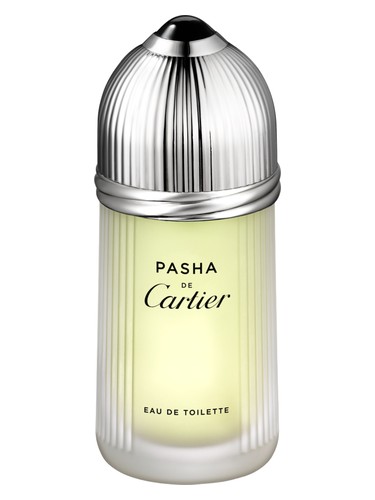
First Impressions
The first spray of Pasha Cartier delivers what can only be described as an impeccably dressed greeting—confident without arrogance, fresh without being aggressive. There''s an immediate rush of herbal coolness as lavender and mint intertwine, tempered by the unexpected warmth of caraway and anise. This is not the sharp, aquatic freshness that dominated men''s fragrance counters in the early ''90s. Instead, Pasha announces itself as something more cultivated, more complex. The mandarin orange weaves through these opening moments like a silk thread, softening what could have been a too-bracing introduction. It''s the olfactory equivalent of a perfectly tailored blazer—structured yet comfortable, classic yet individual.
The Scent Profile
Pasha Cartier''s composition unfolds with the confidence of a fragrance that knows exactly what it wants to be. The top notes create a masterclass in aromatic freshness, where lavender takes center stage as the dominant player. But this isn''t your grandmother''s lavender sachet—the mint adds a cooling vitality, while caraway and anise contribute an herbal, slightly spicy character that keeps the opening from veering into predictable territory. The mandarin orange provides just enough citrus brightness to lift the entire accord without overshadowing the more complex herbal elements.
As the fragrance settles into its heart, coriander emerges with its distinctive spicy-green character, adding depth and a subtle peppery quality. The Brazilian rosewood brings a creamy, slightly floral woodiness that serves as a bridge between the aromatic opening and the more grounded base. This heart phase is where Pasha reveals its sophistication—it''s neither purely fresh nor entirely woody, but rather occupies that refined middle ground where complexity reigns.
The base notes anchor everything with a classic masculine foundation. Oakmoss provides that unmistakable earthy, slightly bitter quality that defined so many great fragrances of this era—a nod to the fougère tradition that continues to influence men''s perfumery. Sandalwood adds creamy smoothness, while patchouli contributes depth without overwhelming. Labdanum rounds out the composition with its warm, slightly resinous sweetness, creating a dry down that''s substantial without being heavy. The woody accord registers at 91%, creating a foundation that''s both timeless and remarkably wearable.
Character & Occasion
With its perfect storm of versatility metrics, Pasha Cartier proves itself as a fragrance designed for the well-rounded wardrobe. The data tells a compelling story: this is a scent that thrives in transitional seasons, scoring 94% for fall and 92% for spring. These are the times when aromatic fragrances truly shine—when the air is neither too warm nor too cold, allowing the complex interplay of fresh and woody notes to bloom properly.
Winter wearability comes in at a respectable 71%, suggesting that while Pasha has enough substance to handle cooler weather, it maintains a freshness that prevents it from feeling oppressive. Even summer registers at 60%, which speaks to the fragrance''s fundamental balance—the mint and lavender keep things from feeling too heavy even in warmer months.
The day/night split is particularly revealing: 100% suitable for daytime wear, with 83% for evening. This is a gentleman''s fragrance in the truest sense—appropriate for business meetings, weekend brunches, gallery openings, and dinner dates alike. It won''t dominate a boardroom, but it won''t disappear at a cocktail party either. The fresh spicy accord (69%) and green notes (48%) ensure it never feels too formal or stuffy, while the mossy base (47%) provides enough gravitas for more serious occasions.
Community Verdict
Here''s where the story takes an unexpected turn: despite its solid 4.14 rating from 1,822 voters, Pasha Cartier appears to fly remarkably under the radar in contemporary fragrance discussions. The Reddit community data reveals a complete absence of mentions in recent threads—a striking silence for a fragrance with such respectable credentials. This lack of discussion doesn''t necessarily indicate a flaw; rather, it may speak to Pasha''s positioning in that curious middle ground between mainstream commercial releases and cult favorites. It''s neither controversial enough to spark debate nor hyped enough to generate buzz in an era dominated by louder, more polarizing releases.
This silence might actually work in Pasha''s favor for those seeking something distinctive. In a landscape where certain fragrances are discussed to death, there''s something appealing about a well-crafted scent that simply does its job without fanfare.
How It Compares
Pasha Cartier shares DNA with some distinguished company. Its similarity to Azzaro pour Homme and Zino Davidoff places it firmly in the aromatic fougère tradition—fragrances that built their reputations on lavender, herbs, and oakmoss. The connection to Egoiste Platinum by Chanel and Guerlain''s Vetiver suggests a refined, classical masculinity, while the mention of La Nuit de l''Homme hints at its versatility and smooth sophistication.
Where Pasha distinguishes itself is in its restraint. It doesn''t push boundaries or attempt to reinvent the wheel. Instead, it executes a classic aromatic woody formula with exceptional balance, letting quality materials speak for themselves.
The Bottom Line
Pasha Cartier represents the road less traveled in modern men''s fragrance—a path defined by understated elegance rather than projection and boldness. Its 4.14 rating from nearly two thousand voters suggests consistent satisfaction rather than polarizing brilliance. This is precisely its strength. For the man who appreciates craftsmanship over hype, who values versatility over uniqueness, and who seeks a signature that won''t announce itself before he enters a room, Pasha delivers admirably.
Is it groundbreaking? No. Will it generate compliments from strangers? Probably not. But will it serve as a reliable, sophisticated companion across seasons and occasions? Absolutely. In an era of fragrance maximalism, there''s something quietly rebellious about choosing restraint.
AI-generated editorial review