First Impressions
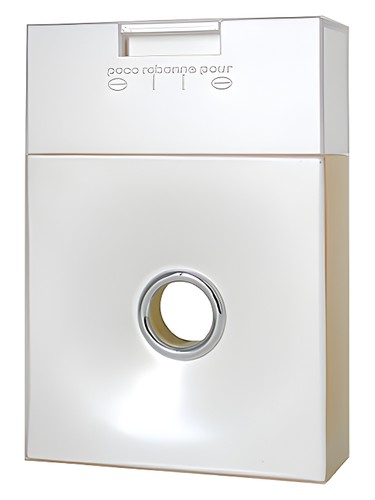
The first spray of Paco Rabanne Pour Elle delivers an unexpected handshake—polite yet provocative. Where you might expect a straightforward floral from the early 2000s, you''re instead met with a curious duality: the soft, dewy sweetness of freesia and mandarin orange colliding with the sharp bite of pink and black pepper. This isn''t the timid femininity that defined many perfumes of its era. There''s an apricot-plum softness lurking beneath that initial spice, but Pour Elle makes you wait for it, teasing out its fruitiness gradually rather than throwing it at you in a saccharine rush. It''s a first impression that whispers rather than announces, and in today''s climate of aggressive sillage monsters, that restraint feels almost radical.
The Scent Profile
The opening movement centers on that striking pepper-fruit tension. Both pink and black pepper varieties create a fizzy, almost champagne-like effervescence around the mandarin orange and freesia, while plum and apricot add a jammy depth that prevents the composition from becoming too sharp. This is not pepper as a fleeting accent—it''s structural, holding the fruity elements in check and adding an adult sophistication to what could have been merely pretty.
As Pour Elle settles into its heart, the white floral accord blooms with impressive complexity. Jasmine and rose form the classical backbone, but they''re elevated by the more exotic tiare flower and ylang-ylang, which bring a creamy, tropical richness to the composition. The mysterious karo-korund note—a synthetic creation meant to evoke precious stones—adds a clean, almost mineral quality that keeps the florals from becoming too heady or indolic. This heart phase is where Pour Elle truly justifies its 99% white floral accord rating; it''s a masterclass in balancing traditional floral beauty with contemporary freshness.
The base is where the fragrance reveals its warmest intentions. Peach emerges as a soft skin-like accord, blending seamlessly with white musk and the creamy, coconut-adjacent nuances of massoia bark. Amber provides a gentle glow rather than heavy resinousness, while sandalwood adds just enough woody structure to ground the composition without overwhelming its essential femininity. This drydown reads as sophisticated and polished—the scent of expensive lotion on warm skin rather than perfume as performance art.
Character & Occasion
According to community data, Paco Rabanne Pour Elle is an all-season performer, and that assessment makes perfect sense when you experience its balanced architecture. The pepper and fresh florals keep it from feeling too heavy in warmer months, while the amber-musk-sandalwood base provides enough warmth for cooler weather. This is the rare fragrance that genuinely transitions across seasonal boundaries without feeling out of place.
The lack of strong day or night skewing in the data suggests that Pour Elle occupies a versatile middle ground—appropriate for professional settings without being boring, elegant enough for evening wear without demanding a formal dress code. It''s the fragrance equivalent of a well-cut blazer: always appropriate, quietly luxurious, and more interesting upon closer inspection than a casual glance would suggest.
This is a fragrance for someone who wants to smell polished and feminine without broadcasting their presence across a room. It suits the woman who has nothing to prove, who understands that true elegance doesn''t require volume. With moderate sillage and what appears to be respectable longevity from the woody-musky base, it''s built for proximity rather than projection.
Community Verdict
With a rating of 3.82 out of 5 based on 643 votes, Paco Rabanne Pour Elle sits comfortably in "very good" territory without reaching masterpiece status. This solid rating suggests a fragrance that delivers on its promises without necessarily revolutionizing the genre. The relatively substantial vote count indicates this isn''t an obscure release, yet it hasn''t achieved the cult status of some of its contemporaries. Perhaps its greatest strength—that refined restraint—is also what keeps it from garnering passionate devotion. It''s easier to evangelize about fragrances that make bold statements than those that practice sophisticated understatement.
How It Compares
The comparison to J''adore by Dior is immediately understandable—both champion white florals with fruit accents and a polished, modern femininity. However, Pour Elle''s spicy opening and softer projection distinguish it as the more introverted sister. The Noa by Cacharel connection speaks to the clean, soapy musk aspects, while the Narciso Rodriguez For Her similarity likely references the white musk foundation. The Poison and Poème comparisons are more interesting, suggesting that despite its freshness, Pour Elle shares DNA with the grand floral traditions of French perfumery.
Where Pour Elle distinguishes itself is in that pepper accent and its overall restraint. It exists in the same family as these classics but refuses to compete on volume. In the landscape of early 2000s feminines—an era often dominated by fruity florals and sugar bombs—it stands as a more mature, composed alternative.
The Bottom Line
Paco Rabanne Pour Elle is a quiet achiever in a category that often rewards the loudest voice. Its 3.82 rating reflects what it truly is: a well-crafted, versatile white floral with enough character to remain interesting but enough polish to never offend. For the price point of a vintage or discounted bottle—and these do circulate—it represents excellent value for anyone seeking a grown-up floral that works across multiple contexts.
This isn''t a fragrance for collectors chasing uniqueness or those who want their perfume to announce their arrival. It''s for the person who appreciates craftsmanship over hype, who wants something reliably beautiful that won''t compete with their personality. If you''ve enjoyed any of the similar fragrances listed—particularly J''adore or Noa—Pour Elle deserves a place on your sampling list. It may not inspire poetry, but it will make you feel polished, confident, and quietly elegant. Sometimes, that''s exactly enough.
AI-generated editorial review