First Impressions
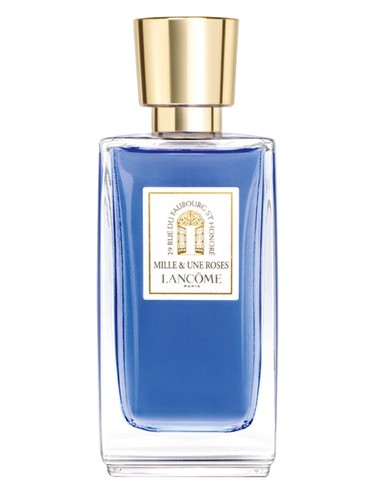
Some perfumes whisper their intentions. Mille et Une Roses announces them from across the room. From the first spray, Lancôme's 1999 creation makes an unequivocal statement: this is rose, full stop. Not rose tempered by citrus brightness or masked behind fruity distractions, but rose in its most forthright, unapologetic expression. The name promises a thousand and one roses, and the fragrance delivers on that ambitious claim with the confidence of a house that knows exactly what it's doing. There's an immediate richness here, a musky-powdery embrace that wraps around the floral heart like velvet, softening what could have been sharp into something surprisingly wearable. This is rose for those who've grown weary of fragrances that only flirt with the note, who want the real thing in all its blushing, blooming glory.
The Scent Profile
Without a traditional pyramid structure spelled out in its composition, Mille et Une Roses reveals itself through its dominant accords rather than distinct phases. The rose accord commands complete attention at 100% intensity—this is the fragrance's entire raison d'être. But Lancôme's perfumers were smart enough to know that even the most rose-devoted wearer needs balance, and that's where the supporting players earn their keep.
The musky foundation, registering at 50%, provides the crucial architecture that prevents this from becoming a single-note study. It's the kind of musk that feels skin-close and intimate rather than soapy or synthetic, creating a soft focus effect around the rose's sharp edges. Almost equally present are the powdery and amber accords, both at 43%, which work in tandem to add dimension and warmth. The powder brings a vintage sensibility—think the inside of a well-loved compact rather than baby talc—while the amber contributes a golden, resinous glow that becomes more apparent as the fragrance settles.
Vanilla rounds out the composition at 40%, just enough to sweeten without tipping into gourmand territory. There's a subtle floral accord at 30% that suggests the supporting cast of a rose garden—perhaps the green stems, the surrounding blooms—but make no mistake, this is a solo performance with backup singers, not an ensemble piece.
The evolution is more about intensity than transformation. Mille et Une Roses blooms immediately and then gradually softens, the powdery-musky base becoming more prominent as hours pass, leaving a skin-scent that hovers between romantic and comforting.
Character & Occasion
The seasonal data tells a clear story: this is spring's fragrance, scoring 87% in that category. It makes perfect sense—Mille et Une Roses captures that moment when rose bushes explode into bloom, when the air is soft and gardens come alive. Summer claims 59%, which speaks to its surprising wearability despite the intensity; the musky-powdery base keeps it from feeling heavy in warmth. Fall follows at 55%, where the amber and vanilla notes find their moment to shine against cooling air. Winter, at 36%, is possible but not ideal—this fragrance wants to breathe, not be buried under wool coats.
The day-to-night split is equally revealing: 100% day, 45% night. This is a fragrance that feels most at home in natural light, appropriate for occasions when you want to project elegance without intimidation. It's polished enough for professional settings, romantic enough for afternoon dates, classic enough for any situation where "overdone" would be a misstep. The night score suggests it can transition into evening, but this isn't a fragrance that thrives in cocktail bar lighting or dramatic dinner settings.
Who is this for? The woman who knows herself, who isn't afraid of traditionally feminine gestures, who considers rose a feature rather than a risk. There's a maturity to this composition that might feel costumey on very young wearers, but confidence transcends age.
Community Verdict
With a 4.4 out of 5 rating from 645 votes, Mille et Une Roses has earned serious respect. That's a substantial sample size and an impressive score, suggesting consistent satisfaction rather than polarized opinions. For a fragrance that's now over two decades old and takes such an uncompromising approach to a single note, this rating indicates staying power in both senses of the term. The community has spoken: when Lancôme commits to rose, they deliver something worth returning to. These aren't the numbers of a forgotten flanker or a dated relic—this is a fragrance that continues to find its audience.
How It Compares
Placed alongside its stylistic siblings, Mille et Une Roses holds distinguished company. Chanel's Coco Eau de Parfum shares that vintage-inflected sophistication, while Yves Saint Laurent's Cinéma and Dior's Midnight Poison play in similar powdery, ambery territory with more drama. The two Guerlain comparisons—L'Instant de Guerlain and Samsara Eau de Parfum—make perfect sense given their shared love of classicism and unabashed femininity. Where Mille et Une Roses distinguishes itself is in its singular focus. While these others weave complex stories with multiple chapters, Lancôme chose to write a love letter to one flower and let everything else serve that narrative. It's less versatile than some of these alternatives, but more committed to its vision.
The Bottom Line
Mille et Une Roses isn't trying to be all things to all people, and that specificity is precisely its strength. At 4.4 out of 5, it's doing exactly what it promises exceptionally well. Value is harder to assess without current pricing, but for vintage fragrance hunters or those who find it still available, you're getting a well-constructed rose soliflore with enough complexity to stay interesting.
This is essential trying for anyone who claims rose as their signature note, for lovers of classic French perfumery, or for those building a collection that represents perfume's various approaches to iconic flowers. Skip it if you prefer your roses in supporting roles, if powder reads old-fashioned rather than timeless to your nose, or if you need versatility from your bottles. But if you've been searching for rose that doesn't apologize, doesn't hide, and doesn't compromise? Here are your thousand and one reasons to say yes.
AI-generated editorial review