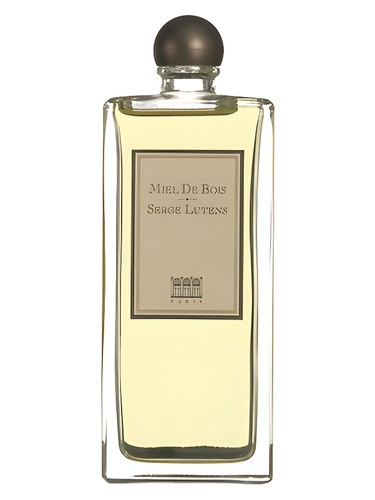
First Impressions
Miel De Bois announces itself with a contradiction that shouldn''t work, yet does. The first spray delivers honey—not the bright, golden drizzle of breakfast tables, but something darker, more mysterious. This is honey found in the hollow of an ancient tree, mingled with bark and moss, touched by smoke from a distant fire. The name translates simply to "Honey Wood," but Serge Lutens has never been one for simplicity. From the opening moments, you understand this is honey reimagined through a deliberately oblique lens, sweetness tempered by an almost austere woodiness that refuses to let this fragrance slip into gourmand territory.
The initial impression is disorienting in the best possible way. Where you expect sticky sweetness, you find sawdust and shadow. Where you anticipate lightness, there''s weight and contemplation. It''s immediately apparent why this 2005 release has maintained its cult status nearly two decades later—Miel De Bois occupies a singular space that few fragrances dare to explore.
The Scent Profile
Without specified individual notes to guide us, Miel De Bois reveals itself through its dominant accords, and here the composition tells its story clearly. The woody accord commands at full intensity, creating a framework that defines everything else. Imagine standing in a carpenter''s workshop where someone has left a jar of honey open near cedar shavings—that intersection is where this fragrance lives.
The honey accord follows close behind at 82%, but this isn''t floral honey or creamed honey. It reads as beeswax and propolis, the structural elements of the hive rather than its liquid gold. There''s something almost resinous about it, as though the bees gathered their nectar from tree sap as much as from flowers. This creates a fascinating tension: honey should be fluid, but here it feels solid, architectural.
As the fragrance develops, a modest sweetness emerges at 44%—enough to remind you that honey is indeed the co-star, but restrained enough to maintain sophistication. The powdery elements at 36% soften the harder edges, creating an unexpected tactile quality, like running your hands over weathered wood that''s been polished smooth by time. Musky undertones at 29% add warmth and skin-compatibility, while the subtle floral presence at 27% whispers rather than shouts, perhaps suggesting the ghost of the flowers that once fed those philosophical bees.
The evolution is less about dramatic transformation and more about revealing different facets of the same complex idea. The honey never disappears, but the wood becomes more embracing. The sweetness never dominates, but the powder makes it more intimate. This is a fragrance that unfolds slowly, rewarding patience and repeated wearing.
Character & Occasion
The community data speaks definitively: Miel De Bois is an autumn and winter creature, scoring perfect marks for fall and 91% for winter. This makes intuitive sense—it''s a fragrance that needs cooler air to breathe, where its warmth becomes comforting rather than cloying. In spring it drops to 44%, and summer at 28% confirms what you''d suspect: this isn''t beach reading but rather fireside contemplation.
Interestingly, it skews heavily toward daytime wear at 93%, which challenges assumptions about dark, woody compositions. Perhaps it''s that the honey keeps it from becoming too brooding, or the powdery elements provide enough softness for daylight hours. That said, its 62% night rating suggests it transitions well into evening, making it remarkably versatile for those cooler months.
Marketed as feminine, Miel De Bois nonetheless occupies that androgynous territory that Serge Lutens navigates so well. The woody dominance and restrained sweetness make it approachable for anyone drawn to unconventional compositions. This is for the person who finds typical honey fragrances too literal, who wants their sweetness complicated by shadow and substance.
Community Verdict
With a solid 3.75 out of 5 stars from 777 voters, Miel De Bois has earned its place as a respected, if polarizing, composition. This isn''t a crowd-pleaser designed to achieve universal approval, and that''s precisely the point. The rating suggests a fragrance that deeply resonates with its audience while acknowledging it won''t be for everyone. Those who connect with its particular vision rate it highly; those expecting conventional honey sweetness may be disappointed by its austere approach.
The substantial vote count indicates enduring interest long after its 2005 release—this isn''t a forgotten experiment but a continuously discovered treasure within the Serge Lutens collection.
How It Compares
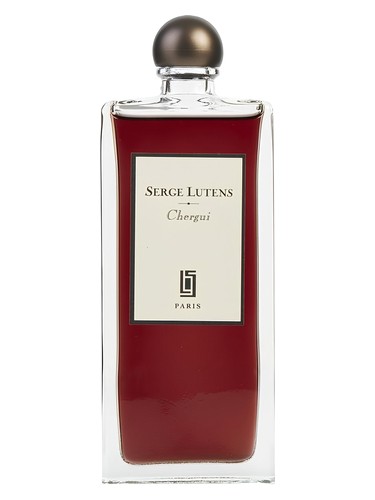
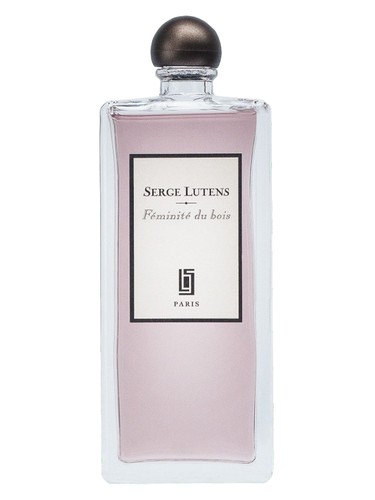
Miel De Bois sits comfortably within the Serge Lutens family, sharing DNA with Chergui''s honeyed tobacco warmth, Fumerie Turque''s smoky exoticism, and Feminité du Bois'' cedarwood foundation. The connection to Feminité du Bois is particularly notable—both explore woody territories from different angles, with Miel De Bois taking the sweeter, more viscous path.
The inclusion of Angel by Mugler in its similarity profile is fascinating, suggesting that despite its restraint, Miel De Bois shares Angel''s willingness to challenge conventional beauty. Fille en Aiguilles rounds out the comparisons, another Lutens creation that finds poetry in unexpected combinations—in that case, pine and sweetness.
Within the honey fragrance category, Miel De Bois stands as one of the more challenging interpretations, favoring complexity and abstraction over accessibility.
The Bottom Line
Miel De Bois isn''t an easy fragrance, but the worthwhile ones rarely are. It demands that you meet it halfway, that you appreciate honey through a deliberately distorted lens. For those willing to embrace its contradictions—sweetness that isn''t cloying, woodiness that isn''t masculine, honey that smells more like home than hive—it offers something genuinely distinctive.
At 3.75 stars, it''s a fragrance worth exploring rather than blind-buying. Sample it first. Wear it through a cool autumn day. See if its particular meditation on honey and wood speaks to you. For the right person, it becomes an essential part of a cold-weather rotation. For others, it remains an interesting detour rather than a destination. Either way, it''s unmistakably Serge Lutens: uncompromising, poetic, and utterly unique.
AI-generated editorial review