First Impressions
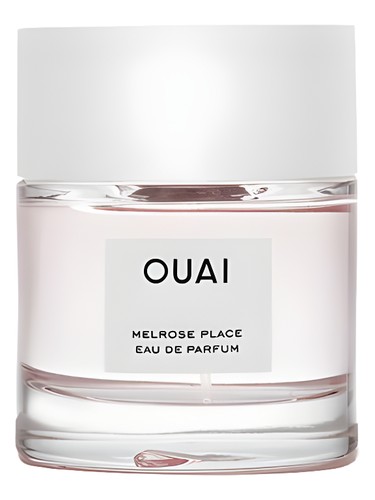
The first spray of OUAI''s Melrose Place arrives with the effervescent promise of a celebration—litchi sweetness mingling with champagne bubbles and pink pepper''s gentle bite. For a fleeting moment, it''s the olfactory equivalent of golden hour on Melrose Avenue: bright, optimistic, touched with California glamour. Red berries add a juicy dimension that feels fresh and approachable, the kind of opening that makes you lean in closer. But this sparkling prelude is brief. Within minutes, the composition pivots sharply, and what emerges is something altogether different from what those fizzy top notes suggest.
This is where Melrose Place begins to reveal its true nature—and where opinions diverge dramatically. The fragrance settles into a rose-forward territory so pronounced that everything else becomes supporting cast. With floral accords registering at 100% and rose specifically at 80%, this is unabashedly, unapologetically a rose perfume that happens to contain other notes rather than a balanced floral bouquet.
The Scent Profile
The transition from top to heart happens swiftly. Those initial litchi and champagne notes, charming as they are, fade within the first thirty minutes, making way for an assertive rose that takes center stage and rarely relinquishes it. Peony and freesia attempt to soften the edges, while jasmine adds a whisper of indolic richness, but the rose remains dominant throughout the wear. Bergamot''s citrus brightness (accounting for that 33% citrus accord) flickers in and out, providing occasional relief from the floral intensity.
The promised fresh accord (62%) manifests primarily in that opening burst and through the cleaner aspects of the florals, but this isn''t the crisp, aquatic freshness of marine notes. Rather, it''s the freshness of cut flowers in a vase—dewy, living, but definitively floral.
As Melrose Place settles into its base, white musk becomes the rose''s most faithful companion. The sandalwood, cedar, and amber mentioned in the composition seem to play surprisingly muted roles. Where you might expect these woody, warm notes to ground the fragrance and provide complexity, they instead offer only a subtle backdrop. The musky accord (30%) adds a skin-like softness, but for many wearers, this is where the fragrance''s divisiveness becomes most apparent. Some find this drydown pleasant and wearable; others report that the rose-musk combination turns soapy or loses its appeal entirely.
The fruity accord (46%) remains present throughout, though never dominant enough to classify this as a fruity floral in the same vein as more fruit-forward compositions.
Character & Occasion
The data speaks clearly here: Melrose Place is a warm-weather, daytime fragrance. Spring claims 100% suitability, with summer following closely at 87%. This is emphatically not a winter scent (14%) or an evening fragrance (14% night wear). The lightness of the composition, that fresh quality, and the rose''s brightness all point to afternoon garden parties, weekend brunches, and sun-drenched errands.
The feminine classification fits the traditional floral profile, though the marketing nods toward OUAI''s signature hair care aesthetic—that effortlessly cool, Los Angeles vibe. This is theoretically a fragrance for someone who wants to smell polished without appearing to try too hard, though the rose''s intensity may actually demand more consideration than that casual approach suggests.
Those who gravitate toward rose-dominant fragrances will find themselves in familiar territory. But anyone hoping for a complex, shape-shifting composition may be surprised by how single-minded Melrose Place remains throughout its wear.
Community Verdict
With a sentiment score of 5.5/10, the Reddit fragrance community offers a decidedly mixed assessment based on 28 opinions. The overall rating of 3.89/5 from 1,162 votes suggests a broader audience finds it pleasant enough, but the community''s deeper engagement reveals significant reservations.
The primary complaint centers on that rose dominance: many describe it as overpowering with little complexity, noting that the scent profile doesn''t match the more nuanced experience suggested by online descriptions. Several reviewers specifically mention that the rose note dries down poorly on their skin, turning soapy or losing its appeal after the initial spray.
Interestingly, the most enthusiastic supporters have found alternative applications. Melrose Place performs notably well in haircare and home fragrance contexts—sprayed on linens or used as OUAI intended, in hair. Some devotees love it enough as a signature scent that they''ve sought out dupes and copycat products, suggesting that when it works, it really works.
The consensus: check your personal rose tolerance before investing. This isn''t a fragrance that hides its dominant note or offers much evolution.
How It Compares
The comparison to Chloé Eau de Parfum makes sense—both are rose-forward feminines with that fresh, modern approach to classic florals. Chance Eau Tendre shares the fruity-floral lightness, while Flowerbomb offers a similar sweetness (though with considerably more depth and complexity). Lazy Sunday Morning by Maison Martin Margiela provides an interesting parallel in its clean, uncomplicated freshness, while Valentino Donna Born In Roma shares that contemporary take on traditional femininity.
Within this group, Melrose Place positions itself as perhaps the most straightforward and least complex—which could be either a virtue or a limitation, depending on what you seek.
The Bottom Line
OUAI''s Melrose Place succeeds at being exactly what it is: a rose-dominant, fresh floral designed for daytime wear in warm weather. The 3.89 rating reflects this honesty—it''s a competent execution of a specific idea rather than a groundbreaking composition. At an accessible price point from a brand known primarily for hair care, it offers reasonable value for those who know they love rose.
But the community data suggests caution. This is not a safe blind buy unless you already know you adore rose-heavy fragrances and prefer linear scents to complex evolution. Consider it seriously for hair and fabric applications, where the rose intensity and quick drydown might actually be advantages. As a skin fragrance, try before you commit—your skin chemistry''s relationship with rose will determine whether Melrose Place becomes a sunny-day staple or a disappointment that doesn''t match the champagne promise of its opening.
AI-generated editorial review