First Impressions
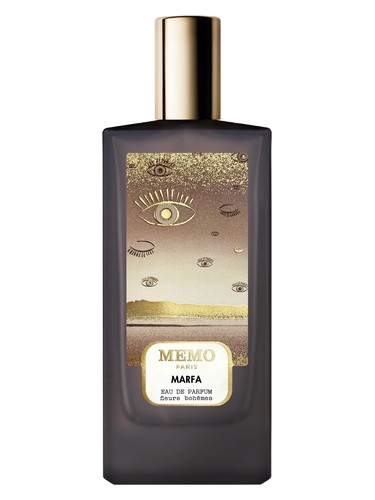
The first spray of Marfa whisks you away with a sunny contradiction: the succulence of ripe peach mingling with bright mandarin, like biting into fruit at a desert oasis. This opening feels deliberately deceptive—fruity and approachable, almost innocent—before the fragrance reveals its true intention. Within minutes, that fruity veil parts to expose a lush white floral garden, improbably blooming in the arid West Texas landscape that inspired its name. The tuberose arrives not as a whisper but as a statement, transforming this seemingly light introduction into something far more indulgent and complex.
The Scent Profile
Marfa''s evolution is a study in contrasts, beginning with that juicy peach and mandarin duo that reads more like a prelude than a proper act. These citrus and stone fruit notes provide just enough sweetness and radiance to prepare you for what''s coming, but they don''t linger long. The heart is where Marfa stakes its claim as a white floral powerhouse, with tuberose taking center stage in an unabashed display of creamy, heady floralcy.
The tuberose here is cushioned by ylang ylang''s banana-like sweetness and orange blossom''s honeyed facets, creating a triumvirate of white flowers that reads simultaneously vintage and contemporary. There''s a richness to this composition that borders on intoxicating—the kind of dense, full-bodied florals that filled perfume bottles in the golden age of perfumery, yet rendered with modern sweetness that keeps it from feeling dated.
As Marfa settles into its base, the sweetness intensifies rather than dissipates. Vanilla bean and tonka bean form a gourmand foundation that adds almost dessert-like qualities, while sandalwood and cedarwood provide just enough woody structure to prevent the composition from becoming cloying. Musk rounds everything out with soft, skin-like warmth. The result is a powdery, enveloping drydown that maintains that sweet-floral character for hours, creating a scent trail that''s both comforting and conspicuous.
Character & Occasion
With nearly perfect marks for both fall and spring wear, Marfa proves itself a versatile player across three-season territory. Its 99% spring rating makes perfect sense—those white florals capture the essence of gardens in full bloom—while its equally high fall score speaks to the vanilla-tonka warmth that provides cozy comfort when temperatures drop. Even summer, at 74%, is viable territory, though the sweetness might feel heavy in oppressive heat. Winter, at 69%, is less ideal but certainly wearable if you gravitate toward softer, less spicy cold-weather scents.
The day-to-night split (99% day versus 69% night) reveals Marfa''s true personality: this is fundamentally a daytime fragrance, despite its richness. There''s an approachability to its sweetness, a sunniness beneath the white floral intensity that makes it feel more appropriate for brunch than nightclub. That said, the 69% night rating suggests it can transition to evening occasions—perhaps dinner dates or cultural events where you want to project warmth without full-on seduction.
Marketed as feminine, Marfa''s tuberose-vanilla axis certainly leans traditional in its gender presentation, though the woody base notes provide enough grounding that adventurous wearers of any gender might find appeal here.
Community Verdict
Here''s where Marfa becomes intriguing: it''s conspicuously absent from the broader fragrance community conversations captured in recent discussions. Despite its respectable 3.92 out of 5 rating from 4,613 voters—a substantial sample size that suggests solid approval—Marfa doesn''t appear to generate the passionate discourse that other white florals or Memo Paris releases inspire. This silence is telling. It suggests a fragrance that satisfies without provoking strong reactions, that performs competently without becoming anyone''s signature obsession or divisive talking point.
The mixed sentiment score of 5.5 out of 10 from community analysis reinforces this middle-ground position. Marfa seems to be a fragrance that splits opinion quietly: some find it pleasant and wearable, others perhaps find it unremarkable or too sweet. Without specific pros and cons emerging from community discussions, we can infer that Marfa occupies that challenging space of being "nice" without being necessary—a fate that befalls many technically well-crafted perfumes in an oversaturated market.
How It Compares
The similar fragrances list reads like a who''s who of modern feminine blockbusters: Kilian''s Love Don''t Be Shy, Narciso Rodriguez For Her, Chanel''s Coco Mademoiselle, Dior''s Hypnotic Poison, and Tom Ford''s Black Orchid. What unites these seemingly disparate scents with Marfa is their shared foundation in sweetness and florals, though each takes dramatically different approaches. Where Love Don''t Be Shy amplifies marshmallow sweetness, and Black Orchid goes dark and gothic, Marfa occupies a sunnier, more straightforward middle path—sweeter than Narciso Rodriguez, less complex than Black Orchid, more floral than Hypnotic Poison.
The Bottom Line
Marfa delivers exactly what its note pyramid promises: a sweet, tuberose-heavy white floral with vanilla warmth and woody support. At 3.92 out of 5 stars, it''s well-liked but not beloved—a distinction that matters in a market where truly exceptional fragrances regularly score above 4.0. This is a safe choice for those who love white florals and aren''t afraid of sweetness, and its seasonal versatility makes it practical for year-round wear.
However, the lack of community buzz suggests Marfa struggles to distinguish itself in a crowded category. When compared to its similar fragrances—many of which have achieved cult status—Marfa feels pleasant but not particularly memorable. If you''re drawn to the Texan desert inspiration and love Memo Paris''s approach to storytelling through scent, Marfa deserves a test. But if you''re seeking a signature white floral, you might find more personality elsewhere in that stellar comparison list.
AI-generated editorial review