First Impressions
Natura''s Luna arrives with promise—a name that evokes nocturnal mystery and celestial romance. The first spray delivers an immediate rose presence, unapologetically bold and commanding attention from the opening moment. This isn''t a shy, dewy rose discovered in a garden at dawn; it''s a full-throated floral declaration backed by a citrus brigade of Italian mandarin and a fruit basket that reads like a summer market inventory: apple, peach, plum, red fruits. Pink pepper adds a fashionable contemporary edge, while CO2 extracts suggest a commitment to aromatic authenticity. On paper, Luna positions itself as a modern fruity-floral with serious credentials. The reality, however, proves far more complex—and contentious.
The Scent Profile
Luna''s composition unfolds with rose dominating at 100% of its accord profile, making this fundamentally a rose fragrance wearing a fruity disguise. The top notes burst forth with Italian mandarin leading a procession of red fruits, apple, peach, and plum, all lifted by the subtle heat of pink pepper. The CO2 extracts promise sharp, naturalistic clarity to these opening moments, creating an effervescent introduction that should sparkle with optimism.
As the fragrance settles, the heart reveals Luna''s true ambitions: a luxurious rose bouquet constructed from both rose oil and specifically Turkish rose oil, layered with jasmine sambac and Egyptian jasmine. Tunisian neroli adds citrus-floral brightness while violet contributes a powdery softness. This is clearly where Natura invested their creative energy—a multi-faceted floral core with geographic specificity suggesting quality sourcing.
The base grounds this floral extravagance with patchouli and cedar providing woody structure (83% woody accord), while musk, vanilla, amber, and maltol create a sweet (71% sweet accord), enveloping foundation. More CO2 extracts appear here, theoretically delivering cleaner, more vibrant base notes than traditional extraction methods.
The dominant accords tell the technical story: rose reigns supreme, followed by citrus at 96%, fruity at 87%, and woody at 83%. White floral notes contribute 69% to the overall impression, creating a fragrance that should theoretically deliver a bright, rosy, fruit-forward experience with substantial woody support.
Character & Occasion
The seasonal data positions Luna squarely as a spring fragrance, with 88% suitability during those transitional months when fresh florals feel most natural. Summer follows at 62%, suggesting the citrus and fruity elements provide enough brightness for warmer weather, while fall registers 57%—the woody and sweet base notes likely carry it into cooler temperatures. Winter, at 34%, is clearly not Luna''s natural habitat.
The day/night breakdown is unambiguous: this is a daytime fragrance at 100%, dropping to 44% for evening wear. Luna wants to be worn in sunlight, perhaps for casual daytime occasions, weekend brunches, or afternoon meetings where approachability matters more than seduction.
As a feminine fragrance from 2014, Luna represents that era''s continuation of fruity-floral dominance in women''s perfumery, offering a formula that should feel familiar to anyone who grew up wearing mainstream floral fragrances.
Community Verdict
Here''s where Luna''s story takes a dramatic turn. Despite a respectable 4/5 rating from 2015 votes on the main platform, the Reddit r/fragrance community tells a starkly different story, delivering a negative sentiment score of just 3.5/10 across 22 opinions.
The disconnect is striking: multiple community members report that Luna smells nothing like its advertised notes. Instead of the promised fruity-floral bouquet, some detect peanut notes, while others identify clove or pepper as dominant—not the pink pepper listed in the top notes, but something more assertive and unexpected. This discrepancy between expectation and reality has elevated Luna to cautionary tale status within the community, frequently cited as evidence against blind buying.
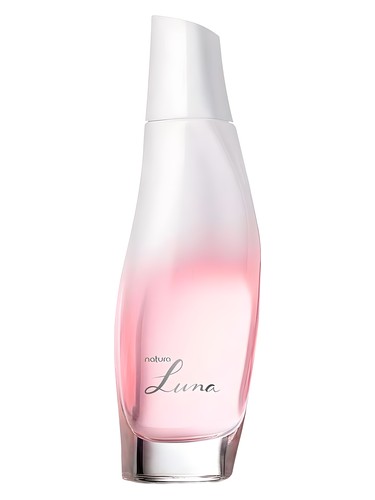
The pros are modest: the bottle design receives praise for its uniqueness, the price point remains accessible, and some find it inoffensive if unremarkable. But the cons overwhelm these modest virtues: disappointing performance, generic execution, and most damning, a scent profile that diverges wildly from what the notes pyramid suggests.
The community recommendation? Sample before committing, if you bother at all. Luna represents for many a profound fragrance disappointment—the gap between paper promise and liquid reality made manifest.
How It Compares
Natura''s own portfolio offers several companions and alternatives: Una Artisan by Natura presumably shares DNA, while Luna Intenso offers a more concentrated interpretation. Essencial Feminino and Ilía represent other directions within the brand''s feminine range. O Boticário''s Floratta in Rose suggests that other Brazilian beauty brands were mining similar rosy-fruity territory during this period.
Within the broader fruity-floral category, Luna competes in a crowded field where differentiation proves challenging. The community''s reaction suggests it fails to carve out a distinctive identity, instead falling into generic territory despite its impressive-looking notes list.
The Bottom Line
Luna presents a genuine paradox. With 2015 votes averaging 4/5, clearly many find this fragrance satisfactory or better. Yet the engaged community feedback reveals significant dissatisfaction, citing a fundamental disconnect between promise and delivery.
The truth likely lies somewhere between these poles. Luna is an affordable rose-citrus-fruity fragrance designed for daytime spring wear—a safe, approachable option for those seeking uncomplicated femininity. But for those expecting the specific notes advertised, or hoping for distinctive character, Luna disappoints.
If you''re drawn to rose fragrances with fruit and citrus support, and you have access to Natura products, sample Luna with tempered expectations. Appreciate it for what it delivers rather than what it promises. At this price point, it may charm as an easy-wearing daytime option. Just don''t expect the moon—despite the name.
AI-generated editorial review