First Impressions
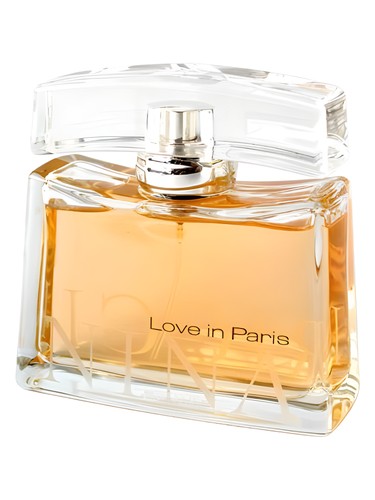
The first spray of Love in Paris feels like biting into a perfectly ripe peach at a Parisian farmers market—juice running down your fingers, flowers blooming from nearby stalls, the air sweet with possibility. This is Nina Ricci''s 2004 declaration of unabashed femininity, and it announces itself with zero subtlety. The opening is an explosion of orchard fruits: peach leads the charge, followed closely by pear and an unmistakable whisper of banana that walks a tightrope between charming and polarizing. Bergamot provides citrus brightness, while star anise adds an unexpected twist—a hint of licorice that keeps this fruit basket from veering into simple sweetness. Rose and peony float through this opening act, foreshadowing the floral heart to come. It''s exuberant, youthful, and utterly unapologetic about its love affair with fruitiness.
The Scent Profile
Love in Paris constructs its personality through three distinct phases, each one softening the intensity of what came before. The top notes are dominated by that lush peach-pear-banana trilogy, a combination that reads as decidedly fruity rather than photorealistic. This isn''t the dried-fruit sophistication of niche perfumery; it''s bright, almost candy-like in its interpretation. The star anise weaves through, creating an aromatic counterpoint that prevents the opening from becoming one-dimensional. Bergamot adds necessary sparkle, while rose petals begin their slow unfurling.
As the fruit recedes—usually within 15 to 20 minutes—the heart reveals its floral intentions. Apricot joins the composition here, extending the fruity theme while introducing a velvet-soft quality. Jasmine and violet bring classic floral femininity, their delicate sweetness merging seamlessly with the lingering peach notes. The anise reappears, now softer and more integrated, adding depth to what could otherwise be a straightforward floral bouquet. This is where Love in Paris shows its most balanced face: the interplay between stone fruit and white florals creates something genuinely pretty, a harmony of sweetness and softness.
The base is where many fruit-forward fragrances falter, but Love in Paris manages a graceful landing. Musk provides the expected soft skin effect, while woodsy notes—subtle and undefined—offer just enough structure to ground the composition. Don''t expect dramatic cedar or sandalwood declarations; these woods whisper rather than shout. The powdery quality that characterizes the dry down comes from the combination of violet, musk, and residual floral sweetness. It''s clean, understated, and remarkably wearable, even if it lacks the complexity that keeps you returning for another sniff.
Character & Occasion
The community has spoken definitively about Love in Paris: this is a daytime fragrance designed for warmer weather transitions. With spring claiming 85% preference and fall following at 69%, it''s clear this scent thrives in moderate temperatures when its fruity sweetness won''t feel overwhelming. Summer shows only 35% approval—likely because the intensity of fruit in heat can become cloying. Winter sits at a modest 40%, perhaps for those who want a reminder of warmer days.
The day versus night breakdown is even more telling: 100% day, just 32% night. Love in Paris is unequivocally a sunshine perfume. It''s for coffee dates, office environments where you want to smell pleasant but not provocative, weekend brunches, spring shopping trips. The sweetness and fruit-forward nature lack the sophistication typically desired for evening wear, and the sillage—moderate at best—won''t command attention in dimly lit spaces.
This is a fragrance for someone who embraces femininity without irony. It skews young, though not exclusively so. If you''re drawn to cheerful, uncomplicated scents that prioritize likability over artistic statement, Love in Paris will feel like a friendly embrace.
Community Verdict
With a rating of 3.81 out of 5 from 3,495 voters, Love in Paris sits comfortably in "very good" territory without approaching masterpiece status. This is a respectable showing that suggests widespread appreciation tempered by some reservations. The fragrance clearly has its fans—nearly 3,500 people took time to rate it—but it''s not inspiring the passionate devotion that pushes ratings above 4.0. The polarizing banana note likely accounts for some of the lower scores, as does the overall sweetness level, which won''t appeal to those seeking sophisticated or complex compositions.
How It Comparisons
Nina Ricci positions Love in Paris among some serious company. The similar fragrances list reads like a greatest hits of accessible luxury: J''adore by Dior, Chloé Eau de Parfum, Eclat d''Arpège by Lanvin, Noa by Cacharel, and Miracle by Lancôme. What''s notable is that Love in Paris is fruitier and sweeter than most of these comparisons. Where J''adore emphasizes floral sophistication and Chloé leans into powdery rose elegance, Love in Paris commits fully to its fruit-forward identity. It''s less refined than these counterparts but also more immediately cheerful—a trade-off that will appeal to some and disappoint others. Among this group, it''s the most casual, the least concerned with gravitas.
The Bottom Line
Love in Paris succeeds at exactly what it sets out to do: deliver an accessible, likable, fruit-drenched floral for daytime wear. At nearly two decades old, it holds up as a solid representation of mid-2000s perfumery trends—sweet, friendly, unchallenging. The 3.81 rating reflects its quality accurately: this is a well-made fragrance that many people enjoy without considering it exceptional.
Should you try it? If you love fruity florals and aren''t put off by prominent peach and banana notes, absolutely. It''s perfect for building a rotation of spring and fall daytime scents. However, if you prefer woody sophistication, evening drama, or minimalist compositions, your money is better spent elsewhere. Love in Paris knows its lane and stays firmly within it—which is both its greatest strength and its ultimate limitation.
AI-generated editorial review