First Impressions
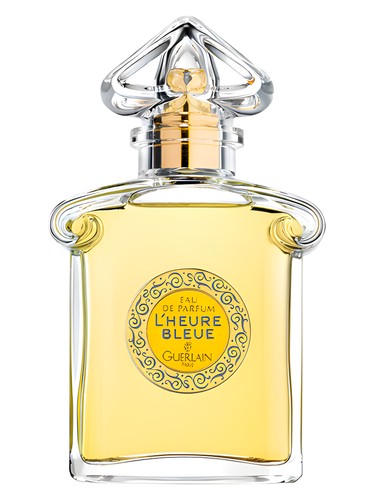
The first spray of L''Heure Bleue is like stepping into a Parisian twilight circa 1912—that suspended moment the French call "l''heure bleue," when the sun has set but night has not yet claimed the sky. There''s an immediate burst of brightness: anise and bergamot dance with neroli and a whisper of coriander, creating an opening that feels both vintage and surprisingly wearable. This isn''t the bracing citrus of modern fragrances; it''s softer, more contemplative, like light filtered through gauze. Within moments, something else emerges—a powdery sweetness that feels inevitable, like watching dusk settle over the city.
Jacques Guerlain created this fragrance over a century ago, and it shows. Not in any dated or fusty way, but in its unapologetic romanticism, its willingness to be tender and melancholic without irony. This is a fragrance that knows what it wants to say and says it beautifully.
The Scent Profile
The opening quartet of anise, neroli, coriander, bergamot, and lemon creates an aromatic-citrus prelude that feels almost herbal. The anise brings a gentle licorice quality that might initially surprise—it''s not sweet candy, but rather a sophisticated, slightly medicinal touch that adds complexity. This phase is brief, a overture lasting perhaps fifteen minutes before the true spectacle begins.
The heart is where L''Heure Bleue reveals its lavish character. This is an extraordinarily generous floral composition: heliotrope and violet form the emotional core, creating that signature powdery softness that defines the fragrance. But they''re surrounded by a supporting cast that would make any perfumer envious—carnation adds spicy warmth, Bulgarian rose and jasmine bring classic floral richness, while tuberose, orchid, and ylang-ylang contribute creamy depth. Cloves appear as punctuation marks, little sparks of warmth throughout. The neroli from the opening lingers here too, bridging the composition.
What''s remarkable is how these florals never feel heavy or grandmotherly despite the complexity. The heliotrope and violet create an almost almond-like softness, a dusting of face powder and marzipan that feels intimate rather than overwhelming.
The base is pure Guerlain mastery. Iris reinforces that powdery quality while adding a subtle rootiness, a touch of earth beneath all that prettiness. Vanilla and tonka bean bring sweetness without being cloying, while benzoin adds a resinous warmth. Sandalwood, musk, and vetiver provide structure, keeping the composition from floating away entirely into abstraction. This is where L''Heure Bleue settles for hours—soft, warm, slightly woody, utterly comfortable.
Character & Occasion
The community data tells a clear story: this is overwhelmingly a fall and winter fragrance, scoring 96% and 84% respectively in seasonal preference. It makes perfect sense. That powdery-floral-vanilla character feels made for cooler weather, for cashmere scarves and twilit walks. Spring sees 52% approval, and summer drops to just 33%—this is not a fragrance that loves heat, and heat doesn''t love it back.
The day-versus-night split is fascinating: 72% during the day, but a perfect 100% for evening wear. L''Heure Bleue is that rare fragrance that transitions beautifully from afternoon to midnight. It''s demure enough for daytime, perhaps for a museum visit or lunch at a quiet bistro, but it absolutely shines after dark. This is a date-night fragrance, a theater fragrance, a fragrance for moments that deserve to be remembered.
Who is it for? Despite being marketed as feminine, L''Heure Bleue transcends strict gender categories in the way many vintage fragrances do. It''s for those who appreciate perfumery as art, who aren''t afraid of something unabashedly romantic and slightly melancholic. It''s not for minimalists or those who prefer fresh, sporty scents. This is maximalism done with restraint, complexity rendered wearable.
Community Verdict
With a rating of 4.28 out of 5 based on 5,391 votes, L''Heure Bleue stands as one of the most beloved fragrances in the Guerlain pantheon—and that''s saying something given the house''s legendary status. This rating, collected across a substantial sample size, suggests broad appreciation that crosses generational and stylistic boundaries.
What''s particularly impressive is maintaining this rating for a fragrance that''s over 110 years old and decidedly uncommercial by contemporary standards. The dominant powdery accord (rated at 100%) could easily alienate modern wearers accustomed to fresher compositions, yet the love persists. This is a fragrance that has earned its classic status through sheer quality and distinctiveness.
How It Compares
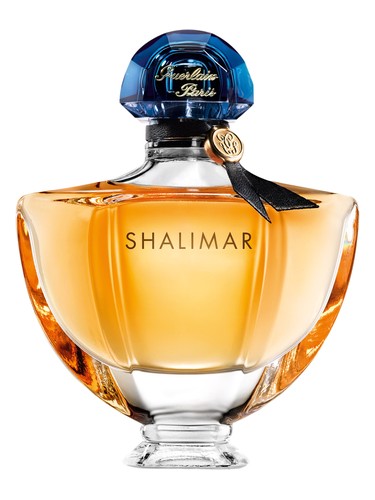
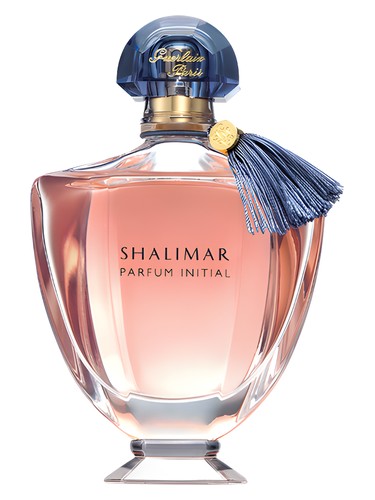
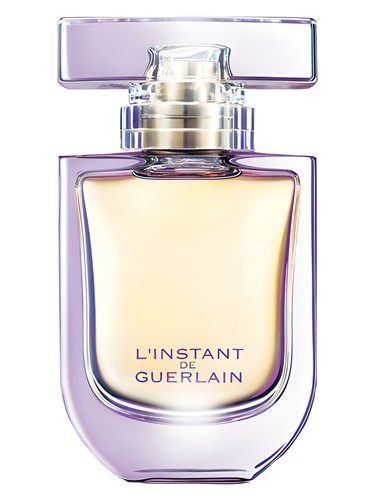
The similarity matches reveal L''Heure Bleue''s position within a family of sophisticated, complex fragrances. Guerlain''s own Samsara, L''Instant, and Shalimar Parfum Initial share genetic material—that house style of plush florals and rich bases. Cacharel''s LouLou and Chanel''s Coco Eau de Parfum occupy similar territory: unapologetically feminine, vintage in spirit if not always in actual age, built on quality ingredients rather than focus-group appeal.
Where L''Heure Bleue distinguishes itself is in that violet-heliotrope-iris triumvirate that creates its signature powdery softness. While Shalimar goes heavier on vanilla and amber, and Coco emphasizes spice, L''Heure Bleue maintains a more delicate balance—it''s the most wistful of this group, the most tender.
The Bottom Line
L''Heure Bleue Eau de Parfum is a masterpiece that has aged gracefully into its second century. That 4.28 rating from over five thousand voters isn''t nostalgia talking—it''s recognition of a fragrance that does something specific and does it exceptionally well. Yes, it''s expensive, but this is Guerlain at their finest, and quality of this caliber commands appropriate pricing.
Is it for everyone? Absolutely not. If your fragrance wardrobe consists entirely of fresh citrus and clean musks, this will feel like a foreign language. But if you''re ready to explore what powdery-floral perfumery can be at its absolute peak, if you want something that feels like wearing a piece of perfume history without smelling like a museum piece, L''Heure Bleue deserves a place on your skin. Test it in fall or winter, give it time to develop, and let yourself sink into that blue hour. Some moments—and some fragrances—are worth lingering in.
AI-generated editorial review