First Impressions
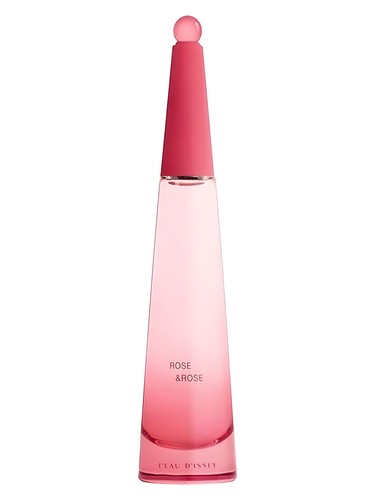
The first spritz of L''Eau d''Issey Rose & Rose defies every expectation of what a rose fragrance should be. Instead of opening with the solemn, powdery grace of traditional florals, it announces itself with an exuberant burst of raspberry that feels almost effervescent. The pear adds a watery, translucent sweetness while pink pepper provides the slightest tingle—a whisper of spice that keeps the fruit from veering into dessert territory. This is Issey Miyake''s 2019 interpretation of rose, and it''s clear from the first moment that tradition has been gleefully rewritten.
What strikes you immediately is how the fragrance prioritizes joy over sophistication, brightness over depth. The fruit doesn''t simply complement the rose—it practically engulfs it, creating a composition where the floral is filtered through a prism of berry-stained sweetness. It''s playful without being juvenile, fresh without being simplistic.
The Scent Profile
The opening act belongs entirely to the fruit. Raspberry dominates with an almost jammy intensity, its tartness softened by the gentle, nectarous quality of pear. Together, they create a juicy, succulent introduction that feels more like biting into perfectly ripe fruit than applying perfume. The pink pepper adds texture rather than heat—tiny pinpricks of spice that lift the composition and prevent it from settling into flatness. This top note phase is brief but memorable, a burst of unabashed sweetness that sets the tone for everything to follow.
As the fruit begins to recede, the heart reveals itself with surprising nuance. Bulgarian rose emerges alongside a general rose accord, creating a doubled-down floral effect that justifies the "Rose & Rose" name. But this isn''t the deep, velvety rose of classic perfumery. Instead, it arrives tinted pink from its journey through that fruity opening, retaining a candied, almost crystallized quality. The osmanthus adds a peachy-apricot dimension that bridges the gap between the berry-laden top and the floral heart, creating a seamless transition that feels more like a gradient than distinct phases.
The base notes provide necessary grounding to what could otherwise float away in pure sweetness. Cashmere wood brings a soft, musky foundation—not aggressively woody, but more like the suggestion of structure beneath silk. Amber adds warmth without heaviness, while patchouli (likely in a cleaned-up, modern interpretation) offers a subtle earthiness that reminds you this is still perfume, not fruit salad. These base notes never dominate; they simply catch the sweeter elements and give them somewhere to land.
Character & Occasion
This is unequivocally a spring fragrance, and the community data confirms it with a perfect 100% seasonal rating for that time of year. It captures that feeling of gardens coming back to life, of fruit trees blossoming, of temperatures warm enough to wear something light and joyful. Summer follows closely at 63%—the fruity brightness and relatively uncomplicated composition make it entirely suitable for warm weather when heavier florals would suffocate.
The day-to-night data tells an even clearer story: 93% day versus a mere 29% night. This is a fragrance for sunlight, for outdoor cafés and weekend errands, for feeling effortlessly put-together during daytime activities. It lacks the depth and mystery typically associated with evening wear, and that''s not a criticism—it''s simply knowing its lane and staying in it beautifully.
Who is this for? The woman who wants floral sophistication but doesn''t want to smell like her grandmother''s powder compact. The rose lover who''s grown tired of the same old interpretation. Anyone seeking a fragrance that feels feminine without being dated, sweet without being cloying, approachable without being forgettable.
Community Verdict
With a solid 3.9 out of 5 stars from 698 votes, L''Eau d''Issey Rose & Rose has found its audience without necessarily converting everyone who tries it. This rating suggests a fragrance that does what it promises very well, even if what it promises isn''t universally appealing. It''s not reaching for the experimental heights that might earn a 4.5+ rating from adventurous perfume collectors, nor is it falling into the generic trap that would sink it below 3.5.
The substantial vote count indicates this isn''t a niche obscurity—it''s been tried and evaluated by a meaningful cross-section of fragrance wearers who''ve formed clear opinions. That it maintains its rating above the "like it" threshold speaks to its quality and wearability, even if it doesn''t inspire the passionate devotion reserved for true masterpieces.
How It Compares
The fragrance finds itself in distinguished company among modern feminine blockbusters. Its similarity to Lancôme''s Idôle and La Nuit Trésor, Giorgio Armani''s Si, Chloé''s signature Eau de Parfum, and Chanel''s Chance Eau Tendre places it firmly in the contemporary floral category that balances accessibility with quality. These are fragrances designed to please rather than challenge, to complement rather than dominate.
Where L''Eau d''Issey Rose & Rose distinguishes itself is in its commitment to that fruity opening—the raspberry-pear combination is more pronounced than most of its peers, giving it a juicier, more overtly sweet character. It''s less powdery than Si, less ambery than La Nuit Trésor, and more directly floral than Chance Eau Tendre''s citrus-forward approach.
The Bottom Line
L''Eau d''Issey Rose & Rose is a well-executed modern floral that knows exactly what it wants to be. It''s not pushing boundaries or redefining categories, but it''s delivering a wearable, pleasant, decidedly optimistic take on rose that skews younger and fruitier than traditional interpretations. The 3.9 rating feels accurate—this is a fragrance that does its job very well without necessarily being anyone''s desert-island scent.
For someone seeking an everyday spring and summer fragrance with enough character to feel like a choice rather than a default, this deserves serious consideration. It''s particularly worth exploring if you''ve historically found rose fragrances too mature or heavy, or if you''re drawn to that sweet spot where fruit and florals achieve genuine harmony. Just don''t expect it to transform by nightfall or carry you through winter—this rose blooms best in daylight.
AI-generated editorial review