First Impressions
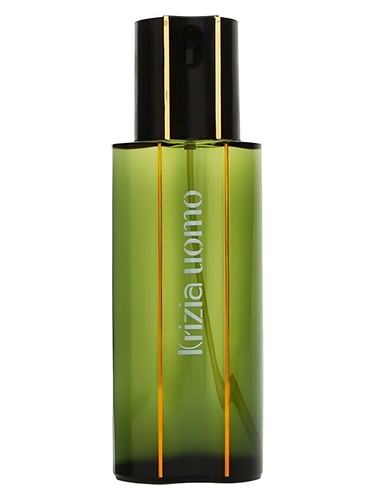
The first spray of Krizia Uomo announces itself with a curious contradiction: bright citrus aldehydes colliding with the green bite of juniper and artemisia, creating an opening that feels both polished and wild. There''s an immediate herbaceous quality—basil adding a culinary edge—while lemon and mandarin orange attempt to soften the aromatic intensity. It''s a distinctly 1984 greeting, when masculine fragrances weren''t afraid to layer complexity from the start, letting aldehydes amplify rather than smooth the rough edges of botanical ingredients.
This is not a fragrance that whispers. It projects the confidence of its era, bringing that characteristic 80s boldness where woody and aromatic elements dominate at 100% and 95% intensity respectively. The fresh spicy accord (50%) adds snap to the proceedings, while earthy and herbal undertones (33% and 28%) ground what could otherwise veer into cologne territory.
The Scent Profile
As Krizia Uomo settles into its heart, the composition reveals its true character: this is a forest in a bottle, though whether you''re experiencing the original vision depends entirely on which version has found its way to your skin.
The middle phase brings forward pine tree needles as a signature element, flanked by cedar and sandalwood that create a resinous, slightly dry woodiness. It''s here that the fragrance earns its reputation among pine enthusiasts—that specific evergreen quality that defined a particular strand of 80s masculines. Carnation adds a subtle spiciness, while geranium and jasmine provide just enough florality to prevent the composition from becoming one-dimensional. Cyclamen contributes a delicate, almost aqueous freshness that keeps the woods from feeling too heavy.
The base is where the reformulation debate becomes impossible to ignore. The notes list promises oakmoss, vetiver, leather, patchouli, and musk—a classic chypre-adjacent foundation that should deliver earthy depth and vintage swagger. In theory, this base should provide the warm, slightly animalic backbone that made 80s masculines so distinctive. The woody accord maintains its dominance here, supported by that 33% earthy presence and subtle warm spicy notes (26%) that create a lingering finish.
Character & Occasion
The seasonal data tells a clear story: Krizia Uomo is an autumn and winter stalwart (100% and 83% respectively), with enough versatility for spring wear (77%) but less suited to summer heat (43%). This makes intuitive sense—those pine and cedar notes find their natural habitat in cooler weather, evoking walks through coniferous forests when the air carries a crisp bite.
Interestingly, this fragrance skews heavily toward daytime wear (98%) while maintaining reasonable evening versatility (74%). It''s the kind of scent that works for the office, casual weekends, and outdoor activities without feeling too formal or too relaxed. The aromatic freshness keeps it appropriate for professional settings, while the woody depth prevents it from reading as purely utilitarian.
This is a masculine fragrance in the traditional sense—unapologetically so—designed for those who appreciate classic woody aromatics without the sweetness or synthetic intensity of modern designer masculines.
Community Verdict
Here''s where things get complicated. With a rating of 4.31 out of 5 from 362 votes, Krizia Uomo appears to be well-loved. But the community sentiment tells a more nuanced story, clocking in at a mixed 5.5 out of 10.
The praise centers on the vintage formulation: collectors speak reverently of the original 80s version, particularly its authentic forest and pine character. Some users have found creative uses for it as a layering component, adding that evergreen quality to other fragrances. The pros are clear: when you find a genuine vintage bottle, you''re experiencing a well-regarded piece of fragrance history.
The cons are significant and unavoidable: heavy reformulation has allegedly stripped away key ingredients including oakmoss, sandalwood, leather, and musk—precisely the notes that should provide the base''s character. Community members report that current versions may be counterfeit or so different from the original that they''re essentially unrecognizable. The hunt for authentic vintage bottles has become part of the Krizia Uomo experience, for better or worse.
The consensus? Seek vintage bottles from trusted secondary markets rather than risking disappointment with current retail versions. This positions Krizia Uomo less as an active recommendation and more as a cautionary tale about reformulation''s impact on classic fragrances.
How It Compares
Krizia Uomo sits alongside heavyweights like Tsar by Van Cleef & Arpels, Drakkar Noir by Guy Laroche, and Polo by Ralph Lauren—fragrances that defined 80s masculinity through bold woody aromatic profiles. It shares DNA with Oscar de la Renta Pour Lui and Quorum by Antonio Puig, all of them representing that particular moment when men''s fragrance favored complexity over accessibility.
Where Drakkar Noir went for fougère freshness and Polo embraced powerhouse intensity, Krizia Uomo carved out its niche with that distinctive pine-forward character. It''s perhaps less iconic than its siblings, which may explain both its reformulation struggles and its relative obscurity today.
The Bottom Line
Krizia Uomo represents a fragrance dilemma: the scent you want exists primarily in memory and vintage bottles, while the version you can easily purchase may disappoint. That 4.31 rating suggests genuine appreciation, but the mixed community sentiment (5.5/10) reflects the reality of reformulation.
If you''re a vintage collector with access to reliable secondary markets, an original Krizia Uomo offers an authentic slice of 80s woody aromatic excellence, particularly if you love pine-forward compositions. For layering enthusiasts, even newer versions might provide that specific forest note you''re seeking at bargain prices.
For everyone else? Manage expectations carefully. This isn''t a fragrance you blind-buy from current retail stock. Instead, consider it a reminder of what''s been lost to reformulation—and perhaps a motivation to explore those similar fragrances that have maintained their integrity better over the decades.
AI-generated editorial review