First Impressions
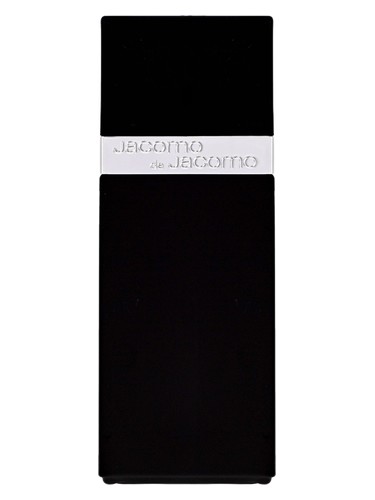
The first spray of Jacomo de Jacomo announces itself without hesitation. This is a fragrance that belongs to an era when masculines wore their intensity as a badge of honor—no apologies, no hedging toward mass appeal. What hits immediately is warmth, the kind that radiates from a well-stoked fire rather than a gentle candle flame. The dominant accord sits squarely in warm spicy territory, bringing with it a robust aromatic backbone and an underlying woodiness that suggests this scent has stories to tell. There''s an immediate sense of substance here, a density that modern releases often dilute in pursuit of versatility. This 1980 creation from Jacomo doesn''t ask for your approval; it simply exists, confident in its own skin.
The Scent Profile
Without a detailed breakdown of specific notes, Jacomo de Jacomo reveals itself primarily through its accord structure—and what a telling structure it is. The warm spicy character dominates completely, forming the backbone around which everything else arranges itself. This isn''t the clean, synthetic spice of contemporary releases but something more textured and complex, likely drawing from traditional spice cabinet ingredients that would have been fragrance staples in 1980.
The aromatic accord, weighing in at a substantial 71%, adds dimension beyond simple warmth. This suggests the presence of herbs—perhaps rosemary, basil, or lavender—that prevent the composition from becoming one-dimensional heat. These aromatics provide air and movement, lifting the spices into something more dynamic than a straight oriental approach.
Woody notes at 64% ground the composition, offering the kind of substantial base that explains this fragrance''s reported longevity. The fresh spicy element at 62% adds a different texture to the warmth—perhaps pepper or cardamom—creating contrast against the deeper, slower-burning spices.
The earthy and mossy accords, both hovering in the mid-30s percentage range, speak to classic masculine construction. These elements add a certain gravitas, an old-school masculinity that connects Jacomo de Jacomo to the great aromatic fougères and chypres of its era, even if it doesn''t fit neatly into either category.
Character & Occasion
The seasonal data tells a clear story: this is a cold-weather champion. Winter receives a perfect score, with fall close behind at 94%. Spring drops to 44%, and summer barely registers at 20%. This isn''t surprising given that warm spicy dominance—Jacomo de Jacomo needs cooler air to truly shine, where its heat becomes a comfort rather than an overwhelming presence.
The day/night split is particularly interesting. While it scores 55% for daytime wear, nighttime suitability jumps to 98%. This suggests a fragrance with enough presence and projection to hold its own in evening settings, yet versatile enough that those who prefer substantial daytime scents won''t feel overdressed. It''s the kind of masculine that works for a business dinner that extends into drinks, or a fall afternoon that transitions into evening.
This is decidedly not a safe-choice fragrance for those still finding their footing with scent. It rewards wearers who''ve already explored the territory, who understand that vintage aromatic masculines play by different rules than their modern descendants. The strong 98% night rating suggests it has the projection and sillage that made 1980s masculines notorious—in both good and challenging ways.
Community Verdict
With 925 votes yielding a 4.21 rating and Reddit sentiment scoring 7.8/10, the community clearly respects what Jacomo de Jacomo brings to the table. The praise centers on three key strengths: its unique aromatic composition featuring significant herb and floral notes that set it apart from peers; exceptional longevity and performance that punches well above its price point; and genuine vintage character that feels historically significant rather than dated.
The cons are equally instructive. This fragrance polarizes because of its strong aromatic character—it commits fully to a particular vision that won''t appeal to everyone. More tellingly, it''s explicitly noted as unsuitable for those preferring modern, fresher scent profiles. This isn''t a criticism so much as a acknowledgment of its identity. Jacomo de Jacomo doesn''t attempt to bridge eras or appeal to contemporary minimalism.
Based on 52 community opinions, the consensus points toward evening wear in cooler seasons, particularly recommended for those who appreciate classic aromatic fragrances and understand their historical context. The value proposition emerges repeatedly in discussions—this is an affordable entry point into vintage masculinity that doesn''t sacrifice quality for price.
How It Compares
The comparison set places Jacomo de Jacomo in distinguished company: Oscar de la Renta Pour Lui, Azzaro pour Homme, Drakkar Noir, Polo, and Aramis. These are the titans of 1970s-80s masculine perfumery, the references against which a generation of men defined their scent identities.
Within this group, Jacomo de Jacomo appears to occupy a middle ground—more approachable than Aramis''s leather-heavy intensity, less aquatic than Drakkar''s sharp freshness, warmer than Azzaro''s lavender brightness. It shares Polo''s woody aromatic DNA but trades some of that fragrance''s green pine notes for deeper spice.
The Bottom Line
A 4.21 rating from nearly a thousand voters represents solid approval, not quite reaching "masterpiece" status but well above "merely good." This seems appropriate for Jacomo de Jacomo—it''s an excellent expression of a particular style rather than a genre-defining landmark.
The value assessment is where this fragrance truly excels. For those seeking an education in vintage aromatic masculines without investing in increasingly expensive bottles of reformulated classics, Jacomo de Jacomo offers authentic period character at accessible prices. The reported longevity and performance mean you''re not sacrificing wearability for affordability.
Who should try it? Anyone curious about what masculine fragrance smelled like before fresh aquatics and sweet gourmands dominated the market. Those who find modern releases too polite, too focus-grouped, too safe. Cold-weather scent lovers seeking something with genuine warmth. And especially those who''ve heard stories about 1980s powerhouses but want to experience that era''s aesthetic without wearing something that''s become a cliché.
Jacomo de Jacomo won''t be everyone''s signature scent, but it deserves a place in collections that value historical perspective alongside contemporary releases.
AI-generated editorial review