First Impressions
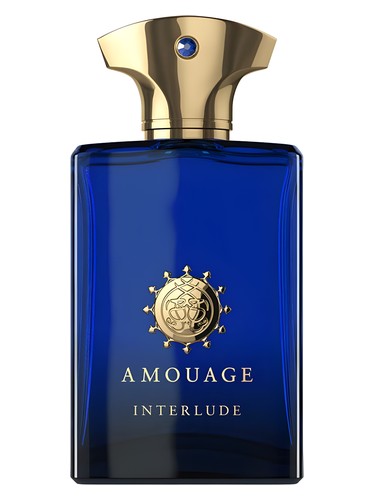
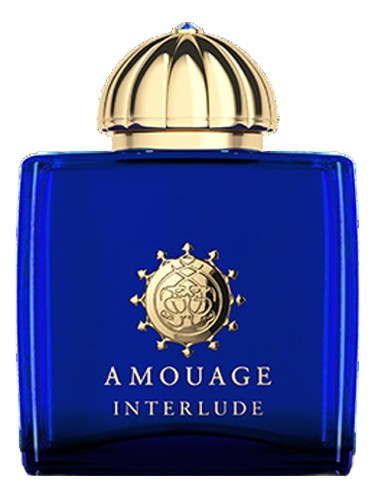
The first spray of Interlude Woman is an experience that demands preparation. This is not a fragrance that introduces itself politely—it announces its presence with the force of a golden marigold sunrise filtered through a haze of sharp ginger and citrus. The opening feels almost disorienting in its complexity: bright bergamot and tart grapefruit struggle to contain the spicy warmth that immediately radiates from your skin. Within seconds, you understand why this 2012 Amouage creation has become one of the most debated fragrances in the contemporary canon. It''s beautiful, certainly, but it''s also unapologetically intense, like standing too close to something magnificent and feeling the heat.
The Scent Profile
Interlude Woman''s architecture is nothing short of baroque. Those citrus-ginger-marigold top notes barely have time to establish themselves before the heart reveals its true ambitions—a kaleidoscopic middle phase that reads like a perfumer''s fever dream. Incense smoke curls around an unexpected walnut accord, while immortelle''s maple-like sweetness mingles with the green tang of kiwi. There''s honey, yes, and the resinous depth of opoponax, but also coffee, sandalwood, rose, orange blossom, and jasmine, all jostling for attention in what should be olfactory chaos but somehow maintains coherence.
This abundance becomes almost overwhelming. The honey-coffee-immortelle trio creates an intensely sweet, almost gourmand effect that''s tempered (barely) by the incense and woods. It''s here, in this maximalist heart, that Interlude Woman either captivates or repels. There''s no middle ground when you''re wearing this much fragrance at once.
The base extends this complexity into warmer, deeper territory. Leather and oud provide a dark, animalic foundation, while benzoin, amber, and tonka bean reinforce the sweetness that''s been present since the heart. Sandalwood appears again, joined by oakmoss, vanilla, and musk—a supporting cast that would be the main event in most fragrances but here serves to anchor an already dense composition. The dominant amber accord (registering at 100% in the fragrance''s DNA) envelops everything in a resinous, almost suffocating embrace that lingers for hours—sometimes days—on clothing.
Character & Occasion
The data tells a clear story: Interlude Woman is a cold-weather creature through and through. Its perfect season is fall (100%), with winter following closely (84%), while spring (38%) and summer (32%) wearers are brave souls indeed. This makes intuitive sense—the fragrance''s warm spicy (67%), balsamic (59%), and woody (57%) accords demand cooler temperatures to avoid becoming oppressive.
Interestingly, while 66% find it suitable for daytime wear, that number jumps to 80% for evening occasions. This suggests that Interlude Woman''s intensity feels more appropriate when the sun goes down and boldness is expected. This is special occasion territory: gallery openings on October evenings, holiday parties where making an impression matters, moments when you want your presence felt before you enter the room.
The feminine designation feels almost academic—this fragrance transcends traditional gender boundaries through sheer force of character. It''s for those who view perfume as armor rather than accessory, who understand that beauty doesn''t always mean comfortable.
Community Verdict
The fragrance community''s relationship with Interlude Woman is complicated, reflected in its moderate 6.5/10 sentiment score despite a respectable 4.01/5 star rating from 4,593 voters. This divergence tells a story: people recognize its quality while struggling with its wearability.
The praise focuses on craftsmanship. Reviewers consistently highlight the unique, complex scent profile—particularly those intriguing fruity-nutty notes—and the exceptional longevity and projection you''d expect from Amouage. The technical execution is beyond reproach.
But the criticism is equally consistent: it''s simply too much. "Extremely strong and heavy, difficult to wear all day" appears repeatedly in community discussions. The fragrance is unequivocally polarizing—you either love it or hate it, with little room for ambivalence. Most tellingly, many admit to preferring the experience of smelling it from the bottle rather than wearing it on skin, a damning assessment of its overwhelming strength.
The consensus positions Interlude Woman as something better suited to sampling and collection appreciation than daily rotation. It''s admired more than it''s worn, a museum piece that''s perhaps too precious—or too powerful—for regular life.
How It Compares
Interlude Woman sits in rarefied company. Its similar fragrances read like a greatest hits of powerhouse orientals: Chanel''s Coco, Dior''s Poison, Guerlain''s Shalimar, and fellow Amouage creations Memoir Woman and Fate Woman. These are the heavy hitters, fragrances from an era (or inspired by an era) when subtlety was considered a weakness.
Where Interlude Woman distinguishes itself is in its almost baroque maximalism—while Poison plays with a focused spice-fruit-amber accord and Shalimar perfects the vanilla-incense-citrus trinity, Interlude Woman throws everything into the mix simultaneously. It''s louder, busier, more demanding than even its formidable peers.
The Bottom Line
Interlude Woman is a fragrance that commands respect even from those who can''t wear it. Its 4.01 rating from over 4,500 voters confirms what your nose already knows: this is exceptional perfumery. But exceptional doesn''t always mean practical.
Should you try it? Absolutely—if only to experience what modern perfumery can achieve when constraints are removed. Should you buy it? That depends entirely on your tolerance for intensity and your willingness to clear a room. Sample first, generously, and give it time across multiple wearings. Some find that the beast eventually becomes manageable, even beautiful.
For those who discover they can tame it, Interlude Woman offers a wearing experience unlike anything else in contemporary fragrance. For everyone else, there''s no shame in admiring it from a distance—some beautiful things are meant to be appreciated rather than possessed.
AI-generated editorial review