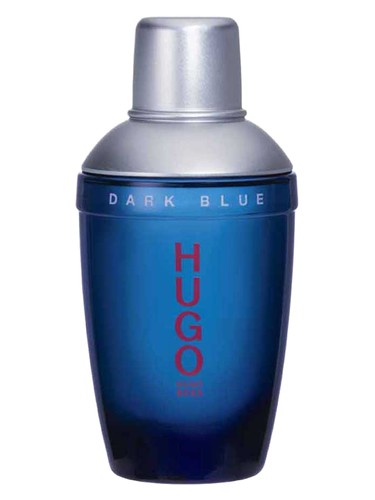
First Impressions
The first spray of Hugo Dark Blue hits like a wave breaking against sunlit rocks—immediate, invigorating, unapologetically bright. This is citrus at full volume: grapefruit leads the charge with its tart sweetness, flanked by a supporting cast of ginger, orange, lime, and lemon that creates something far more complex than your typical fresh cologne. There''s an effervescence here, a sparkling quality that feels almost carbonated against the skin. The ginger adds a subtle heat beneath the acidic brightness, hinting at the warmth that will eventually emerge. It''s the kind of opening that announces your arrival without shouting—confident, clean, and decidedly masculine in that turn-of-the-millennium way.
The Scent Profile
Hugo Dark Blue''s evolution is a masterclass in balancing freshness with substance. That citrus-heavy opening—accounting for the fragrance''s dominant accord at full intensity—doesn''t simply evaporate into nothing. Instead, it gradually yields to a heart that introduces texture and sophistication.
The transition brings cypress and cardamom into focus, with the former adding a green, slightly resinous quality while the latter contributes aromatic spice. Mahogany appears as a woody-warm presence, lending the composition a polished, almost furniture-like richness that grounds the brighter elements. Geranium and sage weave through this middle phase, the geranium offering subtle floral facets while sage maintains the aromatic freshness established at the top. This heart phase represents the fragrance''s sweet spot—where the fresh spicy and aromatic accords (both sitting at 59%) meet the emerging woody character (66%).
The base is where Hugo Dark Blue reveals its true intentions. Vanilla emerges as a smoothing agent, accounting for 28% of the overall accord structure—enough to soften the edges without turning sweet or dessert-like. Cedar and vetiver provide the woody backbone, with patchouli adding earthy depth. Benzoin contributes a gentle balsamic warmth that ties everything together. This isn''t a particularly heavy or dense base, but rather one that maintains the fragrance''s overall sense of wearability while providing enough substance to carry through the day and into evening.
Character & Occasion
The data tells a compelling story about Hugo Dark Blue''s versatility. With night wearability at 99% and day at 96%, this is that rare fragrance equally at home in the office and at dinner. The seasonal breakdown reveals a composition optimized for transitional weather—fall scores 100%, spring hits 96%—but it remains highly wearable in winter (79%) and perfectly acceptable in summer (73%).
This adaptability stems from its construction. The bright citrus opening keeps it from feeling too heavy in warm weather, while the vanilla-cedar-benzoin base provides enough warmth for cooler months. It''s the fragrance equivalent of a well-tailored blazer: appropriate almost everywhere, offensive nowhere.
The masculine classification feels accurate to its late-90s DNA, when gender distinctions in fragrance were more pronounced. Today''s wearer might find it simply fresh and woody—perfectly serviceable for anyone who appreciates clean, citrus-forward compositions with staying power. It skews slightly mature, perhaps best suited for men in their mid-twenties and beyond, though certainly not off-limits to younger wearers who prefer their scents structured rather than experimental.
Community Verdict
With 2,594 votes tallying to a 3.82 out of 5 rating, Hugo Dark Blue occupies interesting territory. This isn''t a polarizing fragrance that inspires devotion or hatred—it''s a solid performer that does exactly what it promises. The rating suggests a fragrance that''s well-liked rather than loved, competent rather than revolutionary.
That might sound like faint praise, but there''s real value in reliability. Nearly 2,600 people have weighed in, and the consensus points to a fragrance that works. No major flaws, no deal-breaking characteristics, just a well-executed citrus-woody composition that has survived a quarter-century in a notoriously fickle market.
How It Compares
The similar fragrances list reads like a who''s who of modern masculine perfumery: Terre d''Hermès, Bleu de Chanel, L''Eau d''Issey Pour Homme, and the Versace duo. What''s striking is that Hugo Dark Blue predates several of these now-iconic releases, suggesting it helped establish the template for sophisticated citrus-woody masculines that dominated the 2000s and beyond.
Compared to Terre d''Hermès'' mineral-citrus austerity or Bleu de Chanel''s polished ambery-woody refinement, Hugo Dark Blue feels more straightforward, less conceptual. It lacks the aquatic elements that define the Versace offerings and the distinctive cucumber-like freshness of L''Eau d''Issey. What it offers instead is balance—a middle path between fresh and warm, casual and dressy, youthful and mature.
The Bottom Line
Hugo Dark Blue''s 3.82 rating tells you it won''t change your life, but the 2,594 votes tell you it won''t disappoint either. This is a workhorse fragrance for someone who needs a single scent that can handle multiple scenarios without causing a second thought. The price point for Hugo Boss fragrances typically sits well below the designer elite, making this an excellent value proposition for the performance delivered.
Should you try it? If you''re building a fragrance wardrobe and need that reliable citrus-woody option that works year-round, absolutely. If you''re a collector chasing the next olfactory revelation, perhaps not—though sampling it would provide useful context for understanding how this category evolved. For someone in their first professional job, traveling light, or simply wanting a scent that garners quiet approval rather than attention, Hugo Dark Blue remains remarkably relevant twenty-five years after its release. That longevity speaks volumes in an industry obsessed with the next new thing.
AI-generated editorial review