First Impressions
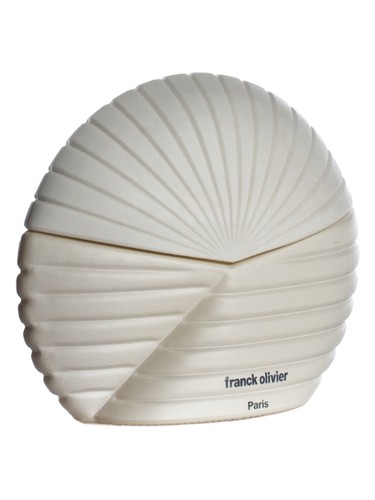
The first spray of Franck Olivier''s 1998 feminine fragrance announces itself with unabashed confidence—a juicy cascade of peach, plum, and black currant that immediately signals this isn''t a perfume for the timid. There''s a grapefruit brightness cutting through the sweetness, but make no mistake: this is a fragrance that leans fully into its fruity identity, registering at a full 100% on the fruity accord scale. It''s the olfactory equivalent of biting into a perfectly ripe peach on a summer afternoon, juice dripping down your chin, except there''s something more here—a whisper of powder and vanilla promising depth beneath that exuberant opening.
This is a scent that makes an entrance, and whether that entrance reads as captivating boldness or overwhelming sweetness depends entirely on your relationship with unabashedly fruity fragrances.
The Scent Profile
The opening quartet of peach, plum, black currant, and grapefruit creates an interesting tension. While the stone fruits and berry bring that signature ''90s fruity-floral sweetness, the grapefruit adds a citric edge that prevents the top notes from collapsing into syrupy indistinction. This is crucial, because with a 55% sweet accord rating, Franck Olivier walks a fine line between delicious and cloying.
As the fragrance settles, the heart reveals a classic late-''90s floral bouquet: ylang-ylang''s creamy exoticism, heliotrope''s almond-tinged sweetness, jasmine''s indolic richness, and rose''s romantic presence. These notes create a soft, powdery cushion (53% powdery accord) that tempers the fruit above and bridges to the warmer base below. The yellow floral aspect, though only 24% of the overall profile, adds a nostalgic quality—this is definitely a fragrance of its era, reminiscent of the opulent feminines that dominated department store counters in the late ''90s.
The base is where Franck Olivier finds its staying power. Vanilla (51% accord strength) combines with musk and sandalwood to create a sweet, woody foundation that explains why this fragrance registers 34% woody despite its overtly fruity character. The sandalwood adds a creamy, soft texture while the musk provides subtle skin-like intimacy. This base is what allows the fragrance to work across all seasons, grounding the fruit in something more substantial.
Character & Occasion
Here''s where things get interesting: despite its feminine classification and sweet profile, community feedback reveals this fragrance often "skews masculine despite sweet note descriptions." This gender ambiguity isn''t necessarily a flaw—it suggests versatility and complexity beyond the expected peach-vanilla trajectory. The data indicates this works across all seasons, which makes sense given its balanced composition: bright enough for spring and summer, warm enough for fall and winter.
The lack of specific day/night preference (both at 0%) suggests this is truly a wear-it-when-you-want-it fragrance, though its boldness and sweetness probably shine best in casual settings rather than formal professional environments. This is a scent for someone who wants to be noticed without necessarily making a statement—approachable warmth rather than intimidating sophistication.
The community identifies it as ideal for "budget-conscious fragrance buyers" seeking "casual everyday wear," and there''s wisdom in that positioning. This isn''t trying to be a special occasion masterpiece; it''s a reliable, pleasant companion that won''t break the bank.
Community Verdict
With a rating of 3.71 out of 5 from 2,099 votes, Franck Olivier sits comfortably in "solid" territory—not outstanding, but far from disappointing. The Reddit community''s mixed sentiment (5.5/10) reflects more nuanced opinions, however, based on 11 detailed reviews.
The pros are clear: users appreciate the "captivating and bold scent profile" and consistently mention "good value for price point." There''s also recognition of "wearable by multiple genders with layering potential," which aligns with that masculine-leaning observation.
The cons are equally straightforward and worth noting. Multiple reviewers mention that offerings from the brand "can smell synthetic and cheap," and there''s a recurring warning that "marketing notes can be deceiving without sampling first." This is crucial advice—what reads as a lush fruity floral on paper might wear differently on your skin, and the synthetic quality some users detect could be a dealbreaker for those accustomed to higher-end compositions.
The community emphasizes this works best for "layering with sweeter fragrances," suggesting it might serve better as a component in a fragrance wardrobe than as a standalone signature scent.
How It Compares
Franck Olivier''s similarity to powerhouse fragrances like Trésor by Lancôme, Hypnotic Poison by Dior, Dolce Vita by Dior, Poeme by Lancôme, and Poison by Dior places it firmly in that late-''90s oriental-fruity territory. These are big, unapologetic perfumes that defined an era, and Franck Olivier channels that same energy at a fraction of the price.
Where those designer fragrances might offer more refined compositions and higher-quality ingredients, Franck Olivier delivers a similar vibe for budget-conscious buyers. It''s the accessible interpretation of that opulent aesthetic—not quite as polished, but capturing the spirit.
The Bottom Line
Franck Olivier is a fragrance that requires honest expectations. At its price point, it delivers a bold, fruity-sweet experience that will appeal to those who love unabashedly feminine (or sweet-masculine) scents from the late ''90s era. The 3.71 rating reflects its solid performance: it''s well-liked by many, if not universally adored.
Should you buy it? If you''re building a fragrance collection on a budget and love fruity-vanilla compositions, absolutely—but sample first. The community''s warning about synthetic qualities and deceiving note descriptions is worth heeding. This isn''t a blind-buy fragrance unless you already know you love this style of perfume. For those who do connect with it, however, it offers excellent value and surprising versatility across seasons and genders.
AI-generated editorial review