First Impressions
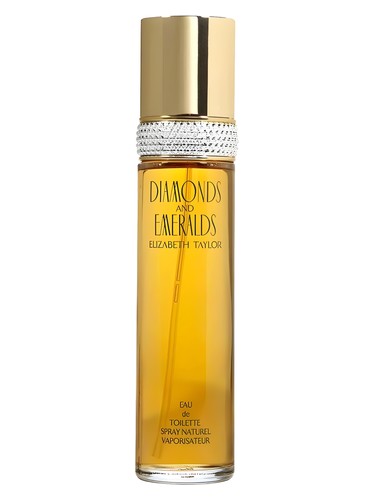
The first spray of Diamonds and Emeralds announces itself without apology. This is not a fragrance that whispers—it proclaims, opening with a heady bouquet of gardenia and white rose that feels like stepping into a conservatory at full bloom. The fruity sweetness of peach and apricot tempers what could be an overwhelming white floral assault, while a crisp note of sage adds an unexpected herbal edge. There''s something distinctly early-90s about this approach—maximalist, unabashedly feminine, and utterly confident in its excess. The hyacinth and orange blossom weave through the opening like golden threads, creating a complexity that rewards those who lean in closer.
The Scent Profile
The architecture of Diamonds and Emeralds reveals Elizabeth Taylor''s understanding that luxury means layering. Those opening notes of gardenia, peach, apricot, and hyacinth create an immediate impression of abundance, supported by orange blossom, white rose, water lily, mandarin orange, and sage. It''s a crowded stage, yet nothing feels superfluous—each element contributes to that dominant white floral accord that defines this composition at 100%.
As the fragrance settles, the heart reveals its true character. Tuberose takes center stage with the kind of creamy, narcotic presence that either captivates or overwhelms—there''s rarely middle ground with this particular white flower. Jasmine adds its indolic richness, while magnolia brings a lemony freshness that keeps the composition from becoming too heavy. Lily, carnation, lily-of-the-valley, and rose create a cathedral of florals, each contributing their voice to the choir. This is where that 28% tuberose accord becomes unmistakable, supported by the broader 49% floral character.
The base notes provide necessary grounding for all that blossoming exuberance. Vanilla and tonka bean offer sweetness without veering into gourmand territory, while amber adds warmth and depth. Musk provides the skin-like intimacy that makes white florals feel personal rather than merely decorative, and patchouli—often heavy-handed in 90s perfumery—appears with surprising restraint, contributing earthiness without dominating. The 25% animalic accord suggested in the data likely comes from this musk-patchouli combination, adding a sultry undercurrent to all those pristine white petals.
Character & Occasion
The community data reveals Diamonds and Emeralds as overwhelmingly a spring fragrance—90% approval for that season makes perfect sense given its garden-in-bloom character. Yet it''s impressively versatile, scoring 78% for fall, suggesting that its vanilla-amber base provides enough warmth to transition into cooler weather. Winter wearability at 60% speaks to its substantial presence, while summer''s 47% acknowledges what anyone wearing this in July heat would discover: this is substantial perfumery that demands moderate temperatures to truly shine.
The 100% day fragrance designation tells you this isn''t an evening seductress, despite its luxurious positioning. This is a scent for making impressions in daylight—at brunches, garden parties, spring weddings, or any occasion where you want to be noticed but not necessarily remembered as "that person wearing strong perfume." The 63% night score suggests it can certainly transition into evening, particularly in spring and fall, though it maintains its bright, fresh character rather than transforming into something darker.
This is fragrance for those who appreciate traditional femininity without irony or apology. If minimalist, skin-like scents are your preference, Diamonds and Emeralds will feel like too much. But for those who view perfume as adornment, as armor, as announcement—this delivers.
Community Verdict
With a solid 3.73 out of 5 from 1,017 votes, Diamonds and Emeralds occupies interesting territory. This isn''t the polarizing score of a challenging avant-garde composition, nor is it the near-universal acclaim of a modern classic. Instead, it suggests a fragrance that delivers exactly what it promises to those seeking its particular style, while leaving others unmoved. That substantial vote count—over a thousand reviewers for a thirty-year-old celebrity fragrance—indicates this is more than a forgotten relic. It has found its audience and kept it.
How It Compares
The similar fragrances list reads like a masterclass in opulent white florals: Givenchy''s Organza and Amarige, Grès'' Cabotine, Lancôme''s Poeme, even Mugler''s Alien. These are powerhouse compositions, each approaching white florals from different angles but sharing that unapologetic presence. Where Diamonds and Emeralds distinguishes itself is in that fruity opening—the peach and apricot add accessibility that something as monolithic as Amarige doesn''t offer. It''s perhaps closest in spirit to Organza, sharing that vanilla-warmed white floral foundation, though Diamonds and Emeralds maintains more green freshness throughout.
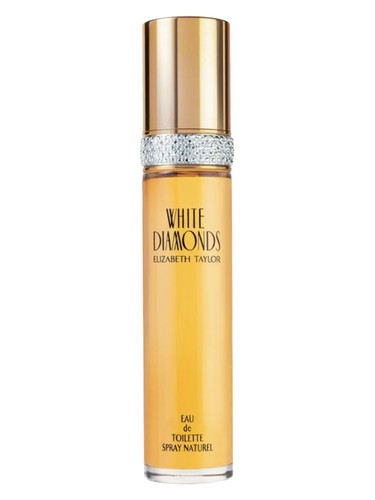
In the Elizabeth Taylor fragrance portfolio, this sits in the shadow of the mega-successful White Diamonds (1991), yet offers more complexity and evolution for those willing to explore beyond the flagship.
The Bottom Line
Diamonds and Emeralds represents 1990s perfumery at its most confidently baroque—before minimalism became aspirational, before "clean" became a marketing imperative. At its likely price point in today''s market, it offers remarkable value for anyone seeking a full-bodied white floral with genuine development and staying power. That 3.73 rating shouldn''t be read as "pretty good"—it''s "very good for those who want exactly this," and that''s a crucial distinction.
This fragrance deserves exploration if you love any of its similar scents, if you''ve been disappointed by the thinness of modern white florals, or if you''re simply curious about what confident femininity smelled like in 1993. It won''t convert white floral skeptics, but it might remind aficionados why they fell in love with the genre in the first place.
AI-generated editorial review