First Impressions
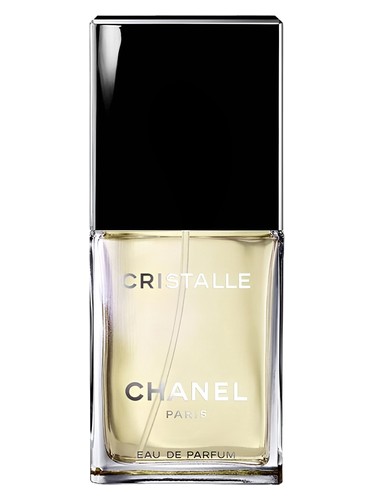
The first spray of Cristalle Eau de Parfum announces itself not with the crystalline citrus clarity its name might suggest, but with something altogether more grounded. There''s mandarin orange, yes, but it''s immediately wrapped in an earthy embrace that feels less like sunshine on glass and more like morning dew on forest floor. This is Chanel in 1993 taking its own 1974 eau de toilette and asking: what if we turned down the brightness and turned up the earth? The answer is immediately apparent—this is a fragrance that has traded sharp edges for soft moss, architectural lines for organic curves.
The Scent Profile
That opening mandarin serves as a brief, bright herald before the composition descends into its true character. The citrus isn''t particularly assertive; it''s more of a golden wash that prepares you for the heart, which arrives surprisingly quickly.
The middle phase is where Cristalle Eau de Parfum reveals its complexity. Melon and peach bring an almost gourmand fruitiness—though calling it gourmand feels wrong when everything is tempered by such restraint. The melon in particular has that honeyed, green-fleshed quality that skews fresh rather than sweet. Jasmine and ylang-ylang weave through this fruity melody, adding white floral depth without ever dominating. The florals here aren''t about grand romantic statements; they''re supporting players that add texture and a subtle indolic richness that keeps the composition from feeling too straightforward.
But the real story—the reason this fragrance scores 100% on earthiness and 83% on mossiness—happens in the base. Oakmoss and vetiver form the foundation, and they''re utterly unapologetic about it. The oakmoss brings that classical chypre DNA, all damp forest and aristocratic restraint, while vetiver adds its characteristic woody, slightly smoky, almost rooty quality. These base notes don''t wait their turn; they''re present from nearly the beginning, creating a verdant bed upon which everything else rests. The 87% woody accord rating makes perfect sense—this is a fragrance that smells like it grew from the ground rather than being composed in a laboratory.
Character & Occasion
The community data tells a clear story about when Cristalle Eau de Parfum thrives: this is quintessentially a spring fragrance (97%), perfectly suited to those transitional days when winter finally loosens its grip and the world remembers how to be green again. Summer claims 72% approval—the freshness works, though perhaps the earthy depth feels slightly heavy on truly sweltering days. Fall at 67% makes sense; there''s enough richness here to carry through cooler weather. Winter, at 40%, is where it struggles; this isn''t a fragrance built for cold.
The day-versus-night breakdown is even more definitive: 100% day, 33% night. This is morning coffee and linen blazers, not evening cocktails and silk. There''s nothing apologetic about this positioning—Cristalle Eau de Parfum knows exactly what it is. It''s for the woman who wants sophistication without seduction, presence without projection, elegance without effort.
Who is she? Someone who appreciates that "feminine" doesn''t have to mean sweet or soft. Someone comfortable with fragrances that challenge rather than comfort. Someone who might just as easily reach for a men''s cologne but appreciates when a perfume marketed to women refuses to play by expected rules.
Community Verdict
With 2,145 votes tallying to 4.12 out of 5, Cristalle Eau de Parfum sits in that interesting territory of the broadly appreciated but not universally adored. It''s not a 4.5+ fragrance that inspires passionate devotion, nor is it polarizing enough to dip below 4.0. This suggests a perfume that delivers on its promises—a solid, well-crafted composition that wears beautifully but perhaps doesn''t inspire the emotional attachment that turns wearers into evangelists.
That rating feels fair. This is very good perfumery, classical and confident, but it''s not transcendent. It doesn''t reinvent categories or create new vocabulary for fragrance. It does, however, execute its vision with conviction.
How It Compares
Unsurprisingly, its closest siblings are other Chanel classics: the original Cristalle Eau de Toilette and the various iterations of No 19. The eau de toilette version is reportedly brighter, more citrus-forward, leaning into that crystalline name with sharper edges. The Eau de Parfum takes the same bones and fleshes them out with earthiness, creating something less immediately refreshing but more substantive.
The No 19 comparisons are revealing—both fragrances share that green, mossy, unapologetically assertive character that Chanel does so well. Where Cristalle Eau de Parfum distinguishes itself is in that fruity heart; the melon and peach bring a softness that No 19''s iris and galbanum refuse. It''s the more approachable of the two, though neither could be called easy-wearing by modern standards.
The references to No 5 in both eau de parfum and eau de toilette concentrations suggest family resemblance rather than true similarity—the aldehydes and abstract florals of No 5 live in a different universe than Cristalle''s earthy directness.
The Bottom Line
Cristalle Eau de Parfum occupies a specific niche: classical French chypre perfumery for those who want it with a slight modern softening. That 100% earthy rating isn''t marketing speak—this fragrance genuinely smells of moss and roots and green growing things, with just enough fruit and flower to keep it from feeling austere.
At its 4.12 rating, it won''t be everyone''s masterpiece, but for those who connect with verdant, woody fragrances that prioritize sophistication over sweetness, it''s absolutely worth exploring. This is particularly true for anyone lamenting the reformulation or discontinuation of classic chypres; while Cristalle Eau de Parfum was created in 1993, it channels an older sensibility.
Try it if you''ve ever wished daytime fragrances had more depth, if you''re tired of fruity-florals that refuse to grow up, or if you simply want to smell like the most elegant person in the garden. Just don''t expect it to work past sunset.
AI-generated editorial review