First Impressions
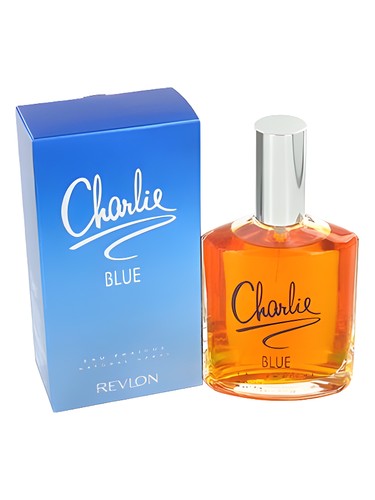
The first spray of Charlie Blue is like stepping into a forest clearing where wild roses grow through moss-covered stones. There''s an immediate earthy richness that catches you off guard—this isn''t the clean, soapy freshness its name might suggest. Instead, Revlon''s 1973 creation announces itself with a bold mossy character that feels almost defiant, softened by the Romance of rose petals crushed underfoot. The spicy aromatic quality adds an unexpected edge, creating an opening that feels both vintage and oddly contemporary in its refusal to play nice.
This is a fragrance born in the era when women''s perfumes weren''t afraid to be complex, when chypre structures dominated department store counters and femininity didn''t mean sweetness. Charlie Blue wears its age like a badge of honor—there''s a density here, a weight to the composition that modern minimalism has largely abandoned.
The Scent Profile
While the specific note breakdown remains a trade secret, the accord structure tells us everything we need to know about Charlie Blue''s architecture. The mossy foundation—registering at full intensity—creates the skeleton upon which everything else hangs. This is oakmoss in its heyday, before reformulation controversies and restrictions, presenting that characteristic bitter-green earthiness that defines classic chypre fragrances.
The rose accord, present at 84%, weaves through this mossy base with remarkable persistence. This isn''t fresh-cut florist rose or jammy Turkish rose absolute; it''s darker, more abstracted, with that slightly dusty quality that rose takes on when paired with woody elements. And those woody notes—coming in at 82%—add crucial depth and staying power, creating a kind of forest floor effect where bark, earth, and petals mingle without distinct boundaries.
What makes Charlie Blue particularly interesting is its fresh spicy component at 78%. This lifts what could be a heavy, oppressive composition, adding brightness and movement. The aromatic facets (68%) likely contribute herbal, almost medicinal nuances that keep the rose from becoming too pretty, too conventional. The overall effect is a fragrance that shifts between earthy groundedness and aromatic lift, never settling into simple categorization.
Character & Occasion
The seasonal data reveals Charlie Blue''s true nature: this is emphatically a cool-weather fragrance. It hits peak performance in fall (100%) and remains robust through winter (84%), with the mossy-woody character providing warmth and substance against cold air. Spring wearability drops to 66%, and summer bottoms out at 35%—that dense, earthy composition simply overwhelms in heat, turning potentially cloying or heavy.
This is decidedly daywear, scoring 95% for day appropriateness versus 65% for evening. There''s something about Charlie Blue''s earnest, unfussy character that feels suited to daylight hours—office wear in the best sense, a signature scent for meetings and errands rather than cocktails and dinner dates. It projects confidence without seduction, presence without provocation.
The profile suggests this is for someone who appreciates perfume history, who wants substance over trends, and who isn''t afraid of a fragrance with opinions. It''s not trying to be likeable in the modern sense—there''s nothing fruity-floral or gourmand here. Instead, it offers a kind of vintage sophistication that requires confidence to pull off in today''s landscape.
Community Verdict
With a rating of 3.46 out of 5 from 1,164 votes, Charlie Blue occupies interesting middle ground. This isn''t a widely beloved masterpiece, nor is it dismissed as dated or unwearable. The rating suggests a fragrance that divides opinion—those who connect with its mossy, earthy character seem to genuinely appreciate it, while others likely find it too heavy, too old-fashioned, or too challenging for contemporary tastes.
That solid vote count indicates this remains a fragrance people actively seek out and evaluate, even fifty years past its launch. Charlie Blue hasn''t disappeared into obscurity; it maintains relevance as a reference point for classic chypre construction and as an accessible entry into vintage-style perfumery.
How It Compares
The comparison set places Charlie Blue in distinguished company. Aromatics Elixir by Clinique shares that bold, mossy-aromatic DNA, though it skews even more intense and herbal. Paloma Picasso offers similar chypre bones with more pronounced aldehydes and spice. L''Air du Temps connects through the rose, though Nina Ricci''s creation is far airier and more traditionally feminine. Cabotine brings green freshness that Charlie Blue hints at, while Obsession shares woody depth despite being far headier and more overtly sensual.
What emerges is a portrait of Charlie Blue as a bridge fragrance—less challenging than Aromatics Elixir, more substantive than L''Air du Temps, occupying a sweet spot of wearable vintage elegance. It''s the chypre for those who find the category intimidating but want to understand its appeal.
The Bottom Line
Charlie Blue deserves its place in fragrance history not as a revolutionary masterpiece, but as an exceptionally well-executed representative of its era. At its 3.46 rating, it''s honest wear—good, solid, interesting perfume that won''t be everyone''s favorite but will surprise those who approach it with open minds.
For the price point (Revlon positioning ensures affordability), this offers remarkable value as an education in classic chypre structure. Those curious about vintage fragrances, those seeking alternatives to modern sweet femininity, and those who simply want a serious, no-nonsense daytime fragrance for cool weather should absolutely try Charlie Blue. Just wait for autumn, spray sparingly, and prepare to smell like 1973 in the best possible way.
AI-generated editorial review