First Impressions
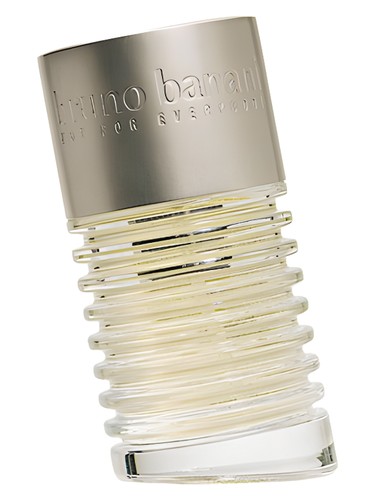
Bruno Banani Man opens with an herbal whisper rather than a shout—a deliberate choice that positioned it as an outlier when it launched in 2000. The lavender arrives first, botanical and slightly medicinal, immediately joined by star anise''s licorice sweetness and basil''s green crispness. It''s an aromatic trio that feels both familiar and unexpected, like walking into a spice merchant''s shop where bundles of dried lavender hang beside jars of aniseed. There''s none of the citrus aggression that dominated masculine fragrances at the turn of the millennium. Instead, Bruno Banani Man announces itself with a softer confidence, hinting at the vanilla comfort that will eventually dominate its character.
The Scent Profile
The evolution of Bruno Banani Man tells the story of a fragrance that knows exactly where it wants to end up. Those opening notes of lavender, star anise, and basil create an aromatic-spicy introduction that lasts perhaps twenty minutes before the heart begins its work. Here, the composition becomes genuinely interesting: heliotrope brings its almond-like powderiness, while cloves and caraway add a warm, bready spiciness. But the real surprise is coffee—not the bitter espresso note that would become trendy years later, but a softer, almost creamy coffee accord that adds depth without darkness.
This heart phase represents the fragrance''s warmest moment, where all those spicy elements dance together before gradually surrendering to the inevitable sweetness below. The transition is smooth, almost imperceptible, as tonka bean and vanilla begin their ascent. These aren''t sharp, synthetic sweet notes; they arrive with a rounded, slightly dusty quality thanks to the powdery accord that runs throughout the composition.
The base is where Bruno Banani Man reveals its true intentions. Vanilla dominates completely—the data confirms it at 100% intensity—but it''s tempered by tonka bean''s hay-like qualities, patchouli''s earthiness, and cedar''s woody dryness. The result is a skin scent that feels like cashmere rather than candy, warm without being cloying. The patchouli and cedar provide just enough structure to prevent the vanilla from floating away into pure dessert territory, anchoring it to something recognizably masculine by early 2000s standards.
Character & Occasion
Bruno Banani Man occupies an interesting space in the temporal landscape of fragrance wearing. The data shows it as suitable for all seasons, which makes sense given its moderate warmth—not so heavy that it suffocates in summer, not so light that it disappears in winter. That vanilla-forward profile with its warm spicy and aromatic backbone adapts well to temperature changes, though it likely performs best in the shoulder seasons when its cozy character feels most appropriate.
The absence of specific day/night data suggests versatility, and the fragrance''s character supports this. It lacks the boozy intensity or animalic edge that would relegate it to evening wear exclusively, yet its sweetness and warmth give it more personality than a typical office scent. This is a fragrance for someone who wants to smell approachable and slightly memorable without making a statement—the date that goes well, the dinner with friends, the weekend errands where you still want to feel put-together.
The demographic skews toward those who appreciate comfort in their fragrances, who aren''t trying to project power or seduction but rather warmth and reliability. It''s decidedly not for minimalists who prefer sharp, clean accords or those seeking challenging, avant-garde compositions.
Community Verdict
With a rating of 3.66 out of 5 from 336 votes, Bruno Banani Man sits firmly in "good but not great" territory. The community assessment reveals a mixed sentiment (5.5 out of 10), and the specific feedback illuminates why. Enthusiasts praise its excellent longevity and projection—that vanilla-tonka base has real staying power. The smoky, musky drydown earns particular appreciation, reportedly improving as it wears. At around $40, the price point is cited as a significant advantage.
However, criticisms are equally specific and revealing. Multiple users note a harsh lemon or citrus opening that overpowers other notes—interesting, since lemon isn''t listed in the official notes pyramid, suggesting either a synthetic sharpness or the anise registering as citrus-like to some noses. The synthetic quality is mentioned repeatedly, a common complaint about early 2000s masculines. Perhaps most tellingly, it''s often compared unfavorably to Aventus despite being cheaper, and users report inconsistent batch quality with varying lemon and birch ratios.
The consensus positions it as ideal for budget-conscious newcomers, casual daily wear, and those unbothered by synthetic elements. It''s the fragrance equivalent of a reliable sedan—it gets you where you need to go comfortably, if not excitingly.
How It Compares
Bruno Banani Man exists in the orbit of late-90s and early-2000s masculine blockbusters: Le Male''s lavender-vanilla template, Joop! Homme''s sweet warmth, Boss Bottled''s apple-vanilla comfort. It shares DNA with these crowd-pleasers while being less distinctive than any of them. Where Le Male has its sailor iconography and metallic edge, and Joop! Homme its pink bottle and unapologetic sweetness, Bruno Banani Man plays it safer.
The comparison to Versace fragrances like Eros and Dreamer The Original Edition is apt—all traffic in that same sweet, approachable masculinity that dominated the era. Bruno Banani Man lacks the mint freshness of Eros or the tobacco depth of Dreamer, instead offering a middle path that''s pleasant if somewhat forgettable.
The Bottom Line
Bruno Banani Man is a time capsule that still functions in 2024, though not spectacularly. That 3.66 rating feels accurate—it''s above average, delivering on its vanilla-warm-spicy promise with competence rather than artistry. The synthetic quality that some criticize is simply the aesthetic of its era; judging it by contemporary niche standards misses the point.
The value proposition remains its strongest argument. For $40, you get solid performance, a wearable scent profile, and enough complexity to stay interesting through its development. It won''t turn heads or generate compliments from fragrance connoisseurs, but it will make you smell intentional and pleasant.
Who should seek it out? Those curious about Y2K masculine fragrance aesthetics, vanilla-lovers on a budget, or anyone building a starter collection who wants reliable performance without risk. Skip it if you demand natural-smelling compositions, hate powdery accords, or already own Le Male—you''ve got this territory covered.
AI-generated editorial review