First Impressions
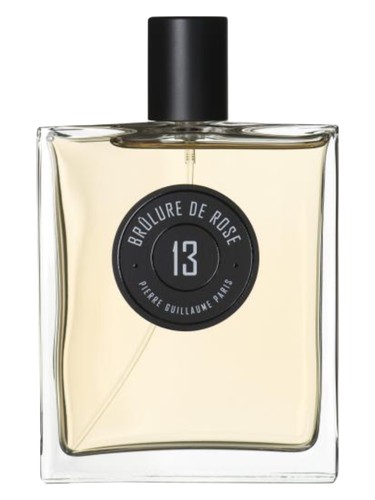
The name tells you everything and nothing. "Brulure de Rose" — a burning rose, a rose wound, perhaps even a rose scorched beyond recognition. Pierre Guillaume''s 2003 creation doesn''t whisper its intentions; it announces them with the confidence of a perfumer who understands that roses needn''t be polite. From the first spray, you''re enveloped not in a garden, but in a patisserie where someone has scattered rose petals across chocolate truffles and vanilla bean custard. This is rose as you''ve rarely encountered it: warm, edible, and utterly unapologetic about its sweet tooth.
The opening moments deliver exactly what the accord breakdown promises — rose at full volume (100% dominance, according to community analysis), but this isn''t the dewy, fresh-cut rose of conventional florals. This rose has been candied, dipped in cocoa, and left to dry near a baker''s oven.
The Scent Profile
Without specified note breakdowns, Brulure de Rose 13 reveals itself through its architectural accords rather than a traditional pyramid structure. What emerges is a fragrance that seems to exist in a perpetual heart phase — a sustained, rich middle ground that never quite retreats into whisper-soft base territory.
The rose accord anchors everything, but it''s the supporting cast that defines the experience. At 70% sweetness intensity, this is decidedly a gourmand composition, though it maintains enough sophistication to avoid crossing into candy-counter territory. The fruity element (57%) adds roundness and juiciness, preventing the sweetness from becoming cloying or one-dimensional. Think preserved rose petals in syrup, or the jammy quality of rose absolute rather than fresh blooms.
The true revelation is the cocoa accord at 48% — substantial enough to register as a co-star rather than a supporting player. This isn''t milk chocolate sweetness but something darker, more complex, with slight bitter undertones that provide crucial contrast. Vanilla (43%) weaves through at moderate strength, smoothing edges and adding creamy depth without overwhelming the composition''s rosier intentions.
A thread of warm spice (32%) runs through the experience, never dominating but providing the "brulure" — the burn — that the name promises. It''s this element that keeps the fragrance from settling into pure comfort, adding a subtle friction that makes you return to your wrist repeatedly throughout the day.
Character & Occasion
The community has spoken clearly on this front: Brulure de Rose 13 is definitively a cold-weather creature. With 93% fall suitability and 83% winter wearability, this is a fragrance that thrives when temperatures drop and you crave olfactory warmth. Spring (40%) and particularly summer (23%) are less hospitable seasons — the richness and sweetness that feel enveloping in November can turn heavy and suffocating in July heat.
Interestingly, the day/night split reveals a fragrance that leans daytime despite its richness. The 100% day suitability suggests an approachability and wearability that doesn''t require evening drama or formal occasions. Yet the 58% night rating indicates it transitions perfectly well to dinner or evening events. This versatility speaks to the fragrance''s balance — sweet and rich without being overwhelming, distinctive without being loud.
This is a fragrance for those who appreciate their florals with substantial body and aren''t afraid of gourmand elements. The feminine designation seems appropriate given the rose focus, but anyone who gravitates toward sweeter, warmer compositions will find much to love here.
Community Verdict
With 678 votes delivering a 3.87 out of 5 rating, Brulure de Rose 13 occupies respectable middle-to-upper territory. This isn''t a universally acclaimed masterpiece, but neither is it polarizing or problematic. The rating suggests a fragrance that delivers consistently on its promise — those who seek out a gourmand rose generally find satisfaction, while those expecting something else might be less enthusiastic.
The substantial vote count indicates this isn''t a forgotten obscurity but a fragrance that has found its audience over two decades since its 2003 release. That longevity speaks volumes in an industry obsessed with the new and next.
How It Compares
The comparison set reveals Brulure de Rose 13''s positioning in the landscape of rich, complex feminines. Sharing kinship with Chanel''s Coco Eau de Parfum places it in distinguished company — both offer baroque richness without tipping into excess. The connection to Tom Ford''s Tobacco Vanille and Mugler''s Angel indicates shared gourmand DNA and unapologetic sweetness.
Perhaps most tellingly, the similarity to Serge Lutens'' Feminité du Bois and Amouage''s Lyric Woman suggests a lineage of sophisticated, woody-spicy florals that challenge conventional prettiness. Where Brulure de Rose 13 distinguishes itself is through its accessible price point (Pierre Guillaume rarely commands niche super-premium pricing) and its particular balance of chocolate and rose — a combination that feels more straightforward than Lutens'' cedar abstraction or Amouage''s opulent complexity.
The Bottom Line
Brulure de Rose 13 is a fragrance that knows exactly what it wants to be and achieves it with confidence. For those seeking a rose fragrance that delivers warmth, sweetness, and comfort rather than garden realism or powdery elegance, this is a highly satisfying option. The 3.87 rating reflects honest competence rather than groundbreaking artistry — this won''t change your life, but it might become a reliable companion through autumn and winter months.
The question isn''t whether it''s the best gourmand rose or the most innovative Pierre Guillaume creation. The question is whether you want your roses served with chocolate and vanilla, warm enough to feel like a cashmere wrap against cold weather. If that description appeals, the community''s two decades of approval suggests you''ll find exactly what you''re seeking. Just save it for when the leaves start falling.
AI-generated editorial review