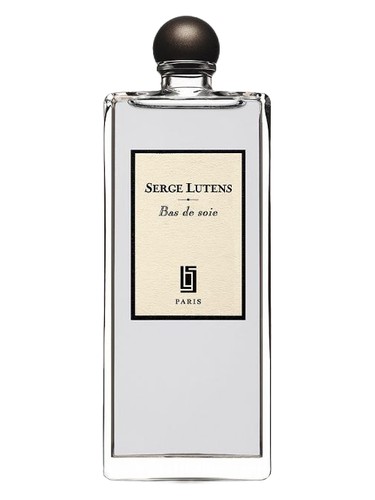
First Impressions
The name says it all, really. Bas de Soie — silk stockings — evokes an era of refined femininity, and the first spray delivers precisely that: the crisp, almost vegetal bite of green accords tempered immediately by the softest dusting of powder. This is Serge Lutens in his most classically feminine mode, eschewing the house''s typical oriental theatrics for something that feels like stepping into a Parisian garden in early morning, dew still clinging to iris stems, the air sharp and clean. There''s an immediate sophistication here, an old-world elegance that doesn''t apologize for its femininity but rather celebrates it with quiet confidence.
The Scent Profile
Without specified individual notes to guide us, Bas de Soie reveals itself through its dominant accords, and what a revealing portrait they paint. The green accord sits at the helm with absolute authority — this is unquestionably a verdant fragrance, leading with the kind of stemmy, slightly bitter freshness that recalls crushed leaves and garden soil. It''s not the gentle green of new grass but something more substantial, more rooted in earth and chlorophyll.
Almost immediately, the floral heart announces itself, though this is no gaudy bouquet. The iris — scoring notably high in the accord profile — brings its characteristic coolness, that almost metallic quality that hovers between root vegetable and cosmetic powder. This iris doesn''t bloom so much as it presents itself with dignified restraint. The floral aspect feels watercolor-soft, impressionistic rather than photorealistic, creating an effect that''s more about suggestion than proclamation.
As the fragrance settles, the powdery accord begins to assert itself, weaving through the green and floral notes like silk thread (that name again, working its magic). This isn''t face powder heaviness but rather the memory of powder — refined, barely-there, the ghost of vintage compacts and dressing tables. A fresh spicy element adds dimension, preventing the composition from becoming too demure, while an earthy undertone grounds everything, reminding you that iris comes from rhizomes, from the actual earth.
The evolution is subtle rather than dramatic. Bas de Soie doesn''t transform so much as it gently shifts emphasis, the green slowly yielding center stage to the powdery iris, the whole composition becoming softer, more skin-like, more intimate as hours pass.
Character & Occasion
The community data speaks with unusual clarity here: this is a spring fragrance first and foremost, scoring a perfect match for the season. It makes perfect sense. This is the scent of gardens waking up, of cool mornings requiring a light cardigan, of sophisticated lunches and afternoon appointments. Fall claims it as a distant second, and you can imagine it working beautifully in September''s transition, when the air grows crisp but flowers still bloom.
With a 94% day rating versus just 31% for night, Bas de Soie knows exactly what it is: a daytime companion of the highest order. This is for board meetings and museum visits, brunch reservations and art gallery openings. It''s office-appropriate without being boring, polished without being corporate. You could wear this to sign important papers or to lunch with someone whose respect you want to earn.
This fragrance assumes a certain maturity — not of age necessarily, but of sensibility. It''s for those who appreciate restraint, who understand that sophistication often whispers rather than shouts. The woman who reaches for Bas de Soie likely owns quality basics, appreciates architecture, and values timelessness over trends.
Community Verdict
With a solid 3.9 out of 5 stars from 1,600 voters, Bas de Soie has earned respect rather than cult worship. This isn''t the controversial masterpiece that divides opinion, nor is it a crowd-pleasing bestseller designed for mass appeal. Instead, it occupies a sweet spot: reliably excellent, widely appreciated by those who encounter it, but perhaps too understated to inspire the passionate evangelism that pushes ratings into the stratospheric.
That 3.9 feels entirely appropriate. This is a fragrance that rewards attention, that grows more beautiful with understanding, but that might initially strike some as too subtle, too restrained. The 1,600 votes suggest steady, sustained interest rather than viral popularity — a sign of a fragrance with staying power and genuine admirers.
How It Compares
The comparison set reads like a masterclass in elegant femininity. Chanel No 19 Eau de Parfum shares that green-iris backbone, though Chanel''s interpretation tends toward more pronounced galbanum bite. Infusion d''Iris by Prada occupies similar territory with its clean, modern iris approach, though it skews cooler and more minimalist. The presence of L''Heure Bleue and Samsara in the comparison set speaks to the vintage sensibility here — Bas de Soie channels old-school refinement without feeling dated.
Most tellingly, Daim Blond, another Lutens creation, shares DNA. Both explore soft, powdery territories with restraint and sophistication. Where Daim Blond adds suede smoothness, Bas de Soie offers green freshness, but the family resemblance is unmistakable.
The Bottom Line
Bas de Soie represents Serge Lutens at his most accessible, which isn''t to say simple — rather, it''s refined to the point of seeming effortless. For those seeking a sophisticated green-iris fragrance that works beautifully in professional and daytime settings, particularly in spring, this deserves serious consideration. The 3.9 rating reflects its excellence within a specific aesthetic rather than any significant weakness.
This isn''t the fragrance for those seeking projection or drama. It won''t announce your presence or leave a trail. What it will do is create an aura of polished, garden-fresh elegance that rewards proximity and repeated wearings. For the right person — someone who values refinement over impact, quality over quantity, whispers over shouts — Bas de Soie might prove irreplaceable. Sample before committing, but if this aesthetic speaks to you, you''ve found something genuinely special.
AI-generated editorial review