First Impressions
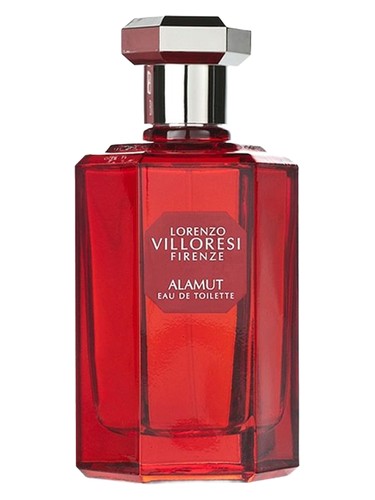
The first spray of Alamut transports you to an amber-lit sanctuary where rose petals have been pressed between aged leather-bound books. Lorenzo Villoresi''s 2006 creation opens with an unexpected richness—not the bright, dewy florals you might anticipate from a feminine fragrance, but something altogether more contemplative. Brazilian rosewood mingles with rose in a way that immediately announces this perfume''s woody intentions, while osmanthus and jasmine weave through the opening like incense smoke through temple corridors. There''s an old-world quality here, a sense of standing at the threshold of something both beautiful and formidable.
The Scent Profile
Alamut''s evolution is a masterclass in restraint and architectural balance. The opening quintet of rose, Brazilian rosewood, flowers, osmanthus, and jasmine could easily overwhelm, but Villoresi orchestrates them with a firm hand. The rose never dominates; instead, it''s softened and textured by the apricot-like facets of osmanthus and grounded by that distinctive rosewood—a note that lends the composition an immediate woody gravitas.
As the fragrance settles into its heart, the florals deepen rather than fade. French labdanum introduces a resinous, slightly leathery sweetness that acts as a bridge between the blooming flowers and the profound base to come. Ylang-ylang and tuberose appear, but they''re surprisingly subdued—rendered almost abstract by the labdanum''s amber glow. Orange blossom and narcissus add delicate green touches, but make no mistake: this is not a fresh white floral. The heart feels like discovering a garden at twilight, when shadows have transformed familiar flowers into something more mysterious.
The base is where Alamut reveals its true nature as a woody-amber hybrid with serious staying power. Sandalwood and amber form the foundation, enriched by benzoin''s vanilla-tinged sweetness and a subtle leather accord that recalls fine suede. Powdery notes emerge strongly here—likely from the interplay of musk, sandalwood, and iris-like qualities—creating that distinctive vintage quality that connects Alamut to the great French amber orientals. Patchouli and amyris add earthy, woody depth without veering into hippie territory, while the overall effect becomes increasingly enveloping and sensual.
Character & Occasion
Alamut is unequivocally a cold-weather fragrance, and the community data bears this out emphatically: fall scores perfect marks at 100%, with winter close behind at 96%. This makes complete sense when you experience the perfume''s rich, layered density. Spring sees a modest 30% approval, while summer languishes at just 16%—this is not a fragrance that breathes well in heat. The amber and woody accords, both rating at 100%, create a warmth that complements wool coats and crisp autumn air far better than linen and sunshine.
Interestingly, while marketed as feminine, Alamut possesses an androgynous dignity that transcends gender boundaries. The powdery accord (71%) adds softness, and the white florals (47%) gesture toward traditional femininity, yet the dominant woody-amber character creates something more universal. This is a scent for someone who appreciates complexity over immediate prettiness.
The day/night split reveals something fascinating: while 57% find it suitable for daytime, a striking 94% approve it for evening wear. This suggests Alamut has the richness and sillage that comes alive in cooler evening air, perhaps at gallery openings, dinner parties, or intimate gatherings where a sophisticated signature scent makes an impression without shouting.
Community Verdict
With 710 votes yielding a 3.97 rating out of 5, Alamut occupies that interesting space of being genuinely admired without achieving universal adoration. This is higher than average—a solid endorsement—but not the near-perfect scores reserved for mainstream blockbusters or niche darlings. The rating suggests a fragrance of real quality that reveals itself to those willing to engage with its complexity. It''s not love at first sniff for everyone, but those who connect with its vintage-inspired, woody-amber architecture become devoted admirers.
How It Compares
Lorenzo Villoresi places Alamut in distinguished company. The listed similarities to Chanel''s Coco, Dior''s Dune and Poison, and Guerlain''s Samsara and Shalimar tell you everything about its lineage. These are the great amber orientals and woody florals of French perfumery''s golden age—compositions that prioritize depth, longevity, and architectural complexity over modern minimalism.
What distinguishes Alamut is its Italian sensibility. Where Coco leans baroque and Shalimar goes full oriental opulence, Villoresi''s creation maintains a slightly drier, more restrained character. It shares Dune''s contemplative woodiness and Samsara''s sandalwood richness, but with more prominent powder and less sweetness than either. Among these legends, Alamut holds its own as a more niche, artisanal interpretation of the woody-amber-floral genre.
The Bottom Line
Alamut deserves its near-4-star rating as a fragrance of genuine substance and sophistication. This isn''t a safe crowd-pleaser or an easy recommendation for everyone, and that''s precisely its strength. Lorenzo Villoresi created something for perfume lovers who appreciate vintage aesthetics reimagined with contemporary restraint—those who want their florals filtered through amber and wood rather than served bright and dewy.
Should you try it? Absolutely, if you love any of those comparison fragrances, if you''re drawn to powdery ambers, or if you want a fall and winter signature scent with real presence. It''s particularly worth exploring if you find most modern florals too light or sweet. However, if you prefer fresh, linear, or summery scents, Alamut will likely feel too heavy and complex.
The 710 votes suggest a fragrance with a devoted following rather than mass appeal, which often means better longevity on shelves and potentially better value. For those whose personal style aligns with its woody-amber soul, Alamut offers the kind of rich, enveloping beauty that justifies space in any serious collection.
AI-generated editorial review