First Impressions
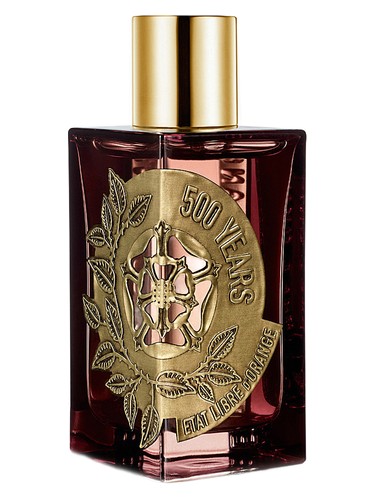
The first spray of 500 Years hits like a caravan arriving from the Silk Road—dusty with saffron, sharp with cardamom, and carrying the sun-warmed brightness of bergamot. This isn''t the polite introduction of a timid fragrance; it''s a proclamation. Within seconds, the warmth envelops you completely, that unmistakable spiced heat that makes your skin feel like it''s glowing from within. Etat Libre d''Orange has never been a house known for restraint, and 500 Years announces itself with the confidence of a perfume that knows exactly what it is: unapologetically bold, unabashedly rich, and thoroughly modern despite its historical inspiration.
The opening is dense but not suffocating, complex without becoming chaotic. That saffron—golden, slightly metallic, vaguely medicinal in the most luxurious way—dominates the initial moments, supported by cardamom''s green-tinged warmth. The bergamot provides just enough citrus to keep the spices from becoming oppressive, a breath of air in an otherwise heavily draped composition.
The Scent Profile
As 500 Years begins its evolution, the heart reveals what this fragrance is truly about: a Turkish rose of exceptional quality, dark and honeyed rather than fresh or dewy. This isn''t a soliflore rose that stands alone in a garden; it''s a rose crushed between precious textiles, steeped in resinous oud and tempered by geranium''s minty-green facets. The oud here doesn''t scream; it murmurs, adding a woody depth and slight animalic edge that prevents the rose from becoming too pretty or conventional.
The geranium performs an interesting balancing act, its slightly metallic, rosy-green character bridging the gap between the spicy opening and the rose-oud heart. This middle phase is where 500 Years shows its sophistication—the interplay between Turkish rose and agarwood creates that fashionable "rose-oud" combination that''s become synonymous with modern luxury perfumery, but the supporting cast of spices and geranium keeps it from feeling derivative.
The base is where the fragrance settles into its skin and decides to stay. Patchouli emerges with its earthy, slightly sweet darkness, mingling with amberwood''s warm, almost vanillic glow. The suede accord adds a remarkable texture to the finish—soft, tactile, intimate. This leather-suede element isn''t sharp or harsh; instead, it feels like well-worn luxury, the inside of an expensive handbag or a vintage jacket that''s molded perfectly to its owner. As the hours pass, 500 Years becomes quieter but no less present, a warm envelope of patchouli-amber-suede that sits close to the skin.
Character & Occasion
This is categorically a cold-weather fragrance. The data tells the story clearly: winter and fall are its natural habitat, where that dense spice and rich rose can bloom without becoming overwhelming. Attempting to wear 500 Years in the heat of summer would be an exercise in futility—or perhaps masochism. Spring might offer occasional opportunities, particularly on cooler evenings, but this is fundamentally a fragrance that craves the crisp air and cozy interiors of autumn and winter.
While 500 Years can technically be worn during the day—and surely some confident souls do exactly that—its true calling arrives with nightfall. The composition''s richness, its opulent warmth, and that seductive suede base all point toward evening wear: dinners that linger for hours, cultural events, intimate gatherings where you want to leave an impression without shouting for attention.
Marketed as feminine, 500 Years feels more accurately described as assertive. It would sit perfectly comfortably on anyone drawn to warm, spicy, rose-forward compositions regardless of gender. This is a fragrance for someone who already knows they love rose-oud combinations, who doesn''t shy away from patchouli, and who considers "too much" a starting point rather than a warning.
Community Verdict
With a rating of 3.71 out of 5 from 1,184 votes, 500 Years occupies solid, respectable territory. It''s clearly not universally beloved—those seeking fresh, clean, or minimalist fragrances will find nothing for them here—but it has found its audience. The rating suggests a fragrance that polarizes somewhat: those who connect with its opulent, spice-heavy character likely rate it highly, while those expecting something more restrained or versatile may find it challenging.
The substantial number of ratings indicates this isn''t a forgotten release or niche oddity known only to hardcore collectors. It''s gained traction, sparked conversation, and built a following since its 2019 launch—no small feat in an increasingly crowded market.
How It Compares
The most obvious comparison is Frederic Malle''s Portrait of a Lady, the gold standard of rose-patchouli-incense fragrances. 500 Years shares DNA with that masterpiece but leans harder into oud and warm spices, making it perhaps slightly more Middle Eastern in character and less overtly French. Within the Etat Libre d''Orange lineup itself, it sits alongside Spice Must Flow and several other similarly adventurous compositions, suggesting a house unafraid to explore bold, statement-making territory.
What distinguishes 500 Years is its particular balance—not as aggressively strange as some Etat Libre d''Orange offerings, but not playing it safe either. It occupies a sweet spot between challenging and wearable, exotic and familiar.
The Bottom Line
500 Years is exactly what it promises: a rich, warm, spice-laden rose-oud fragrance for cold weather and evening wear. Its rating reflects its nature—this isn''t a crowd-pleaser or a safe blind buy, but rather a specific, well-executed vision that rewards those whose tastes align with its opulent warmth.
Should you try it? Absolutely, if you''re drawn to spicy oriental fragrances, if Portrait of a Lady intrigues you but you want something slightly different, or if you''re building a cold-weather wardrobe and need something with presence and personality. Skip it if you prefer fresh, light, or minimalist compositions, or if you''re seeking something versatile across seasons.
For those it calls to, 500 Years offers a compelling journey through warmth, spice, and luxurious materials—a fitting tribute to its namesake half-millennium of cultural exchange.
AI-generated editorial review