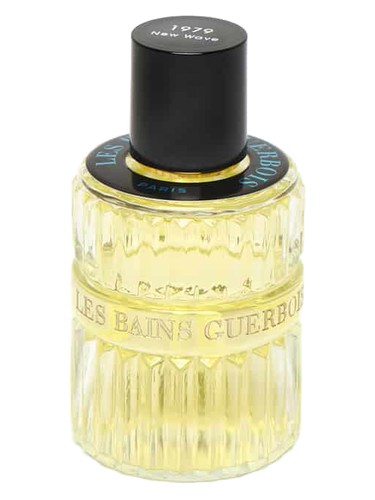
First Impressions
The name promises rebellion—safety pins, synthesizers, and the raw energy of late-70s counterculture. But spray 1979 New Wave, and you''re met with something far more nuanced than its provocative title suggests. This is woody refinement with an unexpected green pulse, an iris-forward composition that feels less CBGB and more Café de Flore. The opening is crisp and almost jarring in its freshness, a verdant slap that quickly settles into something altogether more composed. There''s an immediate sophistication here that seems to wink at its name rather than embody it—perhaps the "new wave" in question isn''t musical at all, but rather the kind of elegance that emerged when punk grew up and discovered tailoring.
The Scent Profile
Without disclosed note breakdowns, we''re left to decode 1979 New Wave through its accent profile—and what a revealing profile it is. The fragrance is built on a foundation of wood (100% accord strength), but this isn''t the dark, resinous wood of traditional masculines. Instead, it''s tempered by an equally powerful green accord (99%) that keeps everything lifted and alive. This is wood with chlorophyll still running through it, forest floor rather than lumber yard.
The iris (99%) emerges almost immediately, bringing that characteristic cool, slightly metallic powder that iris delivers so distinctively. This isn''t the sweet violet-tinged iris of some compositions; it''s the rootier, earthier variety that adds gravitas and a certain aloof beauty. The powdery aspect (94%) works in tandem with the iris, creating a soft-focus effect that gentles the composition without neutering it.
What keeps this from becoming too austere is the aromatic backbone (77%)—likely herb-driven greenness that adds texture and interest. There''s a fresh spicy element (50%) lurking in the deeper registers, just enough to suggest complexity without dominating the narrative. The overall experience is one of constant movement between crisp and soft, sharp and smooth, with the woody-green-iris triumvirate holding everything in balance.
Character & Occasion
The community has spoken decisively on this one: 1979 New Wave is a spring fragrance first and foremost (100%), and the data makes perfect sense. This is the scent of new growth, of iris blooming in cool air, of walking through gardens where winter is finally releasing its grip. Summer claims 79% suitability—that green freshness translates beautifully to warmer weather, though the powdery iris might feel slightly heavier in extreme heat.
Fall retains 62% compatibility, suggesting the woody base provides enough warmth for transitional weather, while winter lags at just 31%. This isn''t a fragrance that wants to be buried under wool coats; it needs air and space to express itself.
The day/night breakdown is even more telling: 91% day versus just 33% night. This is unambiguously a daytime composition, one that plays beautifully in natural light and professional contexts. It''s refined enough for the office, interesting enough for gallery openings, fresh enough for outdoor lunch. Evening wear isn''t out of the question, but this isn''t where 1979 New Wave does its best work—save it for occasions where you want to project competence and understated elegance rather than seduction or drama.
Community Verdict
With a solid 4.08 out of 5 rating from 535 voters, 1979 New Wave has earned genuine respect from its wearers. This isn''t a polarizing love-it-or-hate-it composition, but rather one that delivers consistent satisfaction. The substantial vote count lends credibility to that rating—this isn''t a handful of devotees skewing the numbers, but a properly tested fragrance with a proven track record.
That it maintains this rating while being categorized as feminine speaks to its quality. The woody-iris-green combination clearly resonates with those seeking sophistication without excessive sweetness, and the strong seasonal performance in spring and summer suggests it fills a specific wardrobe gap effectively.
How It Compares
The comparison fragrances reveal 1979 New Wave''s position in an interesting niche. Gris Charnel by BDK Parfums and Bal d''Afrique by Byredo suggest a similarly sophisticated, slightly unconventional approach. Gypsy Water''s inclusion points to that woody-fresh territory, while Encre Noire by Lalique—one of perfumery''s most austere vetiver compositions—hints at the serious, no-nonsense wood aspect. Bois Impérial rounds out the comparisons with its elegant woody structure.
What distinguishes 1979 New Wave in this company is its prominent iris and powdery character. Where Encre Noire goes dark and Gypsy Water stays transparent, this fragrance occupies a middle ground—substantial but not heavy, elegant but not precious.
The Bottom Line
1979 New Wave is a fragrance that plays a long game. It won''t blow you away with pyrotechnics or assault you with personality, but it will quietly establish itself as a wardrobe essential for those who appreciate woody sophistication with a green, powdery edge. The strong community rating suggests consistent quality and wearability, while the seasonal data confirms what the composition promises: this is spring and summer elegance in a bottle.
Is it worth exploring? The 535 voters averaging 4.08 stars suggest absolutely. This is particularly true if you''re drawn to iris, appreciate woody-green compositions, or need a refined daytime signature that works across professional and casual contexts. It may not embody punk rebellion, but it does offer something perhaps more radical in today''s sweet-heavy fragrance landscape: restraint with character, elegance with edge.
AI-generated editorial review