First Impressions
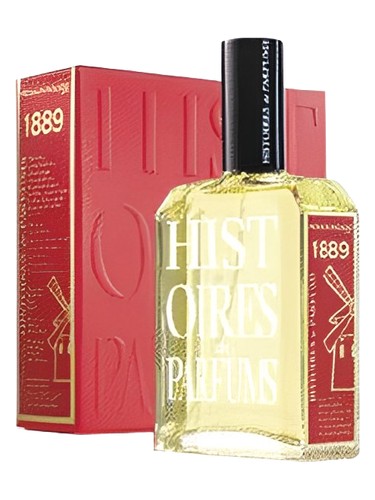
The first spray of 1889 Moulin Rouge feels like stepping through a beaded curtain into a dimly lit dressing room, where stage makeup mingles with the scent of crushed velvet and forbidden absinthe. There''s an immediate contradiction here—something both innocent and provocative, as if Histoires de Parfums bottled the duality of the belle époque itself. The opening delivers a flash of spiced plum and tangerine brightness, warmed by cinnamon''s dusty heat, before quickly settling into something more mysterious. This isn''t a literal interpretation of can-can dancers and champagne; it''s the memory of powder puffs and rose water, the ghost of perfume lingering in an empty theater after the last encore.
The Scent Profile
1889 Moulin Rouge announces itself with an unexpectedly fruity flourish. Plum takes center stage—not the jammy, gourmand variety, but something more restrained and slightly vintage. It''s accompanied by tangerine''s brief citrus sparkle and cinnamon''s warming spice, creating an opening that feels both autumnal and theatrical. This top accord doesn''t linger long; it''s merely the overture before the real performance begins.
The heart is where this fragrance reveals its true character. Tincture of rose appears—not fresh-cut flowers, but the concentrated, slightly medicinal essence you''d find in an apothecary bottle. It''s joined by wormwood, that notorious absinthe ingredient, which lends an herbal, slightly bitter greenness that keeps the rose from becoming too sweet or conventional. This combination of artemisia and rose is unusual and compelling, creating a vintage effect that references perfumery''s more daring past.
But the real star—dominating with 100% intensity in the accord profile—is iris. This isn''t the delicate, watercolor iris of spring gardens; it''s iris root, earthy and powdery, with that distinctive lipstick quality that devotees recognize immediately. The base builds a plush foundation beneath this iris showcase: musk adds skin-like warmth, while patchouli contributes earthy depth without overwhelming. The result is magnificently powdery (88% accord strength), maintaining its fruity character (84%) while developing surprising earthiness (58%) that grounds what could otherwise float away into pure abstraction.
The overall composition reads as sophisticated and decidedly retro-feminine, channeling an era when perfume was applied with deliberation and artistry, not casual spritzing.
Character & Occasion
This is unquestionably a cool-weather companion. The data confirms what the nose suspects: 1889 Moulin Rouge achieves 100% suitability for fall, when its spiced plum opening and powdery iris heart feel most at home. Winter follows closely at 77%, where the fragrance''s density and warmth make sense against cold air. Spring remains possible at 61%, though you''d want to wear it on the cooler, grayer days. Summer, at just 23%, is a stretch—the combination of powder, spice, and earthy base notes would likely feel heavy in heat.
While daytime wear registers at 68%, nighttime jumps to 86%, suggesting this fragrance truly comes alive after dark. There''s something about its vintage glamour and powdery sophistication that suits evening occasions—dinner reservations, theater outings, anywhere you might dress with intention. It''s not office-safe in the bland corporate sense, but rather the kind of scent you wear when you want to be noticed for your taste rather than your volume.
This is decidedly for those comfortable with overtly feminine presentation, particularly the iris-and-powder register that some find old-fashioned and others consider the pinnacle of elegance.
Community Verdict
The r/fragrance community, drawing from 38 opinions, awards 1889 Moulin Rouge a positive sentiment score of 7.8/10, which aligns well with the broader 4.04/5 rating from 1489 voters. The consensus? This is a solid, worthwhile niche offering that delivers on its evocative concept.
Specific praise centers on the quality comparison to Histoires de Parfums'' Café Chantant, with the appealing iris and artemisia notes standing out as particularly successful. Reviewers appreciate that the fragrance genuinely captures something of its Moulin Rouge inspiration—not literal champagne and feathers, but the sophisticated, slightly risqué spirit of the era. Several mention it''s "worth ordering in larger decant sizes," which in fragrance community language translates to genuine interest beyond mere curiosity.
The drawbacks are notable more for what''s missing than what''s present: limited specific feedback on longevity and sillage suggests these aren''t remarkable enough to merit discussion, likely performing at moderate levels. As a niche brand, Histoires de Parfums suffers from variable availability, making sampling potentially challenging depending on location.
The community recommends this particularly for those building decant collections, sampling niche houses systematically, and anyone who already knows they love iris-forward compositions.
How It Compares
The similar fragrances list reads like a who''s who of sophisticated, iris-centric feminines. Lipstick Rose by Frederic Malle is perhaps the closest parallel—both celebrate that cosmetic, powdery iris aesthetic unabashedly. The Guerlain connections (Shalimar Parfum Initial and Samsara) suggest a kinship with classic French elegance, while Serge Lutens'' Feminité du Bois points to the woody-iris-spice territory they share. Narciso Rodriguez For Her indicates similar musky-powdery DNA, though likely with more modern minimalism.
Within this distinguished company, 1889 Moulin Rouge holds its own by leaning harder into the vintage, theatrical concept. It''s less polished than Frederic Malle, less grand than Guerlain, but more narratively specific than most.
The Bottom Line
At 4.04/5 from nearly 1,500 votes, 1889 Moulin Rouge has found its audience—and that audience is devoted. This isn''t a crowd-pleaser or a safe blind buy; it''s too decidedly powdery, too iris-dominant, too vintage in sensibility for that. But for those who love this particular corner of the fragrance world, it''s a gem worth seeking out.
The value proposition depends on your relationship with Histoires de Parfums'' pricing and availability. Start with a decant—the community is right about that. If the iris-wormwood-powder combination speaks to you, a full bottle becomes justifiable. This is best suited for collectors with some experience, those who already know they love iris, and anyone drawn to fragrances with historical or theatrical narratives. If you''ve ever wished you could smell like a belle époque portrait come to life—sophisticated, slightly scandalous, and utterly self-possessed—1889 Moulin Rouge awaits behind the velvet curtain.
AI-generated editorial review