First Impressions
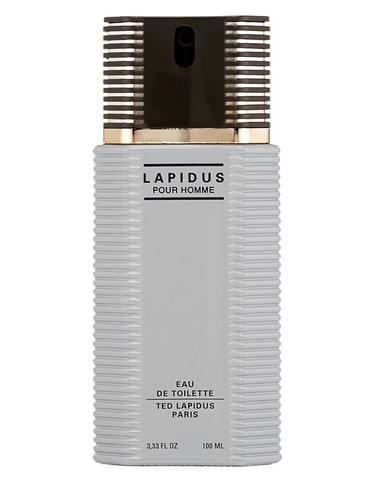
The first spray of Lapidus Pour Homme feels like stepping into a mahogany-paneled office where someone just cracked open a jar of wildflower honey and scattered fresh lavender across the desk. There''s an immediate sweetness here—not sugary or cloying, but rich and ambered—tempered by aromatic herbs that give the opening a sophisticated edge. The pineapple announces itself with tropical brightness, while lavender and artemisia provide a bitter-green counterpoint that keeps things from tipping into dessert territory. This is 1987 distilled into a bottle: confident, unapologetic, and built for projection that could fill a room before you''ve fully entered it.
The Scent Profile
Lapidus Pour Homme opens with a complex aromatic burst that showcases its era''s love affair with multi-faceted masculinity. That pineapple note—a signature move in late-''80s fragrances—mingles with lavender''s herbal calm and artemisia''s bitter wormwood quality. Juniper berries add a gin-like crispness, while basil brings an unexpected culinary greenness. Lemon and bergamot provide citric support, though they''re quickly overshadowed by the composition''s more assertive elements.
The heart is where Lapidus Pour Homme reveals its true character. Honey takes center stage, creating a viscous sweetness that the data confirms as a primary accord (58% honey). But this isn''t honey in isolation—it''s supported by incense that adds resinous depth and a subtle smokiness. Pine tree brings an outdoorsy, coniferous quality that feels masculine without resorting to sport-fragrance clichés. The florals here—rose, jasmine, orris root, and lily-of-the-valley—are present but masculinized, blurred into the background rather than singing soprano. Brazilian rosewood adds a woody-floral bridge, while caraway''s spicy, slightly anise-like character and petitgrain''s bitter-green freshness keep the composition from becoming too sweet.
The base is a masterclass in ''80s opulence. Tobacco and patchouli form a dark, earthy foundation that''s simultaneously dirty and refined. Oakmoss contributes that classic chypre-adjacent dryness (though this isn''t technically a chypre), while musk and amber create warmth and skin-clinging tenacity. Sandalwood adds creamy woodiness, tonka bean reinforces the sweetness with its vanilla-like facets, and cedar provides structural backbone. The result is a woody-sweet hybrid that the data quantifies at 100% woody and 87% sweet—an unusual but effective combination that gives Lapidus Pour Homme its distinctive personality.
Character & Occasion
This is emphatically a cold-weather fragrance. The community data shows winter at 100% suitability and fall at 85%, with spring trailing at 42% and summer barely registering at 20%. That makes perfect sense—Lapidus Pour Homme has the density and sweetness that thrives in lower temperatures, where its honey-tobacco-oakmoss combination can unfold without becoming overwhelming.
The day/night split is revealing: 61% approve for daytime wear, but 90% champion it for evening use. This suggests a fragrance with enough refinement for professional settings but one that truly comes alive after dark. Picture it at dinner meetings, theater evenings, or anywhere you want your presence felt before you''re seen. The aromatic top notes (74% aromatic accord) make it suitable for office wear—just apply judiciously—while the amber and balsamic base (64% and 45% respectively) give it the gravitas for more formal occasions.
This is for someone who appreciates vintage masculine sensibilities but isn''t precious about smelling "modern." If you''ve ever wondered what power dressing smelled like in its heyday, Lapidus Pour Homme is your answer.
Community Verdict
With 3,085 votes yielding a 3.92 out of 5 rating, Lapidus Pour Homme has earned solid respect from a substantial user base. This isn''t a niche darling with a tiny cult following, nor is it a polarizing love-it-or-hate-it composition. Instead, it occupies that interesting middle ground: widely appreciated, reliably well-crafted, and perhaps taken slightly for granted because it doesn''t chase trends or demand attention through novelty alone.
That rating suggests a fragrance that delivers on its promises without revolutionary innovation—and there''s value in that dependability. Nearly four stars from over three thousand voters indicates consistent quality and a formula that has aged better than many of its contemporaries.
How It Compares
Lapidus Pour Homme shares DNA with several heavyweight masculines from its era. Quorum by Antonio Puig offers similar green-aromatic richness, while Polo by Ralph Lauren matches its woody-spicy intensity. Obsession for Men by Calvin Klein shares that amber-spice density, and Zino Davidoff by Davidoff echoes the sweet-woody balance. Drakkar Noir by Guy Laroche connects through aromatic fougère elements, though it skews fresher.
What distinguishes Lapidus Pour Homme is its honey-forward character. While its siblings emphasize leather, spice, or fresh aromatics, this fragrance leans into sweetness more boldly. It''s the warmest of the group, the most overtly honeyed, and arguably the most overtly sensual rather than athletic or aggressive.
The Bottom Line
Lapidus Pour Homme represents late-''80s masculine perfumery executing at a high level—no apologies, no minimalism, just generous layers of quality materials composed into something substantial. The 3.92 rating reflects its strengths: well-balanced despite complexity, sweet without being juvenile, woody without being austere.
Is it subtle? Absolutely not. Is it safe? Only if everyone around you enjoys big, honeyed, aromatic fragrances. But for cold-weather evenings when you want something with presence and personality, this delivers. The value proposition is typically strong—vintage designer fragrances from this era often offer remarkable quality at accessible prices.
Try Lapidus Pour Homme if you''re drawn to vintage masculines, if honey notes intrigue you, or if you simply want to understand what masculine excess smelled like before "fresh" became mandatory. Just remember: this is a fragrance from an era when more was more, and it has no interest in apologizing for that fact.
AI-generated editorial review