First Impressions
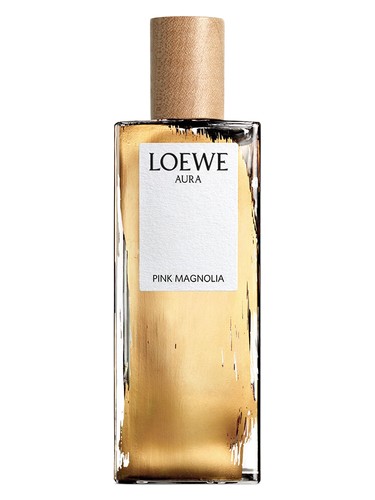
The first spray of Aura Loewe Pink Magnolia lands like a soft petal falling onto bare skin. This 2020 addition to Loewe''s Aura collection announces itself with restraint rather than fanfare—a deliberate choice that signals sophistication over spectacle. The fragrance opens with an immediate floral embrace, yet there''s something decidedly modern about its delivery. It doesn''t shout magnolia at you; instead, it suggests it, the way morning light suggests rather than declares the arrival of spring. Within moments, a fruity sweetness emerges, rounding the edges and adding an approachable warmth that keeps the composition from veering into formal territory.
The Scent Profile
While Loewe hasn''t disclosed the specific note breakdown for Pink Magnolia, the accord structure tells a vivid story of its evolution. The fragrance is overwhelmingly floral at its core—scoring a perfect 100% in floral character—but this isn''t a linear journey through a single blossom. Instead, the magnolia note (presumably the star, given the name) appears to be surrounded by a constellation of supporting florals that create depth and dimension.
What sets this composition apart is the substantial fruity presence running through it, clocking in at 84%. This isn''t fruit as punctuation; it''s fruit as structure. The interplay between floral and fruity creates a dual personality: one moment you''re inhaling the creamy, slightly soapy elegance of magnolia petals, the next you''re aware of something brighter, juicier, more playful. It''s this tension that keeps the fragrance interesting beyond its initial sweetness.
As Pink Magnolia settles into the heart phase, a musky undercurrent emerges with a 61% presence. This musk doesn''t read as animalic or heavy; rather, it provides a soft-focus effect, blurring the edges of the floral-fruity combination into something skin-like and intimate. The powdery accord (49%) works in tandem with the musk, adding a vintage-inspired softness that prevents the fragrance from feeling too contemporary or synthetic.
In the base, subtle woody notes (38%) and a whisper of citrus (40%) provide structure and lift. The citrus element likely appears throughout, offering brightness that keeps the sweeter elements in check, while the woody foundation—though understated—gives just enough weight to prevent the fragrance from floating away entirely.
Character & Occasion
Pink Magnolia has found its natural home in spring, where it scores a perfect 100% seasonal match. This makes intuitive sense: the fragrance captures that particular moment when winter''s grip finally loosens, and the air fills with promise rather than chill. But its versatility extends further than spring''s narrow window. With an 81% affinity for fall, this is clearly a fragrance that thrives in transitional weather, those days when you need something uplifting but not overwhelming.
Summer brings a 62% compatibility score—respectable, suggesting Pink Magnolia can handle moderate warmth without wilting, though it may not be your first reach during peak heat. Winter, at 47%, is where the fragrance shows its limitations. Without the heavier base notes or spicy warmth that cold weather often demands, Pink Magnolia might feel too delicate when frost is on the ground.
The day/night split is revealing: 100% day wear versus 54% for evening. This is decidedly a daylight fragrance, one that belongs to coffee meetings, weekend errands, office environments, and outdoor lunches. It can transition to evening—that 54% suggests it''s not entirely casual—but you''d be wearing it to relaxed dinners rather than black-tie events.
Community Verdict
With 595 votes tallying up to a 3.86 out of 5 rating, Pink Magnolia sits comfortably in "very good" territory without quite reaching "exceptional" status. This is a respectable showing that suggests consistent satisfaction rather than polarizing genius. The fragrance appears to deliver exactly what it promises—no more, no less. It''s unlikely to become anyone''s signature scent or inspire passionate devotion, but it''s equally unlikely to disappoint those seeking a reliable, pretty, wearable floral for everyday use.
The substantial vote count adds legitimacy to this rating; we''re not looking at a niche outlier with limited feedback. This is a fragrance that has been tested in real life, across different skin types and preferences, and found to be solidly pleasant.
How It Compares
The similarity lineup reads like a who''s who of accessible luxury florals: Chanel''s Chance Eau Tendre, Dior''s Miss Dior Blooming Bouquet and J''adore, Lancôme''s Idôle, and Narciso Rodriguez''s Pure Musc For Her. This positioning is both a strength and a challenge. Pink Magnolia swims in a very crowded pool of refined, feminine, floral-fruity fragrances aimed at the same demographic.
Against Chance Eau Tendre, Pink Magnolia feels slightly less effervescent, trading some of Chanel''s signature sparkle for a softer, more linear sweetness. Compared to Miss Dior Blooming Bouquet, it''s less explicitly romantic. Where it carves out its own space is in that magnolia focus—a less common floral choice than the roses and peonies dominating this category—and in its particular balance of fruit and powder.
The Bottom Line
Aura Loewe Pink Magnolia is a fragrance that knows what it wants to be: an easy, pretty, thoroughly pleasant daytime floral for spring and fall. It achieves this goal with grace, if not with groundbreaking creativity. The 3.86 rating reflects this reality—it''s a good fragrance that many people enjoy, even if it''s not rewriting the rulebook.
Who should try it? Anyone seeking a work-appropriate floral that won''t announce your arrival three rooms ahead. Those who find many modern fragrances too aggressive or sweet but still want something noticeably feminine. Fans of the similar fragrances listed above who want to explore a slightly different take on the theme.
At its heart, Pink Magnolia is comfort wear for your fragrance wardrobe—the reliable piece you reach for when you want to smell lovely without making a statement. And sometimes, that''s exactly what you need.
AI-generated editorial review